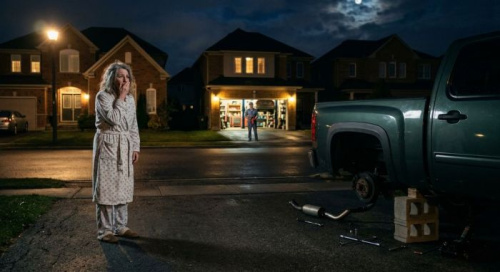
The state lottery posts winning scratch-off tickets on its website every weekday at nine o'clock in the morning. I know this now the way other people know the weather. On that particular Tuesday, I sat at my mother's kitchen table with a cold cup of coffee while Ruth hummed "You Are My Sunshine" and washed the same three plates for the second time. She had been like that since the day before — a little brighter, a little lighter — because she'd won five hundred dollars.
Her exact words, repeated at lunch, at dinner, and again before bed, were: "Diane, I won five hundred dollars at Porter's!" She kept the money in the old coffee tin on the windowsill, five crisp hundred-dollar bills folded into a neat square. Our neighbor Roy Porter had paid her in cash, right there at his counter, she said, so she wouldn't have to wait for a check in the mail.
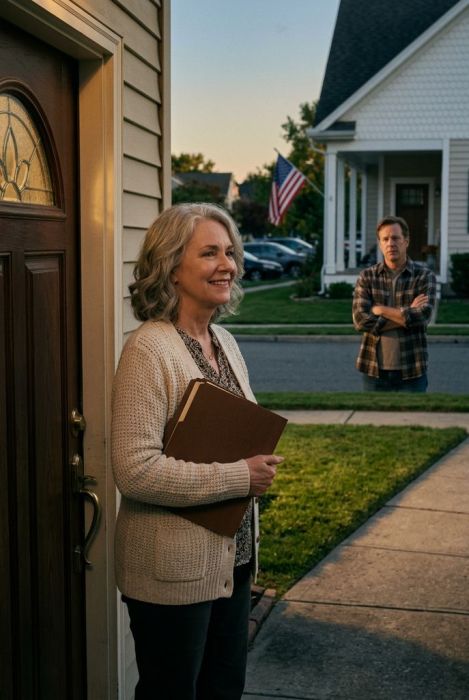
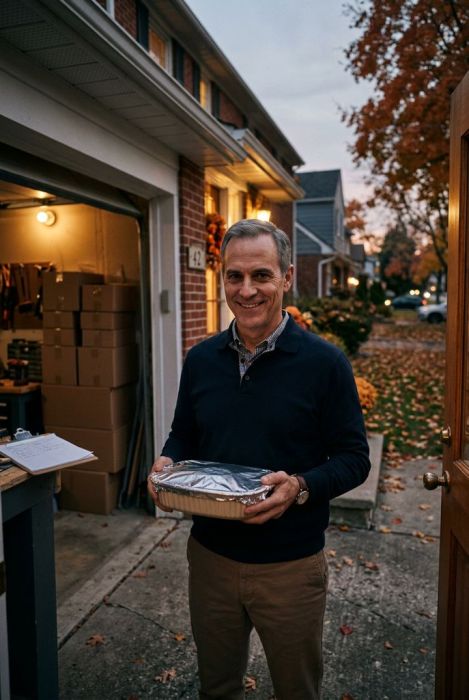
Roy Porter ran Porter's Market, the little corner store that anchored the end of Mulberry Street in Fairview, Ohio. He'd bought it from his father thirty years ago, and he'd been a fixture of our neighborhood his whole life. He was the man who remembered every name, who kept a jar of lemon drops behind the counter for the older ladies on the street, who sponsored the Little League team and hung their photo above the register every summer. He lived in the tidy blue house two doors down from my mother, with an American flag that never once flew crooked.
My mother was seventy-six. She'd spent thirty-eight years at the garment plant on the edge of town, and after my father died, her world had quietly gotten smaller. Her memory had started slipping two years earlier — small things at first, then appointments, then the stove. But she clung to one ritual: her Saturday scratch-off. A single ten-dollar ticket, never more, from Porter's Market, because Roy always let her reach into the little rotating display case and choose her own.
That was where things started going wrong — on a Saturday morning. And I didn't understand how wrong until two days later.
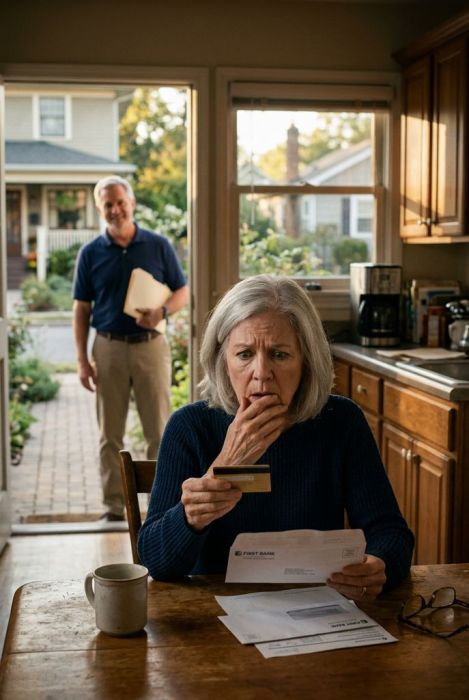
On Monday afternoon, I found her at the kitchen table with the coffee tin open in front of her, beaming. She pushed five hundred-dollar bills toward me like a child showing off a school drawing. "Look what I won," she said. "Roy said the machine showed five hundred dollars. Can you believe it?"
I was delighted. My mother lived on social security plus a small pension, and five hundred dollars was a fortune to her. I hugged her, drove her to the bank, and helped her deposit the cash. She talked about a new winter coat, about taking my daughter to dinner, about paying her electric bill for the whole season. It was the happiest I'd seen her in a year.
And one thing she said stayed with me, when it finally mattered. "Roy told me to keep it our little secret," she'd giggled. "He said if everyone on the street found out, they'd all ask him for lucky tickets."
I laughed at the time. Roy Porter was a good neighbor. Everyone said so.
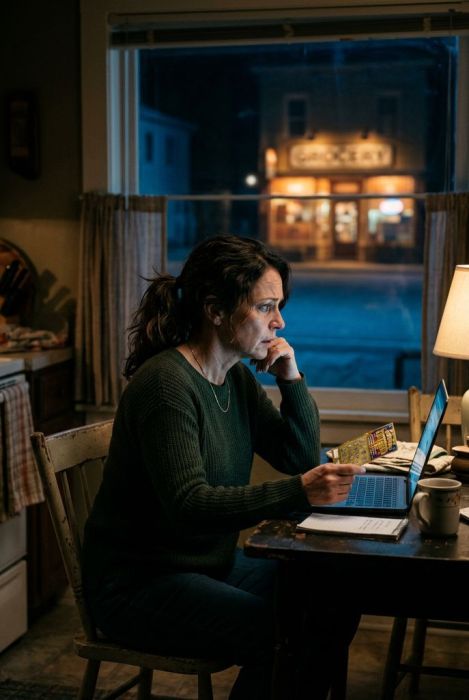
On Tuesday morning I opened my laptop at her kitchen table to pay a bill, and I still can't tell you why I typed "Ohio Lottery" into the search bar. Maybe I wanted to see her game again, to relive a little of her joy. I clicked the page that lists winning scratch-off tickets sold across the state. And my stomach dropped through the floor.
There it was, at the top of the page: "MEGA FORTUNE — $250,000 TOP PRIZE — SOLD AT PORTER'S MARKET, 121 MULBERRY STREET, FAIRVIEW."
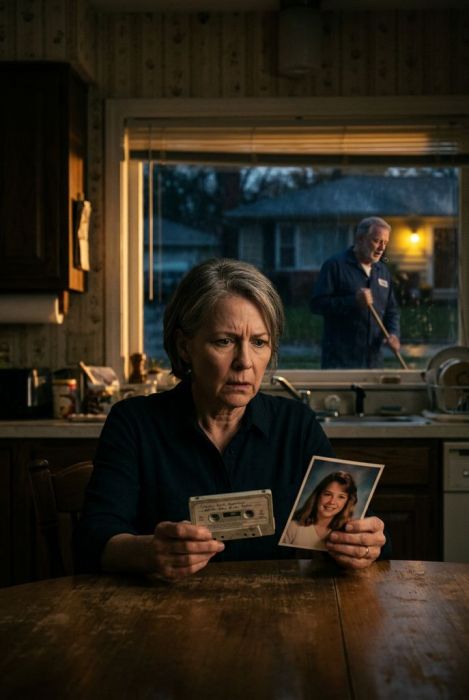
I stared. Below the ticket name was a string of numbers and letters — the ticket's unique validation code, published as proof the prize was real and as yet unclaimed. I went to my bedroom and took out the envelope where I keep my mother's important papers. Inside was a photograph I'd taken of her winning ticket on Sunday morning. I'd snapped it because she was so proud, and because her memory was what it was. The gold ticket in the photo had a code printed beneath the scratch coating.
It matched the code on the lottery website. Character for character.
My mother had bought a ten-dollar ticket on Saturday. Roy Porter had told her the machine showed five hundred dollars, paid her cash, and taken the ticket. But the ticket she'd handed him was worth a quarter of a million dollars — and the state had just posted its code online, waiting for someone to claim it.
I didn't sleep that night. I told myself there had to be an explanation. Maybe the code on the website belonged to a different scratch-off. Maybe I'd misread the photo. Maybe my mother had bought two tickets and forgotten. I checked everything a dozen times. The photo was clear. The lighting was good. The code was identical. And the more I thought about it, the more I remembered other small things — Roy paying my mother's tab at the store so she wouldn't worry, Roy helping her check her tickets every time she visited, Roy always being the one to scan them at the register before she could read them herself.
On Wednesday morning I walked to Porter's Market with my heart hammering. I kept my voice light. I asked Roy if he remembered my mother's big win.
"Five hundred bucks," he said, smiling, wiping the counter with a rag. "Tell Ruth I'm glad she enjoyed it."
"The machine really showed five hundred?" I asked.
His smile didn't change, but I saw something tighten behind his eyes. "It showed what it showed, Diane. I told her the truth. You know, at her age, sometimes people hear what they want to hear."
I felt heat rush to my face. My mother's memory was not perfect — but it was good enough to remember the number of zeros on a stack of money, and good enough to recall Roy telling her to keep a secret. I thanked him and left with the little brass bell on the door chiming behind me like a judgment.
At home, I did what terrified me most: I called the Ohio Lottery Commission and asked, carefully, what happens when a top-prize scratch-off is sold but the winner never comes forward. The woman on the phone was kind. She told me that unclaimed prizes eventually go back to the state, but that a valid ticket can be claimed anytime within the window, and that the store's scanner logs recorded every validation. She also told me something that made the floor tilt: in Ohio, a retailer cannot claim a winning ticket sold at their own store. The lottery watches for that particular red flag very closely.
I thanked her, hung up, and wrote down everything I remembered while it was fresh.
The breakthrough came from an unexpected place. Tyler Bishop was the eighteen-year-old who worked the evening shift at Porter's Market while he saved up for community college. I knew him because he'd dated my daughter in tenth grade. On Thursday evening, I found him behind the register, alone.
I asked him about Saturday morning. I didn't accuse anyone. I just described my mother's visit and asked if he'd been there.
He went very pale. "Please don't," he said, so quietly I almost didn't hear it. "Mr. Porter said he'd fire me and tell the college I was dishonest. He gave me a hundred dollars and said the ticket was five hundred and that was that."
"Tyler," I said. "What did you see?"
He looked at the door, then back at me. "I saw him scan it," he whispered. "The machine beeped the way it beeps for a big one. I heard him say 'congratulations, five hundred dollars.' And I saw him put the ticket in his pocket before Ruth could look at it."
I drove straight home and called the lottery's security unit. I told them everything — the photo, the code on the website, Tyler's testimony, the machine log I hadn't even seen yet. The investigator who took the call was a man named Marcus Webb, and his voice went very businesslike when I mentioned the code. He asked me to email the photograph, and he promised me he'd look at the store's validation records with his own eyes.
Two days later, Marcus called me back. The scanner log at Porter's Market showed a ten-dollar MEGA FORTUNE ticket validated at 10:12 on Saturday morning — for a $250,000 top prize. The store had been reimbursed for paying out a five-hundred-dollar prize to a customer. The ticket itself had not been submitted for claim. Someone was holding it.
Marcus explained the plan to me over the phone, and I agreed to every part of it. On the following Monday, my mother went into Porter's Market one last time — with a small recorder in her coat pocket and two state investigators watching from an unmarked car across the street. She bought a coffee and, in her sweet, confused way, asked Roy if he'd happened to find a lost ticket with her lucky numbers on it. She described the scratch-off exactly.
Roy Porter looked at my mother and smiled his kindest smile. "I haven't seen it, Ruth. You must have dropped it somewhere. Don't worry about it — five hundred dollars is still five hundred dollars."
"It was a nice ticket," my mother said. "I'd hate to think of someone else cashing it."
"No one's cashing anything," he said. "It's gone."
It was the last lie he ever told about that ticket, because the recorder caught it, and so did the affidavit Tyler had signed, and so did the validation log sitting in Marcus Webb's briefcase.
The arrest happened on a Thursday morning, right at opening time, when the store was full of neighbors buying coffee and bread — the exact audience Roy Porter had always played to so well. Two officers and Marcus Webb walked in as he stood behind his register in his clean white apron. I watched through the front window, my hand wrapped around my mother's arm.
At first Roy tried to joke. He called them by name. He asked if there'd been a complaint about the pumpkins out front. Then Marcus set a photograph on the counter — my photograph, of the gold ticket in my mother's hands — and said, very quietly, "We have the code, Roy. We have the scanner log. We have the clerk. Give us the ticket."
He didn't give them the ticket. They found it twenty minutes later, in a lockbox hidden behind the soda cooler in the back room. He'd signed my mother's name across the back of it, in handwriting anyone could have matched to the receipts he wrote every day. The state charged him with theft by deception, forgery, and tampering with records. The news covered it that evening, and the whole town saw the clip of Roy Porter being led out of his own store in handcuffs, his apron still tied, his face the color of the white tile floor.
The aftermath was strange and quiet and, in its own way, wonderful. The lottery commission validated my mother's ticket through their official claims process — with an investigation file an inch thick confirming she was the rightful winner. After taxes, Ruth deposited one hundred seventy-seven thousand dollars into her own bank account, in her own name, with her own signature on every form.
She bought the winter coat. She took my daughter to dinner — the fancy place with the linen napkins. She had the porch steps replaced and the furnace serviced, and she set aside money for the home care she'll need someday, so her daughter won't have to work two jobs worrying about it. And on the first nice Saturday of spring, she drove herself to the bank and back just to look at the number on the statement.
Roy Porter lost the store his father built. The bank foreclosed, and the building sat empty for months before a young couple took it over and turned it into a deli. The blue house with the flag sold at a loss. I heard he pleaded to a lesser charge and spent time in a state facility, and I know for a fact that the neighbors who used to wave to him now cross the street when his name comes up. The Little League found a new sponsor. The lemon drops disappeared from the new counter.
And my mother? She still buys a scratch-off on Saturdays, because a habit is a habit and she's earned it. But now the first thing she does, before she even digs for a coin, is write her name on the back of the ticket in her careful, old-fashioned script. Then she looks at me, and she says, "There. Now nobody can take it."
I always smile and tell her she's right. And I keep the photograph of the gold ticket in the drawer, not as proof of the crime anymore, but as proof of something better: that God, or luck, or the slow turning of the world gave my mother one last good hand — and that this time, nobody got to play it for her.