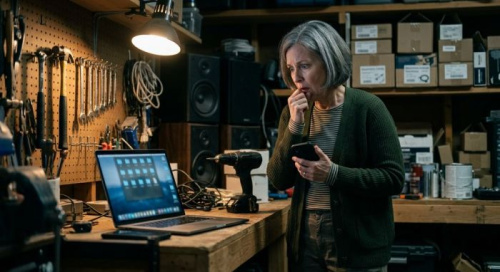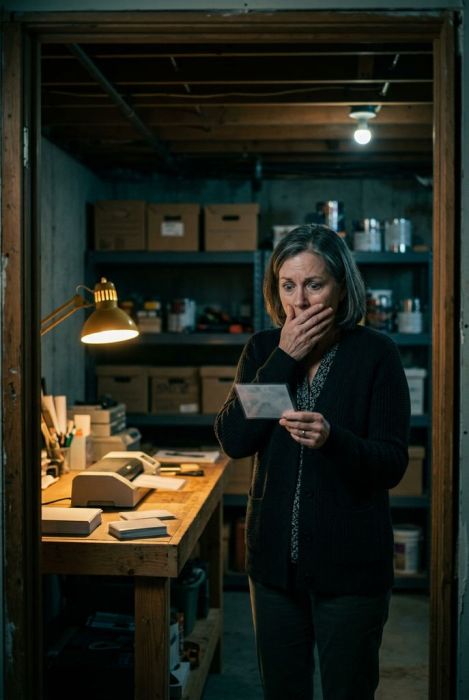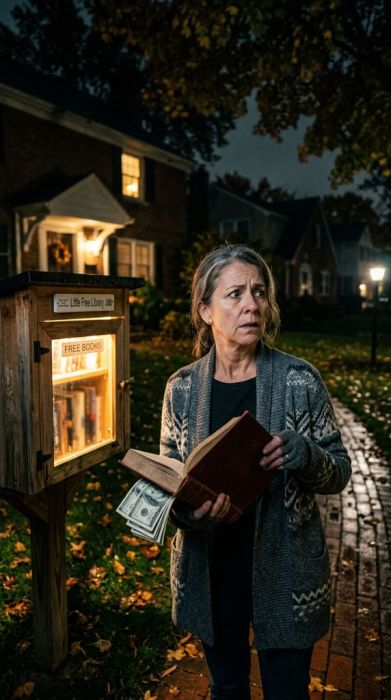
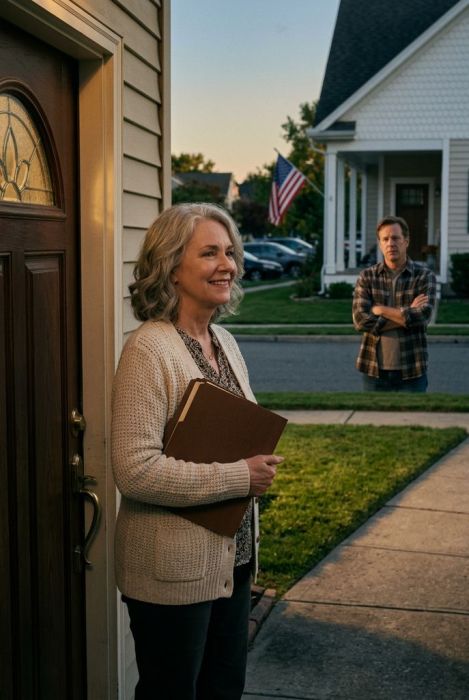
The afternoon the deputies walked Nadine Hollis out of Walter Boyd's house in handcuffs, half our street stood in their driveways pretending to be busy. I was one of them, holding a garden hose I never turned on. My wife, Carol, gripped my forearm. My eighty-seven-year-old mother, Rose, watched from our front window, and I will never forget the look on her face — relief, and something sadder underneath it. Eight months before that afternoon, I would have told you Nadine Hollis was the best thing that ever happened to Walter Boyd. That's how careful she was. That's the part that still keeps me up at night.
We live on Kestrel Run, a quiet loop of a street in Wexford Township, Pennsylvania, the kind of place where people still wave at plows and nobody locks their tools in the garage. I'm Frank Delaney, sixty-three, a retired high-school shop teacher. I've spent my whole life fixing things that other people gave up on, and I like to believe I can read a situation the way I once read a warped board — by running my hand along it and feeling where it lies.
Walter Boyd lived two doors down. Eighty-one, retired machinist from the old axle plant, a man who kept his grass edged like he was still proving something. His wife, Ruth, had passed four winters earlier, and after that, Walter's whole world narrowed to a single chair by a single window. His son, Paul, had moved to Arizona years ago and called on birthdays. That was the arrangement. Nobody on our street judged it too hard.
So when a white sedan with a magnet sign reading GRACEFUL HANDS HOME CARE started parking in Walter's drive, most of us felt something like gratitude. The woman who stepped out of it — late fifties, soft gray hair, cardigans the color of weak tea — introduced herself as Nadine. She had a way of remembering everything. Your grandchild's name. Your surgery. The exact week your tomatoes come in. Within a month she was driving Walter to church, sorting his pills into one of those Sunday-through-Saturday boxes, and leaving warm bread on people's porches.
"She's an angel," my wife said one evening, watching Nadine guide Walter up his front steps with a hand under his elbow. Walter was smiling. That was the thing. He seemed lighter, almost boyish.
I believed it, too. For a while.
The changes came so slowly that I almost missed them, the way you miss your own hair going gray. First, Walter stopped coming outside. Second, the edge trimmer went silent, and Walter's lawn went to seed while Nadine's shiny sedan sat in his driveway like it belonged there. Third, and this was the one that itched at me — Walter's good watch disappeared. He'd worn that watch every day for forty years, a battered steel thing Ruth had given him on their twentieth anniversary. Suddenly his wrist was bare.
"Lost it," Nadine said when Carol asked, cheerful as a weather report. "You know how they get. Things wander off."
I started paying attention after that. It's my nature, and maybe my curse. I noticed that Walter had grown thinner, that his questions repeated, that the easy smile I'd known for thirty years had gone vague and faraway. I noticed the pill organizer kept filling up but Walter kept shuffling. I noticed that Paul's calls seemed to always "just miss" his father, because Nadine was the one holding the phone.
I told myself I was being a busybody. Then one Tuesday, my mother called me across the yard.
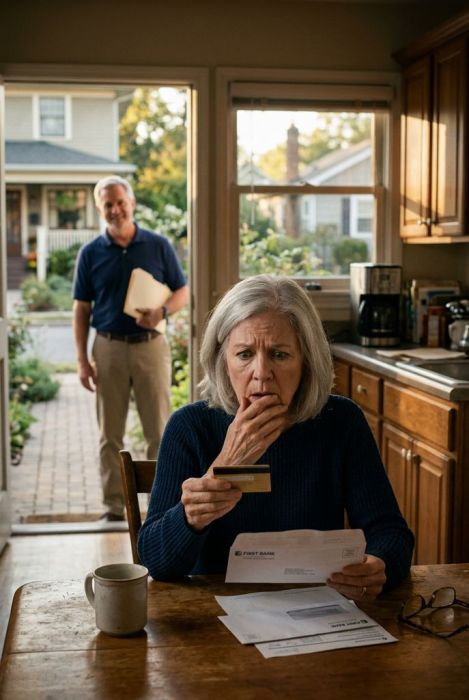
"Frank," Rose said, standing in her kitchen with a piece of paper in her hand, "that nice home-care lady stopped by while you were at the store. She said it was just a form for my flu shot records, but I don't understand why it has Ruth Boyd's name on it."
I took the paper from her. My mother's hands are steady. Mine were not. The heading read DURABLE POWER OF ATTORNEY — GENERAL. Halfway down, in the space for the name of the person granting authority, someone had typed Ruth Boyd, then drawn two neat lines through it, then typed ROSALIND DELANEY underneath in a smaller font, as if a correction on a homework assignment. The signature line at the bottom was empty. For now.
I stood in my mother's kitchen and felt the floor tilt. Ruth had been dead for four years. Nadine Hollis was not keeping flu records. She was fishing, and she had a whole pond of us to choose from.
I don't blow up. I build. So I did what I always do with a problem I don't understand — I took it apart and laid the pieces on the bench.
My daughter, Megan, is a paralegal at a firm in the county seat, and she knows the machinery of records the way I know a bandsaw. I showed her the form. She didn't yell; she got very quiet, which is worse. That night she pulled filings for us. What came back made my palms sweat.
Two years earlier, someone had filed a power of attorney for Walter Boyd. A short time after that, a lender had ordered an appraisal on Walter's house. Then a life-insurance policy had been reworked. And on every one of those documents, the "authorized agent" who'd helped prepare the paperwork belonged to the same small home-care company: Graceful Hands.
Megan ran the owner's name through a licensing database. "Graceful Hands" had been registered, dissolved, and registered again under three different names across two counties. The caregiver-of-record kept changing, but the woman who showed up in the homes never did. It was always Nadine.
Here's where I have to admit something I'm not proud of. I didn't call the police the first night I had that in my hands. I called a friend instead — Dottie Kern, who'd spent twenty-nine years as a sheriff's deputy before her knees retired her. She lives on the other side of the loop. She listened to everything, and then she asked me one question.
"Frank, how many seniors on this street alone are over eighty and living by themselves?"
I counted in my head. Four. Then I thought about the little white sedan, seen three streets over at Mrs. Kaminski's, and then again near the Anders' place, and I stopped counting.
We made a plan. It was quiet, and it was patient, and it looked exactly like neighborliness — which is the only kind of trap that would ever work on a woman who traded in it.
I asked Nadine to come by and help Rose "finalize her paperwork." I told her my mother got flustered and I wanted someone gentle in the room. Nadine almost glowed. She arrived with a folder, a fresh pen, and a smile you could have sold calendars with. Dottie was "visiting" in my kitchen. Megan's recorder was in my shirt pocket, which I want to say plainly was done on her legal advice and with a deputy present, so that everything after it would hold up.
I asked Nadine, innocent as a schoolboy, why the flu-shot form for my mother had Walter's late wife's name typed on it and then crossed out.
She didn't miss a beat. "Oh, these agencies use templates," she said, waving the pen. "It's just a form. Don't overthink it, Frank. You know how hard it is for families." And then she leaned in, and her voice went soft and patient, the way you'd talk to a man you assumed was a little slow. "Honestly? Sometimes the kindest thing for an old man like Walter is to let someone competent handle things. He gets so confused. You'd hate to see him make a mistake, wouldn't you?"
I didn't say a word. I didn't have to. In my kitchen, Dottie Kern had already gone still, and the phone in her pocket was already ringing the county detective she'd worked with for two decades.
What broke the case wide open wasn't the paperwork. It was a keyring.
Two days later, Nadine's sedan sat in Walter's drive while she was inside making his lunch. She'd left the car unlocked with a canvas tote on the passenger seat. I won't pretend I wasn't tempted. But I didn't touch a thing — because I didn't need to. Through the window I could see what had spilled half out of that tote, and so could the county detective standing quietly behind me with Dottie: a steel ring of keys, each one tagged with a little white label in neat handwriting, the kind a careful person uses so she never mixes up the locks.
SIX labels. Six addresses. Six names of elderly people scattered across the township, none of whom I'd ever heard of, each one written in the same tidy hand that had typed my mother's name under Ruth Boyd's. And there, on the very last tag, in fresh ink: DELANEY — ROSE.
My mother's name, on the ring of an angel.
They arrested Nadine Hollis that same afternoon, quietly, at the curb, so Walter wouldn't have to watch. He watched anyway. He stood in his doorway with his bare wrist and said nothing at all, and I think that was the moment I understood how long he had known, and how afraid he had been to say it out loud.
The rest unfolded the way these things do — slowly, then all at once. The state charged Nadine and the man who actually owned the revolving shell of "Graceful Hands" with a long list of felonies: financial exploitation of older adults, forgery, theft by deception. The detective told us later that the keyring had opened six separate cases across the county — and that three of those seniors had already signed away their homes without ever understanding what they'd done. One of them was a woman named Lydia who'd lived four streets over and whose family had believed, right up until the deputies came, that their mother had simply "chosen" to cut them off.
That's the part that still makes Carol cry. Not the money. Not even Nadine. It's how perfectly the loneliness had been worked, like soil before planting.
Walter's power of attorney was voided. His house, thank God, had never actually changed hands — the reverse-mortgage paperwork had a defect Megan's boss found in twenty minutes, which told you everything about how much Nadine had counted on nobody ever looking. Paul flew in from Arizona and stayed three weeks. I don't think I've ever seen a grown man sit on his father's porch and apologize that long. They planted tomatoes together in June.
The county recovered enough for a lawyer to take the cases of the other families, and by fall there was a new law on the books in our state — a small one, about how home-care agencies have to register and how power-of-attorney documents have to be witnessed. It got named after a woman I never met. Lydia. I went to the signing. Rose went with me.
Nadine Hollis is serving time now. Graceful Hands is gone. The little white sign came off the sedan, and the sedan got sold at auction, and I don't feel one bit of pity about any of it. Some people will tell you an old neighbor lady was just trying to get by. I'll tell you what I told the detective: she had my mother's name in her handwriting, and there is no version of that story that ends well for a man who looks away.
Walter and I put the edge on his lawn again this spring. He found the watch, by the way — it turned up in a pawnshop two towns over, and Paul bought it back and buckled it on his father's wrist himself. Ruth's initials are still on the back. Walter touches them sometimes, the way you'd check a pulse.
It's a strange thing, learning that the danger you fear for your kids is really the danger you should fear for your parents. We spend our lives teaching children not to take candy from strangers, and then we let a stranger with a kind voice hold the keys to everything an old person has left. I keep a photograph of that keyring in a drawer now. I don't keep it to be morbid. I keep it so that when someone on Kestrel Run says, "Oh, you can trust her, she's wonderful with him," I can remember exactly how wonderful she was.
The street is quiet again. Walter's grass is green and edged and maybe a little prouder than it's been in years. Rose sits on her porch most afternoons with a lemonade and no paperwork anywhere near her, and when Nadine's name comes up — and it does, because the whole town knows it now — my mother just shakes her head and says the truest thing anyone said during all of it.
"She was so kind, Frank. That's what scared me."
I water my mother's flowers now, and I check on Walter, and I wave at the plows. But I lock my tools in the garage, and I read every form twice before I sign it, and I ask the questions that busybodies ask. Because the terrible part of a story like this one isn't that a monster lived on our street. It's that she was the most beloved woman on it — and it took nothing more than a keyring to prove it.