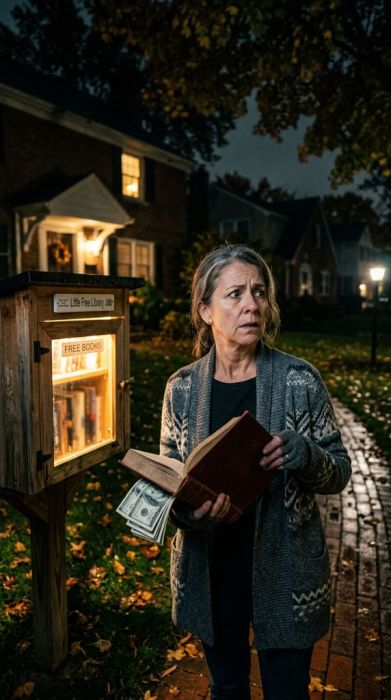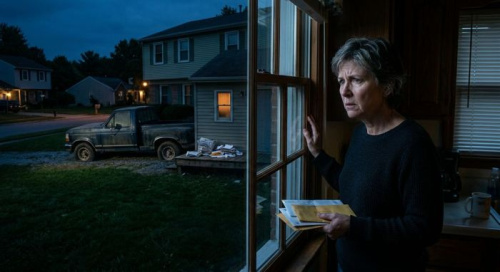
My daughter Jenny showed up at my door at quarter past six on a Sunday with pine needles in her hair and something wrapped in a damp paper towel. She stood on the porch breathing like she had sprinted all the way from the end of the cul-de-sac, which she had. "Dad," she said, "she burns them. I watched her burn them. Every single one." She unfolded the paper towel and held up a scrap of scorched envelope, the corner curled and black, the rest the color of weak tea. Written across the front in looping blue ink were six words: Alan. Open only when you are alone.
I knew that handwriting the way I knew my own. I had watched it produce fourteen messages from my dead wife's mouth. I had paid for every one of them gladly, gratefully, the way you pay for medicine when you are sick and desperate. And my daughter had just found the burned proof that those messages had never come from Carol at all. They had come from the kindest woman on Crestwood Lane — the widow who had held my hand at the funeral, the saint who talked to the dead.
Carol was diagnosed eighteen months before Doreen Voss pulled into the driveway at number 9 with a U-Haul barely bigger than a sedan. The house had stood empty for two years after old Mrs. Pedersen went into assisted living, and we had all assumed a young family would take it. Instead we got a woman in her fifties with silver-streaked hair, long skirts, and the smell of lavender, who introduced herself as a widow and a "spiritual counselor" and did not wait to be asked before she started baking casseroles.
I am a retired fire captain. I have gone into burning houses and pulled people out of wrecked cars, and I am not ashamed to say I have seen things that do not have easy answers. But I was never a man who believed in spirits. I told Carol that straight out, and she laughed and said I just had not been listening hard enough. It was one of the things I loved about her.
In the last months, when the treatments stopped working and the hospice nurse started coming three times a week, Doreen was there almost as much as I was. She sat with Carol on the good days and held her hand on the bad ones. She sent Jenny care packages. She brought over soup when the nights got long. When Carol died on a Tuesday in February, it was Doreen who found me standing in the driveway at three in the morning, and Doreen who sat with me until the sun came up.
The first "reading" happened at the repast. My sister Loretta talked to Doreen for three straight hours, and at the time nobody thought anything of a friendly widow and a grieving sister sharing stories at a folding table. Then Doreen went pale, gripped the edge of the table, and said she could feel someone in the room who wanted to speak. She looked at me with those gray eyes full of pity and said Carol had a message for me.
"Tell him I never finished the blanket," Doreen said, in a voice that was her own but softer, younger, almost shy. I went cold. For twenty years the only person who knew about that blanket — the blue one Carol had started knitting long ago, "for the baby," and never finished — was Carol and me. Loretta did not know. Jenny did not know. I had never told a soul. Carol had kept it folded in the cedar chest at the foot of our bed, with a little note pinned to it that she had written in her own hand.
The first message was a miracle, and the second was a reassurance, and by the third I was writing checks. I know how that sounds. I know it now, sitting here with the full picture, and I still cringe at the man I became. But grief is not rational, and Doreen Voss knew exactly which buttons to push. She did not ask for money at first. The first three visits were gifts, she said, because the spirit world insisted. Then came the "donation" for her foundation — the Veil Foundation, she called it, a charity that "helped grieving families afford counseling." A hundred and fifty dollars for a reading felt reasonable. Five hundred for a "cleansing" of the house, to help Carol's spirit cross over fully, felt necessary. Twelve hundred for a "protection blessing" when Jenny's marriage started falling apart — that one I almost refused, and Doreen looked so wounded that I wrote the check just to smooth it over.
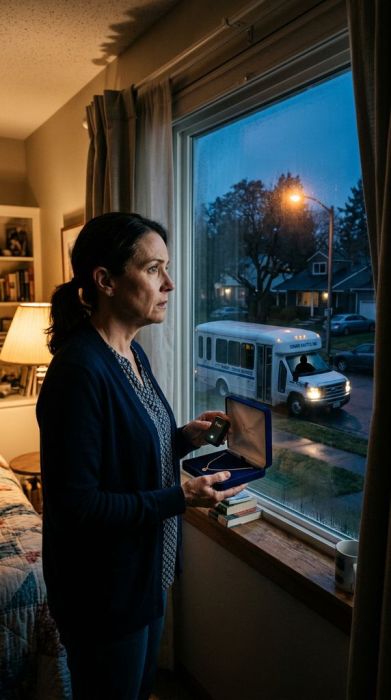
Then, in March, came the big one. "Carol has one more message for you, Alan," Doreen said, holding her hands flat on the table so they would stop trembling. "But it's a heavy one. There's a debt from her past — nothing she did, but something owed — and if it isn't settled, her soul can't rest." She let that sink in, and then she said the full settlement would require four thousand dollars. "I don't set these prices, Alan. I'm just the telephone." I sold Carol's jewelry. Her mother's ring, the pearls, the little diamond studs she had worn on our fortieth anniversary. I told myself Carol would have wanted her soul at rest. I told myself a lot of things.
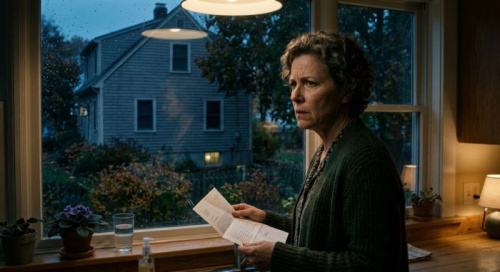
Jenny found the bank statements on a Saturday in April, when she came down to help me clean out the garage. She spread them on the kitchen table with the kind of quiet, terrible calm she had inherited from her mother. "Dad, tell me these aren't what they look like." I tried to explain. I told her about the messages, the blanket, the voice that was softer and younger and shy. Jenny listened to the whole thing, and then she said the most devastating thing anyone had said to me since the funeral: "Dad, Mom would hate that she's being used to hurt you."
She started quietly. She pulled the Veil Foundation's registration, and nothing came back. She called the state charity bureau pretending to be a donor, and the woman on the phone said she had never heard of them. She ran Doreen's address history, and it jumped around the Southeast like a stone skipping across a pond: Orlando, Clearwater, Savannah, then here. Jenny did not say much, but she started taking pictures of Doreen's house from my front window. She noticed the fire pit burned at odd hours. She noticed the "nephew" — a thin, nervous man named Gerald who visited every Friday, carrying banker's boxes out of his car and driving away with boxes in.
Then came that Sunday. Jenny had gone for a walk in the woods behind the cul-de-sac, and through the trees she could see into Doreen's backyard. Doreen was at the fire pit feeding envelopes into the flames one by one. Jenny did not think much of it, until a gust of wind lifted a burning scrap and dropped it, still smoking, on the edge of the woodpile. She watched Doreen stamp it out and go back inside, and then she picked it up. That is the charred corner she brought me. My name, in Doreen's handwriting, on an envelope that was supposed to have been written by the dead.
I was still staring at that scrap when Hank Marchetti knocked on my door. Hank is sixty-eight, a retired county detective who lives across the street, a widower himself. I had always found him friendly but guarded; he watched the street the way a man watches a fire line. He did not say hello. He said, "Jenny called me. Show me the envelope." I showed him. He looked at it for a long moment, then sat down at my kitchen table and told me he had a confession of his own.
"I paid her six thousand dollars after Rose died," he said. "Readings. A cleansing of the spirit. I was a detective for thirty-one years and I fell for it, because she told me things about Rose that she couldn't have known." He had spent six months on his own, quietly, the way he used to work a case. He had run her plates. He had pulled her rental history, her marriage license, her court records. "Her name isn't Doreen Voss. It's Veronica Sharpe. Charged with fortune-telling fraud in Orlando in 2011, dismissed on a technicality. Charged again in Clearwater in 2016, plead out, probation. And Gerald isn't her nephew. He's her partner. He does the background work. He's the one who finds out about cedar chests and blue blankets."
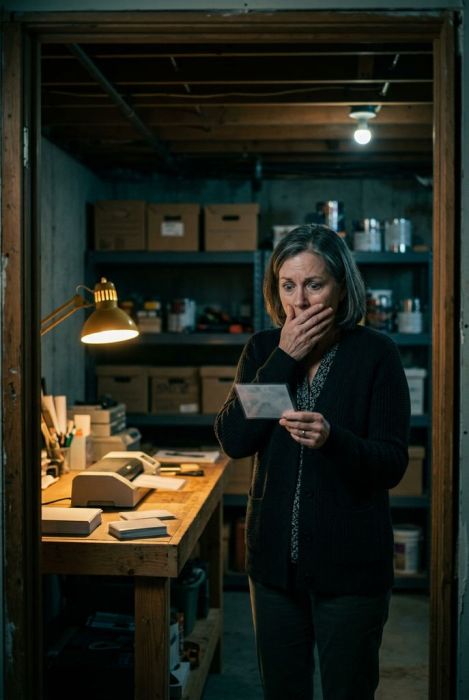
I remember the exact sound my own chair made when I sat down again. Because I had never told a single human being about the blanket, but I had told Doreen an enormous amount without realizing it. She had been everywhere in our house. She had offered to fold the laundry. She had tidied the bedroom while I ran to the pharmacy. She had seen the cedar chest, and she had opened it, and she had seen Carol's handwriting on that little pinned note. Somewhere in a banker's box, there was probably a picture of it.
What Hank proposed was simple, and to be honest I was not sure I had the stomach for it. Jenny's law firm drafted the paperwork — a civil suit for fraud and restitution — while Hank called an old friend, Detective Sergeant Priya Nair at the county sheriff's office. Nair listened to Hank, then to me, then asked for one thing: evidence. The charred envelope helped. The bank records helped. Hank's sworn statement, thirty-one years of credibility behind it, helped a great deal.
The plan was this. I would tell Doreen that the settlement had worked and Carol felt lighter, and that I had one last request. A cousin of Carol's had left me a small inheritance, I would say, and I wanted a "sealing ceremony" to make sure Carol's spirit rested forever and nothing could ever follow Jenny. Her eyes lit up, and she booked it for the following Sunday, the night of her monthly Circle, because she would "have a witness from the other side" — by which she meant Gerald.
On that Sunday evening, Doreen arrived with Gerald, a paper shopping bag, candles, and a laptop "for the foundation's records." I had a hidden camera running in the corner of the living room — Hank's old equipment — with the feed live on his phone across the street. I sat in my own chair and watched my grief become a stage. Doreen lit the candles and burned the sage, and then she began to channel my wife. She told me Carol was tired but happy, proud of Jenny, at peace. Gerald typed the whole time.
Then I asked the question, the one thing I had never once told her, and the one thing the real Carol could never get wrong. "Doreen," I said, my voice cracking the way I had practiced, "Carol knows I've been dreaming about the beach. She needs to tell me the name of it. The one from our honeymoon." Doreen did not miss a beat. She closed her eyes. "It begins with C," she said, drawing out the letter. "Carol says you know the one." She looked at me and smiled.
She was wrong, of course. Carol and I never called that beach by its real name. We called it "the pier," because of the fishing pier, because that was where we had decided to get married, and I had never once called it the pier in Doreen's hearing. The channeling went suddenly, visibly wrong. Doreen stammered, reached for her notebook, flipped pages, whispered to Gerald, who typed furiously and shook his head. "I'm getting a weak signal," she announced. "Carol is tired tonight." And that was the moment the doorbell rang, and when I opened it, Detective Sergeant Nair was standing there with two deputies and a warrant.
What I remember most clearly is not the arrest. It is the look on Doreen's face when Nair said her real name, Veronica Sharpe, and the way her shoulders seemed to come unhinged, like a marionette with its strings cut. Gerald went very, very still. Nair read them their rights while the neighbors drifted out of their houses, drawn by the lights. And in my living room, the phone in my hand showed Hank's feed from fifteen minutes earlier: Doreen, reading from her own notecard, "Alan — sold jewelry, ten thousand, sealing ceremony," written in that same looping blue hand.
At Doreen's house, the deputies found the boxes. Folders labeled with every name on Crestwood Lane. Obituaries printed and cut out. Notes in that same handwriting: "widower, fire captain, $11,700 paid, good mark." "Widow, retired teacher, grieving son, use the son's name." A ledger of donations that the sheriff's accountant later untangled — forty-seven thousand dollars taken from our street in two years. And there, tucked into my own folder, a photograph of Carol's cedar chest with a scribble beneath it: "blue blanket — use at first reading."
The charges were theft by deception and unlicensed fortune-telling, and the district attorney called it what it was: a systematic fraud on the grieving. What broke my heart in the courtroom was the roll call of neighbors who came forward — people I had shared fences and snow shovels with for twenty years, people I never knew had been paying her too. The widow three houses down had handed over her husband's pension. The retired teacher next door had emptied her savings "for her son's protection." Together they had given Doreen Voss more than forty thousand dollars. At the hearing they sat in the same row, holding each other's hands, finally saying out loud the thing none of us had dared to admit in the privacy of our own grief.
Veronica Sharpe took a deal: four years, with restitution ordered for every victim, every dollar of it. Gerald got eighteen months. The Veil Foundation was shut down, and its "accounts" turned out to be prepaid cards run out of a mailbox in a strip mall. The judge signed a lien on her house before anyone could auction it. By fall, a young family moved in at number 9. They bake bread and wave from their driveway, and I waved back the first day, because I had forgotten how good that felt.
I got most of my money back. But that is not the part I think about. The part I think about is the potluck Hank hosted the weekend after the verdict, when the neighbors loaded his picnic table with food and talked about Doreen Voss the way you talk about a fever you survived. And then somebody asked me if I still had any of the envelopes, and I said I had kept one — the only one I had never opened, because I had been saving it for the day I felt strong enough. At dusk, on Hank's back porch, with a dozen neighbors watching, I dropped it into the fire, and we all stood there while it curled and turned to ash. It felt like taking my name back.
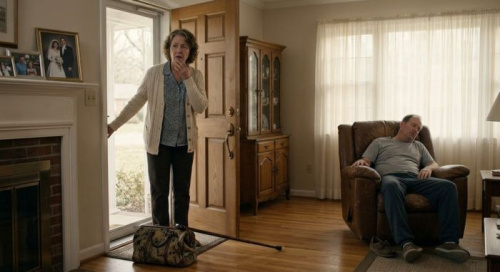
Carol is still gone, and some nights I still wake up reaching for her side of the bed, and that aches and probably always will. But here is what I know now: the dead don't need a telephone. Carol is in the rosebushes I finally planted by the porch. She is in Jenny's laugh, in the way she says "Dad" when she means "I love you." She is in every ordinary Tuesday that Doreen Voss never touched. I don't need a saint to tell me that. I just needed to stop paying one to lie to me.