The calendar said August, but the air felt like a funeral. I sat in that stiff ER chair with Sophie's small hand in mine, watching the monitor beep, and I kept telling myself it was just a nosebleed. Kids get nosebleeds. My own boys used to get them every summer. But Sophie had never had one in her life before this July, and now she'd had three in nine days, and the last one had sent a river of blood down her chin before my daughter Sharon could even grab a towel.
The doctor's name was Patel, and he was patient and kind. He ruled out the scary things one by one — no clotting disorder, no leukemia, no tumor. I nearly collapsed with relief. Then he said the words that changed everything. "Her blood work shows elevated markers for solvent exposure. Toluene, trichloroethylene — the kind of thing we see in people who live near industrial dumping sites. Have you noticed anything unusual about the environment around your home?"
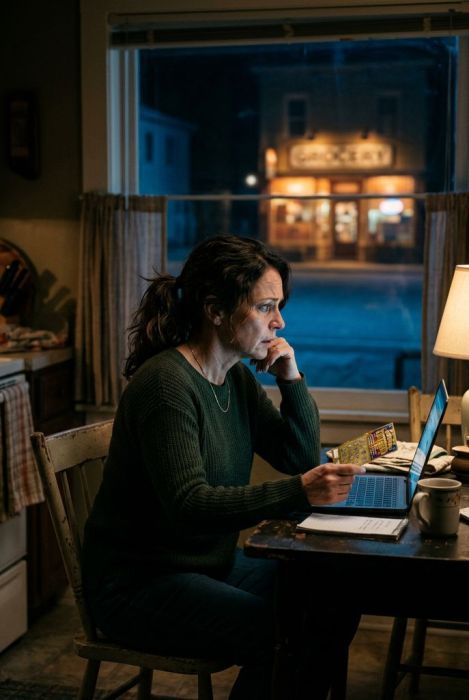
I sat there and felt the whole world tilt. Because yes, I had noticed things. A dozen small things I'd explained away all summer, the way you do, because the alternative was too terrible to hold in your head.
Our backyard had always been the pride of the street. My husband Ray had tended those beds for thirty years, and after he passed, I'd kept them going with the same stubborn love. But this summer the grass had started dying in perfect, strange circles near the fence line. The tomato plants came up twisted and small, their leaves curling like burnt paper. And the drainage ditch that ran behind all the houses on Ross Lane — the one the kids called "the creek" even though it was barely a foot wide — had started wearing an oily, iridescent film after every rainfall.
Then there was the smell. It came and went, mostly at night, a sweet chemical sting that made me close the windows even in the heat. I'd blamed the asphalt plant out on the county road. Everybody did.
But that night, with Sophie's blood work on a clipboard, I couldn't blame the asphalt plant anymore. Something was wrong with our street, and the only person I could think of who might know what it was lived three doors down, in the house with the big gravel driveway and the dented white pickup.
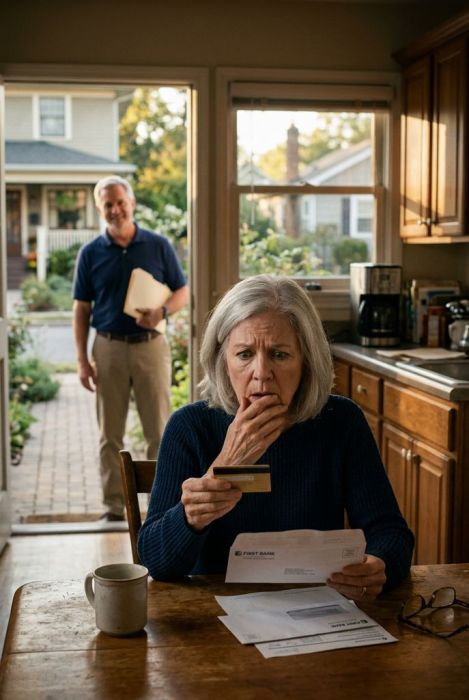
Dale Whitmore moved to Ross Lane six years ago, a widower with a booming laugh and a truck that could swallow a couch. He started Whitmore Hauling out of his garage — junk removal, furniture pickups, the occasional "leave it on the curb and I'll take it" arrangement that made him the most useful man in the neighborhood. When Ray died, Dale was at my door before the sympathy flowers arrived. "Ruth," he said, squeezing my hand with both of his, "I'm taking Ray's workbench and those old paint cans to the dump. Don't you touch a single one. That's man work, and you've got enough on your plate."
He hauled away a ton of stuff that week — paint thinner, the ancient cans of stain, the half-empty drums of solvent Ray had kept for years, enough chemicals to fill the bed of that truck twice over. I'd been grateful. Everyone was grateful. Dale shoveled Mrs. Okafor's walkway in winter and moved Old Man Pemberton's piano for free and never once let anyone pay him more than a gas station coffee.
He was, by every measure, the best neighbor on Ross Lane. Which is why, when I walked out of the ER that night, I still tried to give him the benefit of the doubt. I told myself the chemicals in Sophie's blood could have come from anywhere. Old pipes. The asphalt plant. The hundred-year-old bones of the houses themselves.
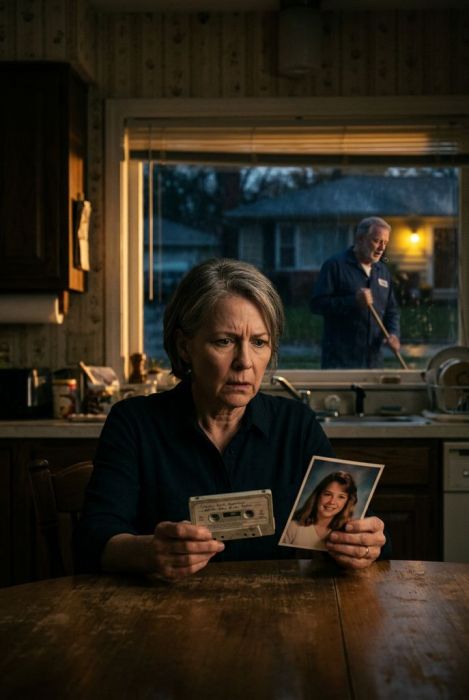
But a grandmother's instinct is older than politeness, and it doesn't let go. I started paying attention to Dale Whitmore the way you pay attention to a strange noise in the dark.
Over the next two weeks, I noticed things I'd missed for years. His truck left the driveway at odd hours — ten at night, sometimes one in the morning, always with the bed covered by a tarp. He'd wave if he saw me, all smiles, but the truck would be gone for two hours and come back lighter. I noticed fresh scrape marks on the fence boards near the old quarry access road. I noticed that the ground on the far side of the Pines — the scrub woods separating our subdivision from the old Norton quarry — looked churned up, like something heavy had rolled over it again and again.
I mentioned it to Harold Pemberton, the retired waterworks chemist on the corner who had been Ray's best friend. Harold listened, pushed his glasses up his nose, and did something that scared me more than anything. He took a jug out of his mudroom and said, "Show me the ditch."
Three days later, Harold came to my kitchen with his test strips and a face like a closed door. "Ruth," he said slowly, "your drainage ditch is carrying trichloroethylene and toluene. Industrial grade. Somebody's been dumping solvent and paint waste up near the quarry, and it's been seeping into the groundwater for years."
I asked if it could be the asphalt plant. He shook his head. "This isn't run-off. This is concentrated. This is somebody opening a drum and tipping it into soft ground, probably on the same schedule, for a long time. Whoever's doing it knows exactly what they're doing."
And that's when I remembered the cans. The paint cans Dale had so kindly hauled away after Ray died. The paint cans that had sat in our shed for years and never leaked, never smelled, never done a thing but gather dust.
Maybe Dale was innocent. Maybe someone else was using the quarry access. But my heart was already cold, because I remembered something else: the grateful tears in Dale's eyes when I'd handed him fifty dollars "for gas." And the way he'd told me, a week later, that he'd "found a better place to take the heavy stuff" — a disposal site that charged him less. He said the county landfill was a racket, and I'd laughed and agreed, because everybody hates paying for disposal.
I didn't laugh anymore. I bought a cheap camera with a zoom lens and started waiting.
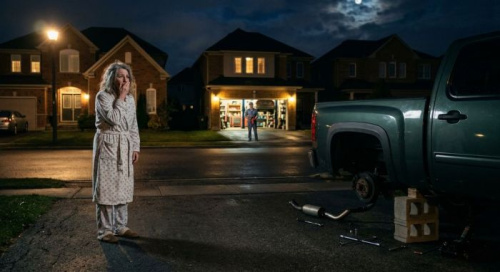
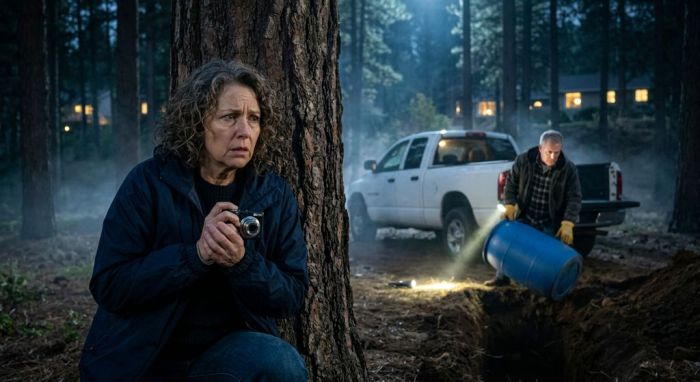
The night I finally saw it, I almost wished I hadn't. It was a quarter past one on a moonless Wednesday, and I was parked in Harold's old Buick at the end of the cul-de-sac with the lights off. Dale's truck came down the lane without its headlights on, rolled past the last house, and turned onto the rutted track leading into the Pines. I followed on foot, the way I'd seen detectives do on television, my heart hammering so loud I was sure he'd hear it.
The clearing wasn't far. And what I saw there made me press my back against a pine and bite my hand to keep from gagging. Dale stood in the wash of his headlights, working fast, dragging five-gallon pails and plastic drums out of the truck bed. He tipped them into a long, wide trench cut into the earth, the black liquid glugging out like syrup, and then he kicked loose soil over the top, the way you'd bury a dog you didn't want to think about.
One of the drums had a torn label. I couldn't read all of it through the zoom, but I caught the name: KESSLER EXTERIORS. A painting and demolition company out of Cleveland, the kind I'd seen on highway billboards a hundred times.
I took forty photographs that night. Harold took water samples from the trench the next morning, wearing rubber gloves like a surgeon, and drove them straight to an old friend at the county health lab.
The report came back worse than before. The trench was a chemical time bomb, contaminating the groundwater that fed the whole subdivision's wells and the little creek that ran down to the elementary school where Sophie was in second grade.
I don't have to tell you what I felt. I'll just say that I have never, in sixty-three years, felt anything close to that cold, shaking rage. The man who'd dried my tears at Ray's funeral had been poisoning my granddaughter's playground. He'd hauled away my husband's old chemicals — and very likely added them to his own dump pile, mixing fresh poison with ours, all while holding my hand and calling me neighbor.
Part of me wanted to go to the police that same afternoon. But Harold, wise Harold, talked me down. "We need the paper trail, Ruth. We need to know who's paying him and how long this has been going on. You go to the cops now and he sees one patrol car, that trench gets covered and every drum disappears by morning."
So we did it the slow way. Harold's friend at the county records office found that the quarry land had been quietly purchased eight years earlier by a shell company with ties to Kessler Exteriors. A retired deputy Harold knew from his fishing club pulled the company's permit history: three environmental citations in two counties, all paid quietly, none reported in the news. And then, in the middle of our research, Dale got bolder.
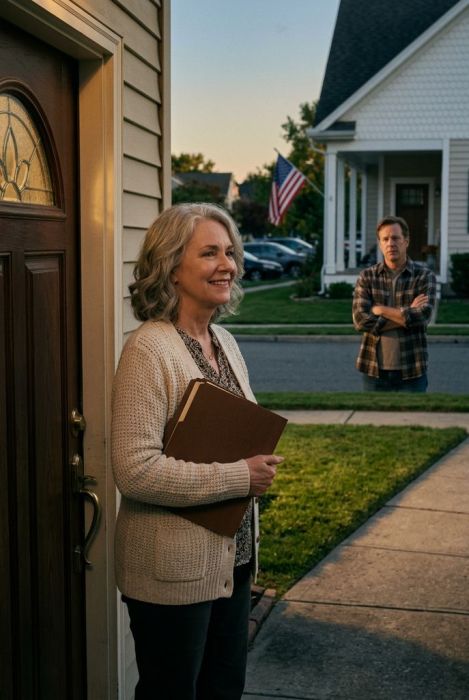
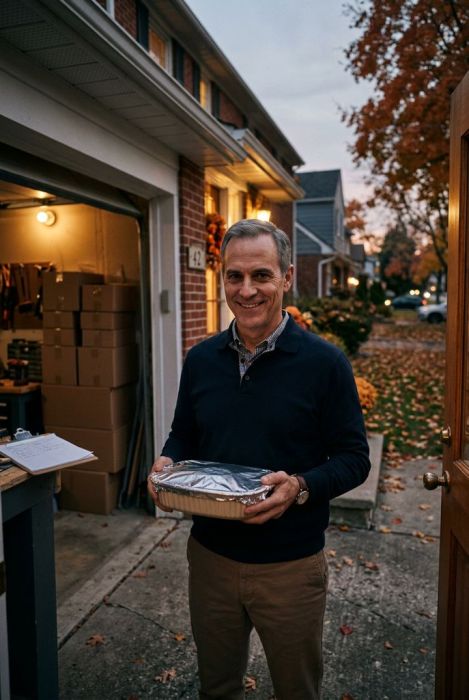
He showed up at my door one evening with a casserole, the way he always did when someone on the street was in "trouble." "Ruth," he said, smiling his good-neighbor smile, "I heard you've been out walking late. The woods behind the quarry aren't safe at night. Coyotes. Cougars, even. I'd hate for anything to happen to you."
It was a threat wearing a smile, delivered over a dish of free pasta. I thanked him, took the casserole, and locked every door in the house. Then I called Harold and told him we needed to move faster.
The twist came from the last place I expected it: Dale's own wife, Carol.
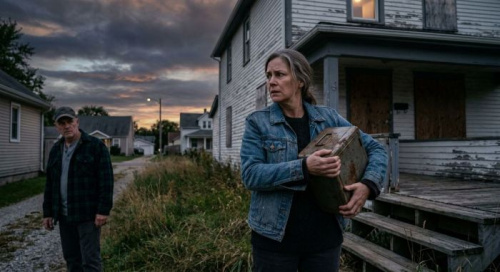
I hadn't seen much of Carol Whitmore in years. She kept to herself, thin and quiet, the kind of woman who apologized for taking up space. But two days after the casserole, she came to my back door at eleven in the morning, pale as paper, holding a cardboard box.
"You're looking into the quarry," she said. Not a question. "I've known for three years. I've been so ashamed I couldn't sleep. Dale isn't a bad man, Ruth. He's a drowning one. The contractor promised him fifty grand a year to take the waste off their hands, cash, no questions. Dale told himself it was fine. It's not fine. Sophie's in the hospital because of it, and I can't — I can't carry this anymore."
I want to tell you I hugged her. I didn't. I stood in my doorway with my arms crossed and let her cry, because I was too full of anger to be kind. But I took the box. It was full of Dale's ledgers — every dump run, every date, every barrel, every cash payment from Kessler Exteriors, recorded in neat columns like a farm ledger for the IRS. My husband Ray had kept books exactly like that. It's what made me trust Dale in the first place. And now that same neat handwriting was going to end him.
Harold and I brought the ledgers, the photographs, and the lab reports to the county district attorney. She didn't need convincing. She'd had twelve complaints from parents on our street over the past two years — kids with rashes and nosebleeds and headaches — complaints she'd never been able to tie to anything. Now she had everything: the dumping, the fraud, the environmental charges, and one very frightened whistleblower willing to testify. Carol.
We set the trap in the clearing. Harold's friend at the county installed a hidden camera and two marked drums. On the last Tuesday of September, Dale Whitmore and two employees of Kessler Exteriors drove their trucks up the quarry track at 1:05 in the morning, loaded with the marked barrels.
I watched it happen from the tree line, and this time I wasn't alone. Sheriff's deputies waited along the access road, and two EPA agents sat in a dark sedan a quarter mile away. When Dale pried the lid off that first marked drum, the woods lit up like a football stadium, and half a dozen doors opened at once.
I expected him to run. He didn't. He just stood there with the crowbar in his hand and watched the deputies come, and when they read him his rights, he looked up at the trees — I could swear he looked straight at me — and his shoulders sagged. For one second he wasn't the saint of Ross Lane at all. He was just a broke, tired man who'd taken the wrong money and buried it in the ground where our kids played.
The cleanup took nine months and cost Kessler Exteriors every dime it had. The company's owner, Brad Kessler, was convicted of environmental crimes, fraud, and conspiracy, and he is still in prison as I write this. Dale Whitmore got four years and a six-figure restitution order. Carol divorced him, moved to her sister's in Michigan, and sends me a Christmas card every year. I never wrote back, but I stopped throwing them away.
The trench was excavated and the soil hauled to a licensed facility, drum by drum, including the ones Dale had so kindly taken from my shed after Ray died. Every family on the street was offered free water testing. Sophie's numbers dropped back to normal within a year. She's eleven now, and she plays in the creek again — the one they cleaned up and restocked with minnows.
As for me, I don't take casseroles from neighbors anymore without asking questions. Ross Lane looks the same as it always did — mailboxes, fireflies, kids on bikes — but we're a little wiser now, and a little kinder to the quiet people. We learned the hard way that the kindest face on the street can hide the darkest secret, and that the smell of fresh paint on a summer night isn't always a renovation.
Harold still calls me every Sunday. Last month he told me the county bought the old quarry land and turned it into a walking trail. They named it after a seven-year-old girl who nearly lost her health to somebody's greed. If you ever drive past Ross Lane, the sign is right there at the tree line. It says: Sophie's Woods. No dumping. Ever again.