The night the hum started, I blamed the refrigerator.
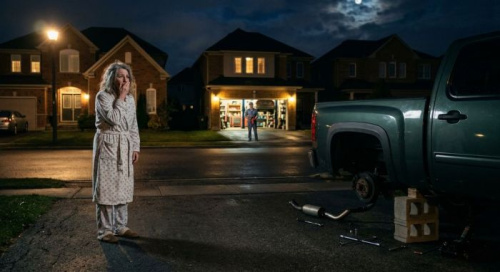
It was almost two in the morning in late September, and I stood in my kitchen in my robe, one palm pressed against the freezer door, telling myself the noise was just the compressor cycling. But the compressor wasn't running. And the sound wasn't coming from the kitchen at all.
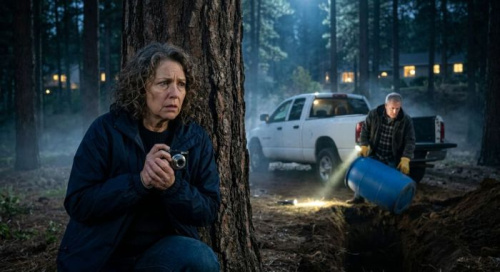
It was coming from outside, from the strip of grass between my house and Ray Mercer's. A low, steady vibration I could feel through the soles of my slippers, rising out of the earth itself like a held breath. It wasn't a motor, not exactly. It was the whole yard humming one flat, endless note, and it put a chill up my spine that had nothing to do with the September air.
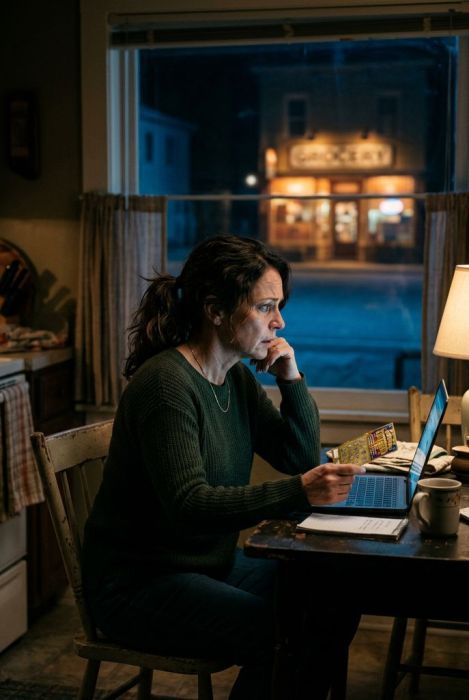
The next morning, the power bill landed in my inbox, and I nearly dropped my coffee.
$438.47. My average bill was a hundred and forty dollars. Even in the worst heat of summer, when my window air conditioner ran day and night, I had never topped two hundred and eleven. I checked the account number. I checked the dates. I called the utility company, and the young woman on the phone patiently read the numbers back to me and assured me the meter was functioning normally.
"Sir, your usage tripled starting about six weeks ago," she said. "It's been steady and consistent since then. That's not a spike. That's a draw."
A draw. I didn't know yet how right she was.
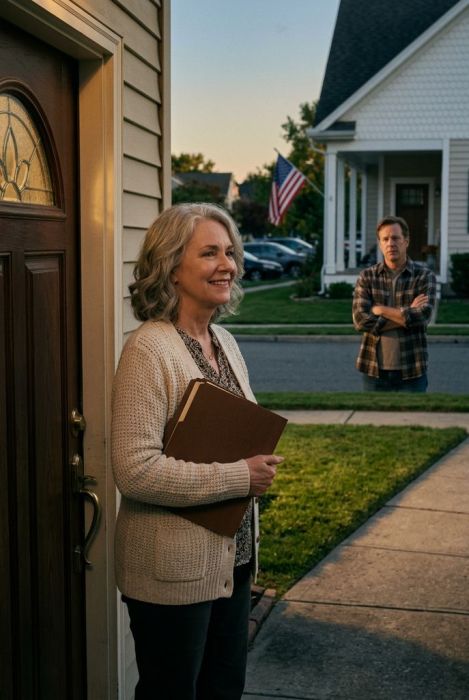
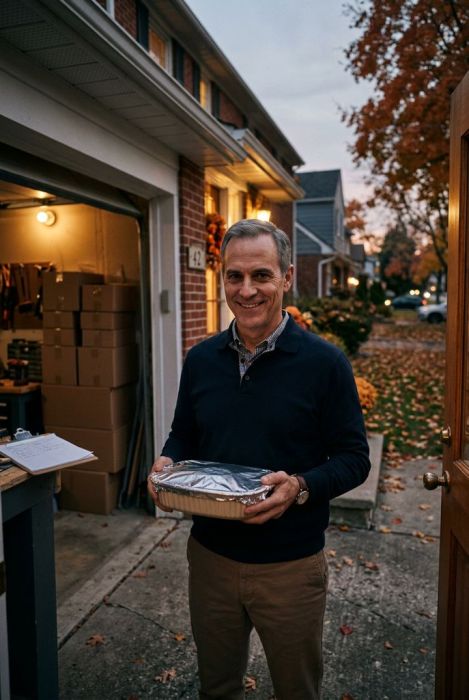
Ray Mercer had lived next door for thirty-one years. He was a retired master electrician, a big silver-haired man with kind eyes and a toolbox that seemed to contain answers to every problem in the neighborhood. When Mrs. Alvarez's fuse box sparked and smoked last winter, Ray was there in fifteen minutes with a new breaker panel, and he wouldn't take a dime. When the church hall's lights flickered during the Easter service, Ray climbed a ladder in his good suit and had it fixed before the closing hymn. He ran the tool-lending shed at the community center every Saturday, teaching teenagers how to wire lamps and repair toasters, and he always had a thermos of coffee and a story for anyone who stopped by.
He was, in every way that mattered, the good neighbor. The one you waved to. The one you trusted with your spare key, your ladder, your seventeen-year-old son who thought he could rewire his own bedroom light — he couldn't, and Ray fixed it, and then he taught the boy how to do it right.
So when I found him in my driveway two days after the bill arrived, holding his multimeter and looking at my breaker panel with a worried frown, I felt nothing but relief.
"Dan," he said, shaking his head, "I don't like the look of this. I was out checking my own line and I noticed your meter spinning like a top. You mind if I take a look?"
I didn't mind. I was grateful. Ray spent an hour in my basement, tracing wires, muttering to himself, and finally came upstairs wiping his hands on a red rag and telling me the problem was my aging sub-panel — it had a slow drain, a ghost draw, nothing dangerous, but it would keep costing me money until I replaced it. He could get the parts wholesale. He'd do the work himself, for free, because that's the kind of man he was.
"Just don't tell anyone I'm going soft," he said with that warm laugh, and I clapped him on the shoulder and felt lucky to live next to a man like Ray Mercer.
The bill the next month was $451.09.
I called the utility company again. They were patient, then apologetic, then slightly annoyed. The meter was fine, they said. The readings were accurate. If anything, they suggested, maybe I should have a licensed electrician check the property.
I told them I already had.
That was when I started paying attention.
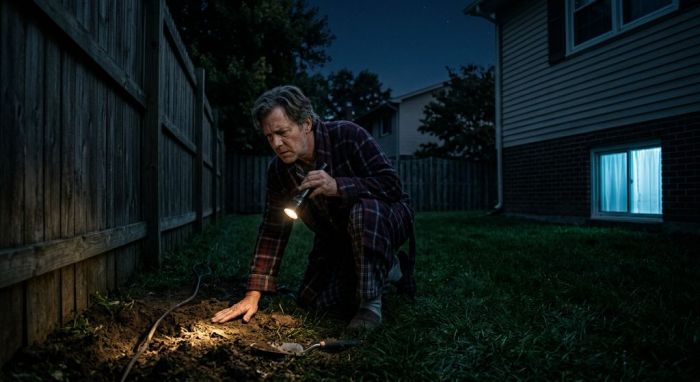
It's funny how quickly a suspicion, once planted, begins to grow roots. Suddenly I noticed things I'd been looking at for months without seeing. The patch of grass along the fence line, for example, was always a little greener than the rest of my yard — the grass directly above where the ground stayed warm. I'd assumed it was a sprinkler leak. But when I knelt down one evening and pressed my palm to the earth, the ground was warm to the touch, and I could feel that same low hum I'd heard through my kitchen floor, right there under the sod, like something buried was alive.
Ray's basement window glowed at night. Not the ordinary yellow of a lamp or a television — a pale blue-white light, steady and cold, that spilled out from the gap in the curtains between two and five in the morning. I told myself he was working late on a project. Ray was always working on something.
Then there were the trucks. Once or twice a month, a plain white box van with no logo would pull into his driveway at odd hours, and Ray and a younger man would unload large cardboard boxes and carry them straight down the basement steps. Furniture, I told myself. Supplies for the workshop. It was none of my business.
But the bill kept climbing, and the hum never stopped, and one night in early November I got up at 3 a.m. for a glass of water and looked out the kitchen window to see Ray Mercer standing at my meter box with a flashlight, a screwdriver in his hand.
He was there for two minutes. I watched him the whole time, my heart hammering, too frozen to move. When he finished, he clicked the flashlight off, walked back to his own yard, and disappeared around the corner of his house without once looking at my window.
The next day, my bill dropped by exactly a hundred and twelve dollars.
I should have called the police then. I should have called anyone. But Ray Mercer was the man who fixed Mrs. Alvarez's fuse box for free. He was the man who taught my son to wire a lamp. When I walked outside that morning, he was on his porch with two cups of coffee, and he waved me over with that easy smile and asked if my power had been behaving itself.
"I think we got it licked," he said. "That sub-panel was the culprit, sure enough."
I took the coffee. I said thank you. And I went back inside and locked my door, feeling, for the first time in thirty-one years, afraid of my own next-door neighbor.
Here's where I have to mention my son, Tommy. Tommy's forty-two now, a network engineer for a company in Columbus, and he visits every few weeks with his wife and my two grandkids. He's the only person in my life who talks about computers the way Ray talks about wiring. When he came over for Thanksgiving, I mentioned, half-joking, that I thought our neighbor was running some kind of alien spaceship in his basement.
Tommy didn't laugh. He got very quiet.
"Dad," he said slowly, setting down his plate, "you said the ground's warm by the fence, and there's a hum, and the basement glows blue-white at night, and the bill tripled but dropped when he touched your meter?"
"Yeah," I said. "Why?"
Tommy looked at me like I'd just told him there was a bear in the backyard. "Because that sounds exactly like a crypto mining rig. A big one. Those things draw more power than a whole house, Dad. Sometimes they're so loud and hot people run them out of warehouses. If he's tapped into your line, he's not stealing power — he's making you pay for his electricity while he mines coins."
I stared at him. "Ray? Ray can barely use email."
"That's what makes it such a good cover," Tommy said. "That's what makes it so smart. Who's going to suspect the retired electrician? He's the one person on this street who could pull it off without ever getting caught. Dad, if he bypassed your meter, that's theft of service. That's a felony in Ohio. And if he's been doing it to you, he's been doing it to everyone."
For the first time in weeks, I felt something other than fear. I felt angry.
We made a plan that night, Tommy and me. He was the engineer; I was the retired history teacher with nothing left to lose. While Ray was at his Saturday workshop at the community center, Tommy came over with a thermal camera and a circuit tracer, and we went through my basement panel wire by wire.
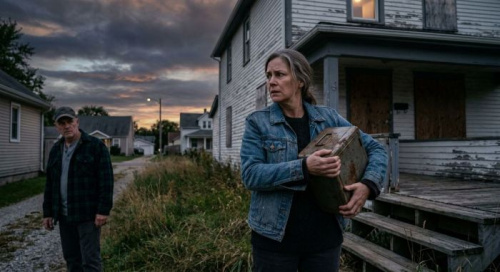
It took about an hour to find it. Behind the sub-panel, tucked against the wall where the insulation had been disturbed, there was a second box — unmarked, unlabeled, not in any permit record on file with the city. Inside that box, a heavy gauge cable ran out through a hole drilled in the foundation, straight toward the fence line. Tommy traced it with his equipment, following it through the grass to where it disappeared into the ground at the base of the fence, then resurfaced twenty feet later at the base of Ray's house.
And then we found the second one. And the third.
Ray had tapped not just my line, but Mrs. Alvarez's, and the Youngs' at number 12, and the old Vickers house that had been standing empty since Mr. Vickers passed. He'd been routing their power into his basement for months, running his machines on everyone else's dime, and the "slow drain" he'd blamed on my sub-panel was him, all along, apologizing for a problem he'd created and then "fixing" it just enough to keep me quiet.
I called the utility company's fraud division that Monday morning. I called the county sheriff's office. And I called my brother-in-law, Stan, who had spent thirty-five years as a lineman for the power company and knew a bypassed meter the way Ray knew a breaker panel. Stan confirmed everything. He told me exactly what to photograph, exactly what to save, and exactly how long the evidence would hold up in court.
The raid happened on a Thursday morning in December, when the street was quiet and the frost was still white on the lawns. Two sheriff's cruisers, a utility company truck, and a forensic electrician from the state pulled up in front of Ray's house without a single siren. I watched from my living room window, coffee going cold in my hand, as they went through the front door and, twenty minutes later, came back out with Ray in handcuffs.
He looked smaller somehow. Older. The big silver-haired man who fixed everything for free walked out of his own house in his robe and slippers, his hands behind his back, and for one brief moment he looked across the lawn and caught my eye.
I thought he'd look angry. I thought he'd look defiant. Instead, he just looked tired, and I heard him say, quiet and flat, to the deputy beside him: "I was going to pay everybody back. I was always going to pay them back."
The forensic team spent the rest of the day in his basement. They found forty-seven mining rigs stacked on steel shelves, each one running a bank of graphics cards, each one drawing power like a small furnace. They found the bypassed meters, the buried cables, the ledger Ray had kept in a shoe box, itemizing every household he was tapping and exactly how much money he'd "borrowed" from each of them. He'd been running the operation for eleven months. In that time, he'd mined somewhere north of a quarter million dollars in digital currency, while the people he called his friends paid his electric bill and told their grandchildren what a wonderful man he was.
Ray Mercer was charged with theft of service, a second-degree felony in Ohio, along with tampering with utility equipment and a dozen counts of fraud. He pled guilty, because the evidence was what Stan called "slam dunk." He lost his house, his pension, his reputation, and the tool-lending shed at the community center that he'd used, for thirty-one years, to build the trust that let him steal from us all.
The utility company issued credits to every household he'd tapped. My bill went back to a hundred and forty dollars a month. Mrs. Alvarez got her money back, and then some. And the hum that had kept me awake for months — the low, steady vibration in the earth behind my house — finally, mercifully, stopped.
I don't think about Ray Mercer much anymore. Sometimes, when I'm out in the yard and the ground feels a little too warm, I kneel down and press my palm to the grass, just to be sure. Tommy laughs at me and says I'm paranoid. Maybe I am. But the man who taught my son to wire a lamp also taught me that trust is the most valuable currency a neighborhood has, and the people who ask for it most loudly are sometimes the ones who want to spend it.
The Youngs put up a block party sign that spring. Someone hung a banner over the community center that said "LARKSPUR LANE, MINE-FREE SINCE DECEMBER." It made me laugh, that sign, and it still does. The tool shed sits open again on Saturdays now, and a kid from the high school runs it, teaching the younger ones how to fix lamps and repair toasters, the way Ray used to. The kid is good at it. He's honest, too, which is the part that matters.
And on the warmest nights, when I sit on my porch and listen to the crickets and the sound of a neighborhood that no longer hums with anyone's secrets, I feel something I hadn't felt in a very long time. I feel safe. I feel home. And I finally understand that the peace you build with your own two hands, on ground you've earned, is the one thing nobody can ever wire around.