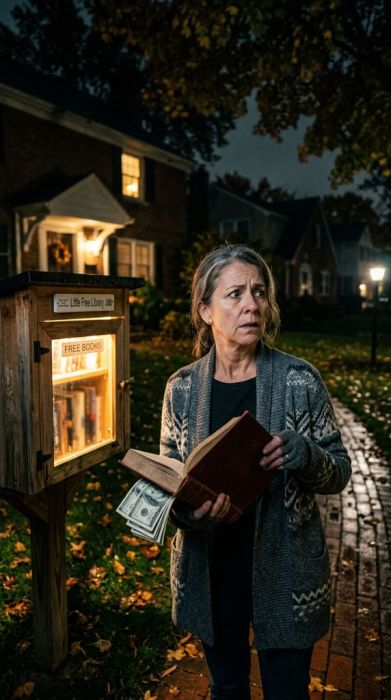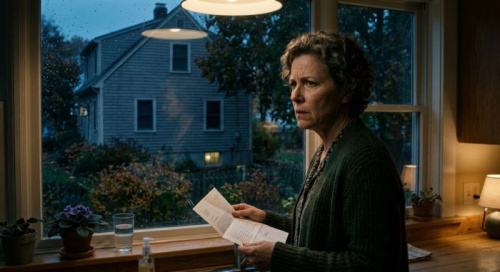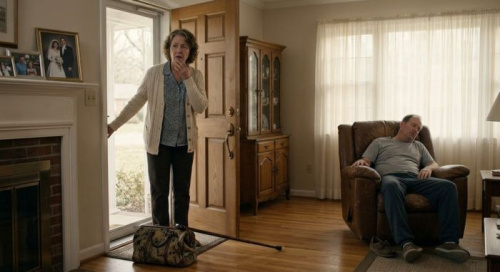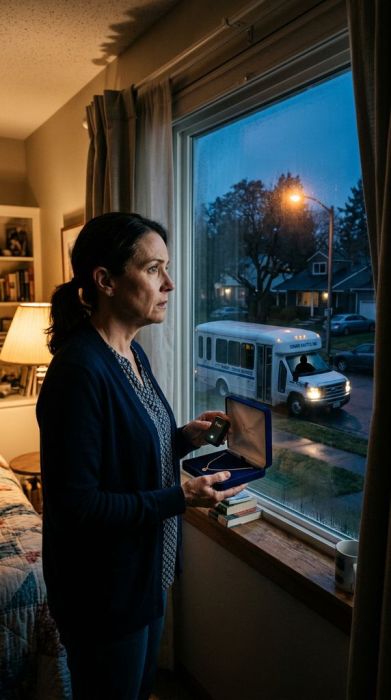
The clerk smiled the way clerks do right before they ruin your afternoon. "Ma'am, I just need you to confirm something for me," she said, and turned her screen around.
On the screen was an Ohio driver's license. The name on it was Frank R. Malone — my husband of thirty-four years, gone since April. The face above the name was not his. It belonged to a sharp-jawed stranger in his forties with a crew cut and a practiced smile, the kind of face you forget the second you look away.
"Someone renewed this license last October," the clerk said softly, as if that made it easier to hear. "Eight days after the funeral."
I had come to the DMV for the most ordinary reason in the world. My daughter Beth wanted to borrow Frank's old station wagon, and you can't drive a dead man's car on his plates forever. I planned to be in and out in twenty minutes. Instead I stood at that counter gripping the edge of the laminate like the floor had tilted. In the eyes of the state of Ohio, my husband was alive — and somebody else was wearing his face.
Frank died on an April morning the way he'd done everything else, quietly and in the middle of something kind. He was pruning the rosebushes along the porch, told me he'd be inside for coffee in ten minutes, and by the time I found him the neighbors had already called it in. The paramedics did everything they could. Beth and I held each other on the front steps and watched the ambulance leave without its lights on, and that was the moment our street became one of those streets.
People bring casseroles. People say the right wrong things. But Ray Dumont, two doors down, did something nobody else did — he came over the morning of the service with a box of printed programs he'd made himself, free, with a picture of Frank on the front and a verse on the back. "You shouldn't have to think about a single detail right now," Ray said. "That's what neighbors are for."
Ray had lived on Hawthorne Court for eleven years. He ran Dumont Design & Print out of his house — the white colonial with the green shutters and the perfectly kept lawn — and he was, without exaggeration, the most useful human being on the street. He printed the church bulletins, the food pantry flyers, the school play posters, and the Fourth of July banners. He fixed the office printer at the elementary school where I used to work. He never charged full price. He never charged widows anything.
Ray cried at Frank's service. I remember thinking how strange that was, that a man I'd only ever waved at should be so moved, and then I thought it was noble. In the months that followed, he brought sympathy cards for me to sign and mailed them for me. He offered to handle the beneficiary paperwork — "You shouldn't have to look at numbers at a time like this," he said — and I told him the bank was handling it. He printed a beautiful invitation for Sophie's sixteenth birthday in June, with a watercolor of the lake on it, and wouldn't take a penny. He shoveled my walk that first storm. Everybody loved Ray, and I did too, because he made the world feel less broken.
The first thing that felt wrong happened in September, and I talked myself out of it. A woman from the downtown branch called, polite as could be, to ask whether I'd opened a new account in Frank's name at a Columbus location. Same social security number. Small deposit, one hundred dollars, then nothing. "Sometimes they open one just to test if the number still works," she said. "I'm sorry to be the one to tell you."
I hung up and stood in the kitchen with the phone in my hand. I told myself it was a mistake, a data glitch, some poor clerk in Columbus with a fat finger. I froze Frank's credit the way the fraud department told me to. I kept his death certificate in the top drawer of the desk, the same drawer for twenty years. What more could anyone want from a man who was already gone?
Then Sophie's learner's permit arrived two days late, and the envelope had been opened and re-glued. The mailman shrugged. Beth laughed it off, but she noticed something else on the way back from her evening runs: the light in Ray Dumont's basement was on at 2:47 in the morning. Every Thursday. "Mom, printers work at night," she said, quoting him. "That's what he tells everyone."
The UPS truck came every other Thursday morning and left a heavy box on Ray's porch. I saw it once, half-wrapped in brown paper, and the label said card stock. Nothing about a man's basement burns at 2 a.m. for card stock. But he printed for the whole county, I reminded myself. Big jobs. Tight deadlines. That was all.
In early November, Ray came over with a flatbed scanner and a roll of plastic sleeves for me to keep my old photos in. "You said you've been meaning to digitize Frank's pictures before they yellow," he said. "Use mine. Take your time." I was so touched that I made him a pot of coffee and we sat in my kitchen while he told me about his ex-wife in Kentucky and how proud he was of his daughter, the one who never visited. He was just a lonely, decent man. That's what I thought.
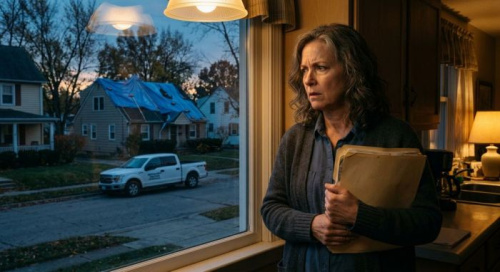
On the last Tuesday of November, I carried the scanner back to his house. His truck was in the driveway and the side door — the one that opens onto his workshop — was standing open, so I let myself in the way neighbors do in a neighborhood like ours. I called his name. No answer. I set the scanner on the workbench by the stairs and was turning to leave when I saw the basement door, open a crack, spilling yellow light.
I should have left. I know that now. But I was a woman who'd watched her husband die, and something about that light had to do with him, and I couldn't make my feet go back up the steps. I went down, telling myself I was looking for a power cord.
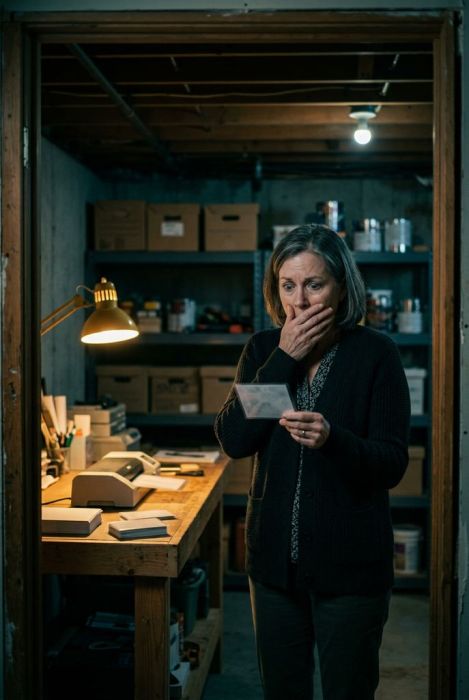
The basement was not a basement. It was a print shop, laid out like a small factory. A laminating machine sat on the long table, still warm. Racks of blank cards hung from the wall. And on a drying rack, in neat rows like leaves ready for a book, were laminated state IDs with county seals — driver's licenses and even a pair of birth certificates. I picked one up the way you'd pick up a snake.
It was a driver's license in the name of Frank R. Malone. The photo was the same sharp-jawed stranger from the DMV screen. The address on it was our house on Hawthorne Court.
I almost dropped it. I stood in Ray Dumont's basement in my good coat, holding my dead husband's name in a stranger's face, and the room went very quiet around me. On the far shelf sat a three-ring binder with tab dividers. I didn't want to open it. I opened it anyway. Tabs from A to Z, names inside — dozens of them, with dates and bank names and social security numbers written in neat pencil. The M tab had five names on it. Mine was the sixth.
I heard his truck pull into the driveway while I was still standing there. I don't remember going up the stairs. I remember being in my own kitchen and realizing my hands were shaking hard enough to rattle the glass in the cabinets. I called Beth and told her I'd found something, and I read her the names I could still see in my head.
Beth wasn't just my daughter. She was a loan officer at the credit union, and she'd spent eight years learning to read the shape of a lie in a number. She came straight over with Mike, her husband, who was a deputy for the county. Mike listened to everything — the DMV license, the Columbus account, the 2 a.m. lights, the binder — and then he did something I didn't expect. He laughed, quietly, the way people laugh when a puzzle finally snaps.
"Patsy," he said, "you just found a quarter of what the Secret Service has been looking for since July."
I stared at him. "The Secret Service?"
"They've been chasing a document mill for months," Mike said. "Somebody in our part of the county has been turning stolen identities and public-record death certificates into clean, printable IDs. Driver's licenses, birth certificates, even utility bills to go with them. Twelve dead people from three counties that they know of. They didn't have a location. They had a ghost printer with a laminator."
I sat down, because my legs had decided they were finished with me. "Twelve dead people."
"At least," Mike said. "Honey, you and Frank make fourteen that we know of."
Mike made a call. Two nights later, a woman in a sensible coat knocked on my door and showed me a badge — Special Agent Whitmore, U.S. Secret Service — and I learned that identity fraud is exactly the kind of quiet crime that keeps them busy. She asked me, very politely, whether I could remember details from the binder. I could. Maiden names. Bank names. The M tab. She wrote it all down and told me to go about my life and to act like nothing had happened.
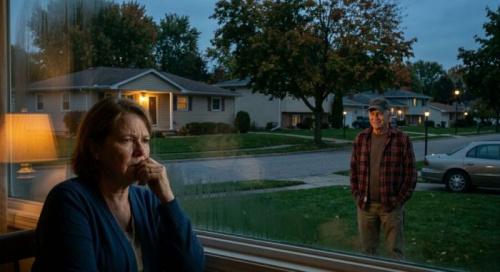
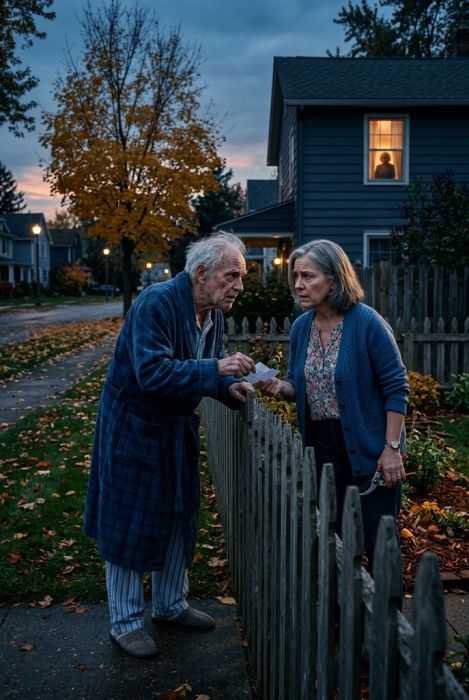
Acting like nothing had happened was the hardest thing I've ever done. Ray waved at me from his driveway the next morning. I waved back with both fingers open. He came over that afternoon with a plate of brownies wrapped in foil — his aunt's recipe, he said — and stood on my porch for a long minute, smiling. "You know," he said, "a man in my line of work likes to know his neighbors. Keeps the street quiet." I said I understood. He looked at me a beat longer than a man should look at a widow, squeezed my shoulder, and said: "Good. I'd hate to lose you."
That night I didn't sleep. I locked the doors, both locks, for the first time in thirty-four years.
The plan, when it came, was almost mundane. The county food pantry held its annual December drive and barbecue at the community center, the same one Ray printed banners for every year. Whitmore told me the buyer's side of the operation had been looking for a supplier with clean Ohio documents, and the agents had decided the easiest way to meet Ray Dumont was to place a truthful order: a full set — license, birth certificate, utility bill — for a person who did not exist. The undercover agent would pay cash at the barbecue, the way business on Hawthorne Court always got done. Loud music. Coolers. Nobody pays attention at a barbecue.
I went that morning because I always went, and because Whitmore asked me to be normal. I brought my macaroni salad and I didn't look at Ray. He flipped burgers in a red apron like he'd been born with it, and the whole street lined up for his cooking, and I watched people laugh with a man who had my name in a binder in his basement.
The buyer came at noon — a compact man in a windbreaker who shook Ray's hand and talked too loud about a nephew who needed a "replacement" license. I saw Ray glance toward the parking lot before he nodded. I saw him walk to the back of his truck and come back with a manila envelope.
That's when the two beige unmarked SUVs came down the street and pulled into the lot, and four people in windbreakers walked across the grass the way people walk when they know exactly where they're going. They arrested Ray Dumont at the grill, in front of the whole neighborhood, while he was still holding the tongs. I'm not going to pretend I felt sorry for him. I felt the ice leave my chest. I felt Beth's hand find mine, and Sophie's arm come around my waist, and I realized we were all watching the street meet the truth at the same time.
The trial filled in the details I hadn't been allowed to know. Ray's print shop had gone bankrupt in 2014, the year before he moved into the white colonial. His ex-wife had taken the house in Kentucky. The business had been a shell for years, and the basement was its real product. Agent Whitmore testified that they found 41 complete identities in the binder and the drying racks, at least 14 of them belonging to people whose obituaries Ray had clipped for the church prayer list — the same prayer list he volunteered to keep, the same list that let him know exactly which names would never complain. The victims can't call the bank. That was the point. Even the sharp-jawed face on Frank's license belonged to a man the agents had already tracked for a year; they picked him up in Baltimore three weeks after the barbecue.
He'd clipped our neighborhood's obituaries for eleven years. He'd printed Frank's program while he was cataloging Frank's death certificate from the county recorder's public database. He'd offered to handle my beneficiary paperwork. When I'd thanked him for the scanner, he'd already had my name in the M tab.
Ray pleaded guilty to identity theft, aggravated identity fraud, and possession of document-making implements. He got nine years in federal prison, and the judge ordered his house and equipment forfeited. The white colonial with the green shutters sat empty through the winter. The county sent restitution letters, small checks, apology forms. I didn't cash mine. I put it in the top drawer with Frank's death certificate, because that drawer deserved a better story than the one it had been telling.
The street changed, but not the way you'd expect. Nobody blamed each other, and nobody pointed at the house and whispered — we'd all loved Ray, and we all had to live with that. We put a neighborhood watch sign at the end of Hawthorne Court, printed by a real print shop in town, and I laughed about it at the meeting and everyone breathed a little easier. Mike came to the meeting in uniform and told everyone to freeze the credit of anyone who had died in the last decade. Sophie took her road test in June. She parallel parked in front of Ray's boarded-up house without flinching, and she passed.
I sat on my porch this morning with my coffee, the way I've done every day for two years now. The mail came and I opened it without a second thought. The young couple with the baby moved into the white colonial, and they'll never know why half the street baked them pies, and that's fine. In the top drawer of my desk, Frank's death certificate sits next to a framed letter from the U.S. Secret Service, both of them proof that even in the quietest neighborhood, somebody has to be the one who looks.
Frank used to say the roses were the only thing on Hawthorne Court that kept a secret. He was wrong. But I like to think he'd be proud of the way his name finally got some justice — and that somewhere down in Baltimore, the stranger who wore his face got to learn what happens when a widow decides to stop being afraid.