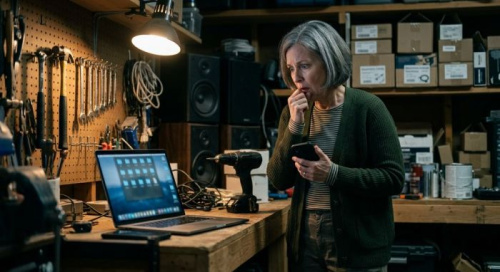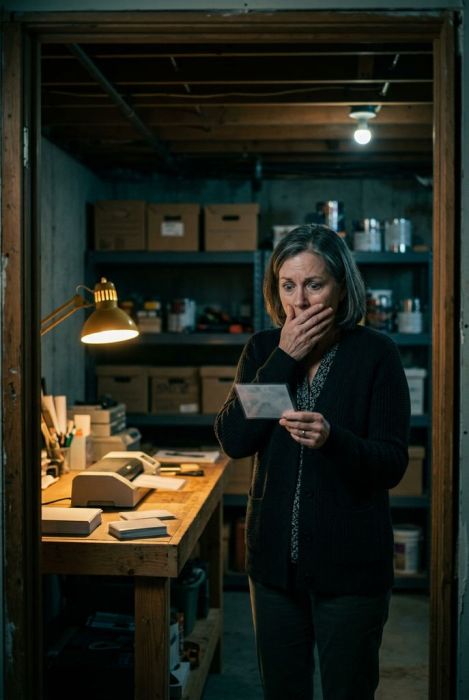
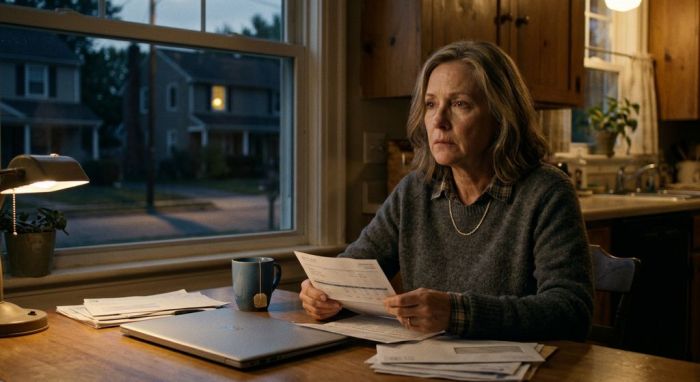
The bank called me on a Tuesday afternoon to ask a simple question that stopped my heart: was I standing in front of an open laptop? The young woman on the other end read off the last four digits of June Harmon's account, then she read off the balance. At first, I thought I had misheard her. I made her repeat the number. She did. And the number did not change.
It was June's money, not mine. But June had added my name to that account the year before, right there at the teller's window, so I could help her pay her bills when her hands gave out. In the three years we had been friends, I had watched her treat every single penny with the reverence of a woman who taught second grade for forty years and planned to make that retirement last. She balanced her checkbook by hand. She cut coupons into neat squares. She did not throw money around.
And yet the quiet voice on the phone told me forty-one thousand dollars had moved out of June's account. It had gone into a holding account I had never heard of, and then it had sailed out into the dark, leaving behind only a long, cold receipt of a life being drained.
I sat in my own kitchen while the Ohio sun went down across the siding of my house, and one thought kept turning over in my chest like a loose stone. I knew who had June's computer password. I knew who she trusted completely. I even knew who had sat in this same kitchen, a few weeks earlier, smiling and nodding, while someone pressed June's laptop into her hands to "keep an old woman safe."
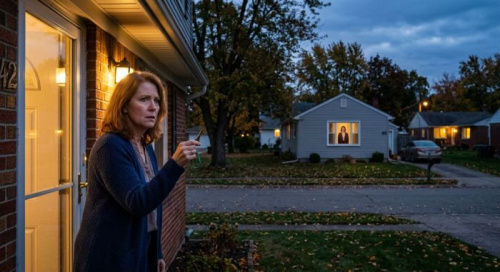
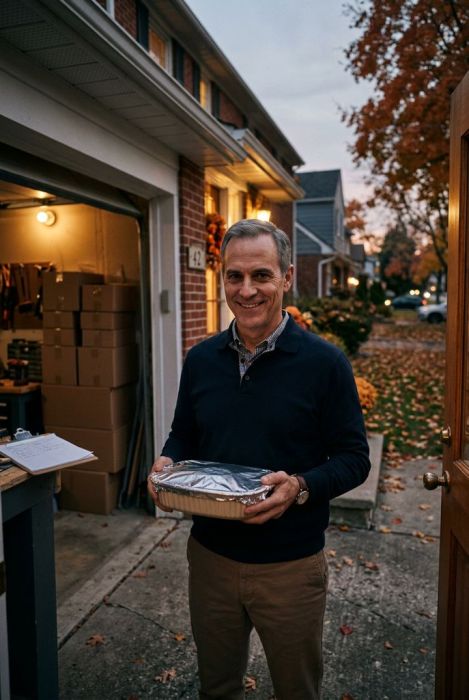
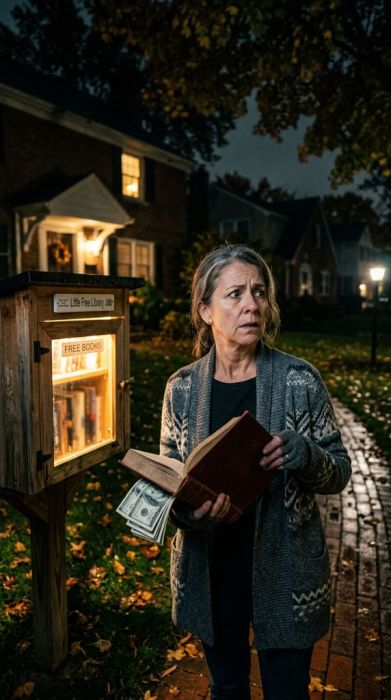
Her name was Marla Baxter. She was the widow who had moved onto Maple Hollow Road three autumns ago with nowhere else to go and a sorrow she wore quietly in her eyes. She was the woman who "helped senior citizens with their computers," who showed up at your door with muffins and a patient voice whenever your printer jammed or your email cemetery-shaped its legs. She set up the text group for the neighborhood's older folks. She reconnected grieving grandkids. She rescued our block from a phishing scam last spring by calling out everyone. Everyone called her a blessing.
Everyone was wrong.
I want to be honest about how she fooled all of us. Marla Baxter did not look like a predator. She looked like the woman who brought the good casserole to the funeral. She asked about your knees and your grandkids and your garden, and she remembered every answer. She gave and gave, and nobody stopped to wonder what a very lonely woman with a brand-new truck and no visible income was collecting in return. Because collectors look a certain way when you imagine them. And Marla looked like comfort.
She became June's whole world. After June's husband passed, June slowed down, a little stiff in the mornings, slower to climb her own front stairs. She was not confused. She was sharp as a whistle, which matters later. But Marla made herself indispensable. She changed June's passwords when June forgot them. She fixed her tablet, her phone, her cloud photos. She became the gatekeeper to every account June owned because, she said gently, "these widows cannot be trusted to secure themselves anymore."
I remember her saying those exact words to me once, in a hushed and worried tone, over coffee. That our street's older women had too much money and too many predators, and that it was a mercy the block had someone like her watching out. I nodded. I agreed out loud. And I went home and told my husband how lucky we were to have her.
It was only in the small things that cracks opened. And they opened so slowly that it took an entire summer for me to see them as a pattern instead of a coincidence.
The first crack was the truck. It was a beautiful new pickup with leather seats, and Marla said it had belonged to her late son, who left it to her. But I was at the county clerk's office one afternoon renewing my own tag, and I saw the title slip sitting in the pile she had set down to sign. Forty-eight thousand dollars. Bought a single year ago. Financed under her own name. There had never been a son. She had mentioned a husband, a church, a life she left behind. She had never once, in three years, mentioned a child. And yet out of her mouth one afternoon came a whole confident career for a young man who had never existed.
I told myself I was being uncharitable, that grief makes people private, and that it was none of my business. I went home and I baked a pie and I buried the thought.
The second crack was the way she talked about the small business she ran from her kitchen table. She told us about a grandmother in Pennsylvania she helped who was so grateful. She told us about a young family in Georgia, whose identity was nearly stolen by strangers. She spun a warm, endless web of charity work that made her the neighborhood's guardian of other people's passwords. And no one ever asked the question sitting right in the middle of the room: why did one woman need to know so many secrets for so many strangers, and why were there so few currants in her own life to show for it?
The third crack was June's memory, and it is the one that later mattered most. Over the months. When Marla devoted every caring hour to June, June began forgetting small things. Where her glasses were. Whether she had called her own daughter that week. Once she forgot my dog's name and smiled at me like a polite stranger at a party. The whole block said it was June's age, a grief turning to shadows. They said it was a mercy that Marla was there.
I agreed out loud, and I said nothing. That is the part I have to live with.
Then June's daughter called me, and the world tilted. On the way home from the grocery store, June had turned to her own child, half a woman she had raised, and asked six times who she was. Then, clear as a bell, June said she did not want to go home, because there was a woman who came in and took her things. When her daughter pressed, June cried, and then she stated, with perfect calm, that her mind was not confused about that one single thing.
That was the week I stopped pretending things were fine.
I started watching more closely. Marla's house gave off a blue light at two and three in the morning, the steady flicker of someone awake in a way that did not look lonely. It looked lit. She drove away with June and she came back with June, and twice a month she drove alone with paperwork spread across her passenger seat. She was always careful to cover it, but I am a woman who knows what a document stack looks like after a lifetime at it, and that stack was signed, official, and growing.
A small thing turned the light on fully. A neighbor who worked in home care mentions that Marla had asked for help getting copies of June's medical records, and something about a FICA card, and some kind of account. "I thought it was just her helping June with papers," the neighbor said, and waved it off.
That night I did real research. I learned exactly what it looks like when a predator quietly becomes an older person's running world. The one who "secures" the accounts. The one who takes the calls from the bank. The one who keeps the copies. It is a slow robbery performed entirely with kindness and paperwork. Someone real can drain a woman's whole life in quiet pieces, and no one will notice, because the helper is the very person everyone swears is a saint.
The moment that broke everything open was a Sunday morning. The block was awake and cheerful, sixty-nine degrees, children racing over lawns. Marla came out carrying a small purple bag to her white trunk. As she swung it up, the bag fell open for half a second. I saw bank papers and a living trust document. I saw an ID card with June's smiling face. I saw FCA paid name printed over and over.
And Marla had no idea I was watching, because the neighbors next to her were waving, and she waved back. She bent to gather her papers and drove away. I stood frozen at my own window with my heart a thin drum, and I knew that if I did not act, the next thing they drained would be everything June had left.
I called Roy. He was the retired county detective at the end of the block, a patient man who had spent thirty years keeping quiet people safe. I gave him facts, not a story. The truck that never belonged to a son. The missing name. The copied medical and FICA records. The account in June's name. The bank call. The bag of personal papers in Marla's trunk. Roy listened without a single interruption. When I finished, he took a slow breath and told me we would do this carefully, together.
He reached a friend who still wore the badge and quietly got some facts confirmed. Meanwhile, I went to the bank myself and asked the young manager one quiet question: was the account set up to notify a secondary email address? The color drained from his face as he read it out loud, slow and unwilling. Marla Baxter.
We set a trap. All according to patience. Roy placed a modest sum into an old, no noticing account and put a little paper where it looked like it belonged to June. Then we waited, and we did not have to wait long. Marla moved that money, taking the bait just as we had hoped, moving it into her own name because she believed she had won, and attaching her signature to a beautiful paper trail as she did. By the time she drove an hour away with what she thought was a clean win, she had already handed the state the story she thought she had hidden.
On a Thursday morning, with half of the block at the donut shop and the rest at the doctor's office, a plain minivan came quietly up to Marla's curb. Two officers went to her front door. She came down in her housecoat saying it was a terrible, terrible mistake, and she was handcuffed anyway, right there on the welcome mat under the rosebushes she had kissed. I watched from my window because I needed to believe at the end that the truth was real.
The charge sheet was long. It came out that she had done this before in another town, under another name, leaving a trail of elderly women behind who had trusted her and who had been quietly emptied. Our block's victims came forward one by one. Together they built a real case, and Marla lost the truck and the house. She lost every stolen dollar that could be wrung doubt of her accounts, and she lost the one thing she had banked on all along: the street's trust.
Almost all of June's savings came home.
But the moment I will carry to my grave came a few weeks later, when June's daughter called me with her voice low and breaking. "She keeps asking why that nice woman isn't coming over anymore with the muffins," she said. Then she paused, "And Mom's not forgetting anything else now. She remembers you. She remembers your dog by name."
My dog's name. June had not forgotten me. She had been told she was forgetting, over and over, until she believed it and surrendered her keys and her accounts and her receipts to a woman who smiled. The whole time we blamed months she had been doing something we did not understand.
The whole block met after the arrest. Roy stood up to us with old neighbor, and for the first time in all our years, we listened with the facts instead of the gossip. "No one person should ever be the only key to an older neighbor's money," he said. "Check people twice, spread the authority, and if an older a friend starts forgetting things they themselves say they remember, do not let one helper's word be the only one you trust."
We walk down Maple Hollow differently now. We lock the windows we used to leave open. We double-check and ask twice. And when a new, sweet voice comes to the street and offers to "just take care of it," to "let me secure the account," for an aging neighbor, more than one of us remembers that kindness can carry an unkind heart behind a smile, and that the costliest thing you can give is your silence.
And when the phone rings and the bank says my name, I answer the way I do, sober and glad. Because the whole street learned to keep the shadows out for good, and my friend June was given back her life—one quiet, remembered morning at a time.