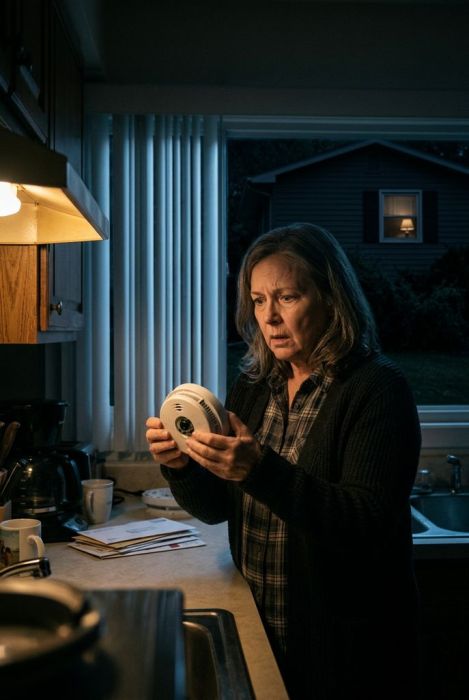
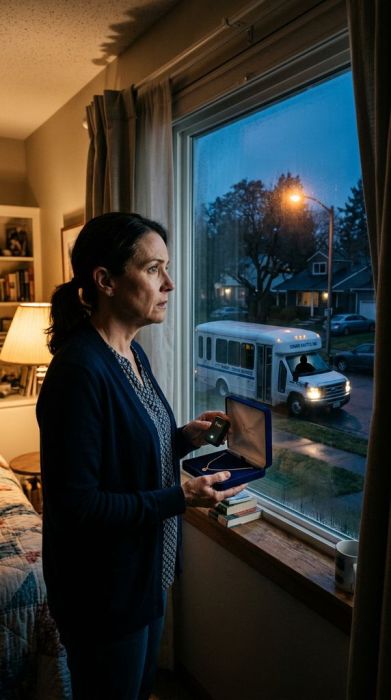
The tracker pinged at 8:47 on a Tuesday night, and I stood frozen in my mother's bedroom with a dish towel still in my hand. My phone buzzed on the dresser, and for three seconds I told myself it was the neighbor's dog setting off the motion sensor again, or a raccoon on the back porch, or anything at all except what I already knew. Then I looked at the little map on the screen and watched the red dot crawl up Maplewood Lane, past the Marsh house, past the Okafor house, and slow to a stop in front of number 14. Our house. The dot was the decoy jewelry box I had hidden in my mother's closet that morning, padded with costume stones and a real GPS tracker glued to the velvet, and at that exact moment it was sitting in the passenger seat of Daleen Mercer's van.
My mother moved in with me two summers ago, after my father died of a heart attack in the garden he had tended since 1983. Evelyn refused to sell the old Craftsman on Maplewood Lane, the house we'd grown up in, where my brother and I had learned to ride bikes and where Dad's prize roses still climbed the fence. So I packed up my apartment across town and came home to look after her. She was seventy-nine, sharp as a tack in every way that mattered, but her hips had betrayed her and the stairs were getting harder. She could tell you the exact day she'd planted every rosebush, but she could no longer carry a basket of laundry up to the landing. And so, the day I needed someone to drive her to an appointment while I was at work, our neighbor Millie Hargrove said what everyone on the street said: call Daleen.
Daleen Mercer seemed like the answer to a prayer. A widow herself, she'd started Sunrise Rides eight years earlier, after her husband Harold passed and she found herself alone with a paid-off van and too many empty hours. She drove seniors to doctors' appointments, church, the hair salon, and the Tuesday night bingo at St. Anne's. She charged half what the county medical transport charged, and for most of the regulars she charged nothing at all. "I just like the company," she'd say, patting some old man's hand. "I've been where you are. I know what it's like to feel stranded."
Within a month she was a fixture at our kitchen table, drinking coffee from the good mugs and laughing at Mom's stories about Dad. She knew which neighbors had heart conditions and which ones had children who never called. She knew who kept cash in the freezer and who kept jewelry in a hatbox. She held everyone's spare keys for emergencies, including ours, on a little ring she called her lifeline. And because she was always the first to arrive when someone fell or got scared, no one ever questioned why she needed them.
The first thing to go missing was Mom's cameo brooch, the one Grandma brought over from Ireland. Mom searched for a week and blamed herself. "I'm getting old, honey. I probably put it in the donation bag." Daleen comforted her at the kitchen table that week, holding her hand and saying exactly the right thing. That was the thing about Daleen. She was always the first to comfort, and she was always careful to point out how forgetful everyone was getting.
Then Mrs. Okafor's cameo disappeared at the hair salon. Then Mr. Ellison's cufflinks vanished, and he swore they'd been in his dresser drawer the night before. The police came out twice and found nothing: no forced locks, no fingerprints, no sign of entry. They called them explainable losses and reminded everyone that older folks lose things. Mr. Ellison was so humiliated by the questions that he stopped reporting anything after that.
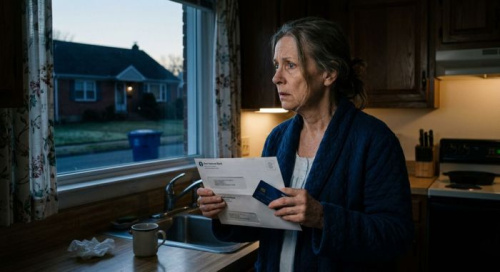
I should have seen it sooner. Of course I should have. The signs were all there, wrapped in kindness and homemade zucchini bread and eight years of being the one person our street trusted absolutely. But you don't suspect the woman who sits with your mother's hand in hers. You don't suspect the person who takes your mom to bingo so you can sleep on a Tuesday night. So when Mom's jewelry box went missing that April, I did what any daughter in my position would do. I blamed my mother.
It happened the morning after bingo. Mom came down to breakfast with a face I'll never forget. "Nora, the little box is gone," she said. "The one with your father's ring and the watch he gave me for our twentieth anniversary, and Grandma's pearls. It isn't in the closet." I checked the closet myself, and she was right. The lockbox we'd had appraised in February, nine thousand two hundred dollars, the man at the shop had said, not that Mom and I cared about the number, sat in an empty spot where it had lived for thirty years. "You were probably looking at it last week and moved it," I told her. "You'll find it behind your winter coats." Mom nodded and apologized, and I carried guilt about that apology for the rest of the month.
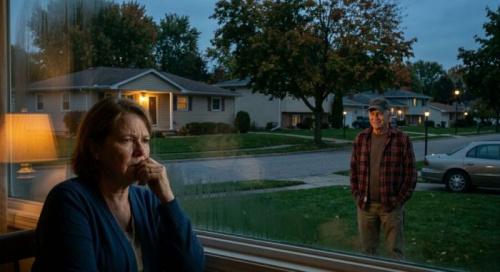
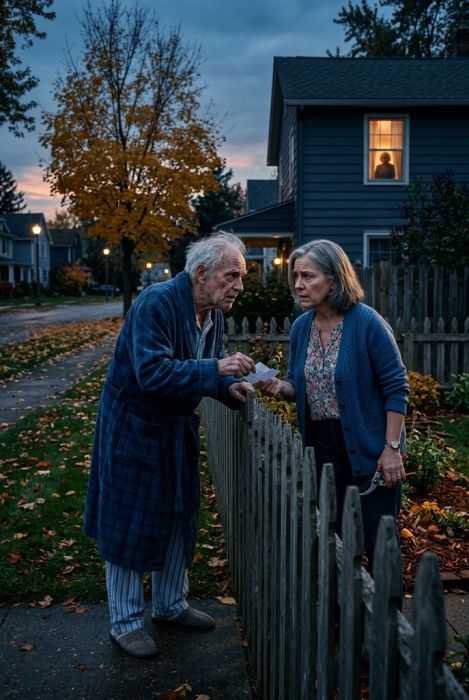
The day I finally listened was a Sunday, at the potluck after church. I was standing in line for Millie Hargrove's famous ham when I heard Mrs. Okafor talking about the cameo. "Simone says the strangest thing," Mrs. Okafor told the table. "She saw Daleen's van parked outside our house last Tuesday, the night of the bingo. She thought it was sweet, that Daleen was checking the locks. But we were home that night. She never knocked."
Something cold settled in my chest. Mom had been to bingo that same Tuesday. She and I had eaten dinner at six, she'd gotten in Daleen's van at seven, and she'd come home at nine-forty-five, exhausted and happy. The house had been empty between seven and ten. I started counting the stories I knew: every missing item on Maplewood Lane, every explainable loss. And every single one, I realized, had vanished on a night when Daleen knew, to the minute, which houses were empty.
I did the only smart thing I'd done in months. I called Walt Granger, the retired sheriff's deputy who lived across the street and had known our family since I was a girl. Walt listened without interrupting once, then asked me a single question: did she still have a copy of our key? I told him she'd returned our spare key the month before, with a cheerful little speech about how everyone should keep their own. Walt just shook his head. "Then she's got the copy she made. And she'll come back for the good stuff."
At that point, I almost called the police myself. But Walt was the one who kept me calm. "You've got nothing yet but stories and a feeling," he said. "You need her holding the thing she came for. That's the only way this ends." So we made a plan, the kind of plan that felt ridiculous until it didn't. We had Mom's jewelry put in a safety deposit box at the bank downtown, under both our names. Then I bought a pretty little jewelry case at the craft store, filled it with costume pearls and paste stones, and glued a GPS tracker into the velvet. It looked exactly like the kind of thing an old woman keeps in her closet and talks about at bingo.
The hardest part was telling Mom, not the whole plan, but enough. I'd been treating her like she was fragile, and the truth was she'd been the only one sure of herself all along. She was the one who'd said it isn't in the closet while I'd told her she must have lost it. When I finally sat her down and told her about the tracker, she laughed until she cried. "You think I kept it together all these years because I'm foolish?" she said. "I knew. I just couldn't bring myself to believe it." She insisted on being part of the sting. She even practiced her lines.
The bait went in on a Friday. That evening, at the neighborhood potluck, Mom mentioned to anyone who'd listen that we were taking a big trip to visit my brother in Oregon, and that she'd finally had the family jewelry appraised. "Nine thousand dollars," she said loudly, over the ham and the Jell-O salad. "Can you imagine? Not that it matters, but you like to know your children inherit something worth having." Daleen's eyes flicked to Mom's cup. I watched her smile and nod and file away every word.
The following Tuesday, bingo night, we played the scene perfectly. Mom got into the van with her cane and her lucky purse, just like always. But this time, at seven-thirty, she told Daleen she was feeling poorly, and Daleen, ever kind, drove her home early and made her a cup of tea. Mom thanked her and went upstairs to bed, and I turned off all but the porch light, the way every house looked when its owner was out of town. Then we waited.
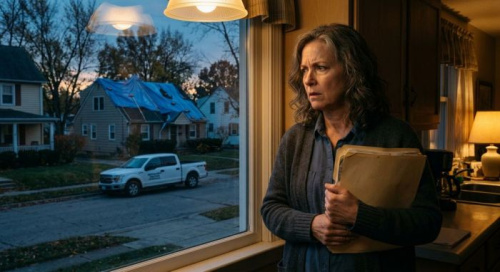
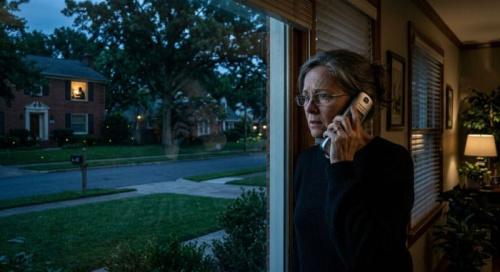
The tracker alarm went off at 8:47. I felt the phone vibrate in my pocket while I was rinsing dishes in the kitchen. I looked at the map and watched the dot move. It came down Maplewood Lane slowly, the way a person drives when they're looking at addresses. It stopped in front of number 14. I looked out the kitchen window and saw the white van, engine idling in the dark under the streetlamp, and I saw Daleen Mercer's silhouette step out and walk toward our side door with a key in her hand.
I didn't confront her. That was Walt's job. I had already texted him the words "she's here," and I'd already called the non-emergency line with the address and the words "possible burglary in progress, suspect inside my mother's house." Then I stood in the dark hallway, my hand on the stair rail, and listened to the sound of my own heart while somebody I'd trusted opened the door I'd grown up walking through.
The patrol cars came with their lights off and their radios down, two of them, sliding to a stop in front of the house like ghosts. The officers went through the side door less than three minutes after the tracker stopped moving, which is to say, three minutes after Daleen Mercer had lifted the decoy out of my mother's closet and closed it in her coat. They found her in the kitchen, frozen, the jewelry case still in her hands, and the look on her face was the first honest expression I ever saw on it. Surprise, not shame. She hadn't thought the trap was real. She'd thought the trip to Oregon was real. She'd thought I was everybody's fool, the way she'd thought every one of us was a fool.
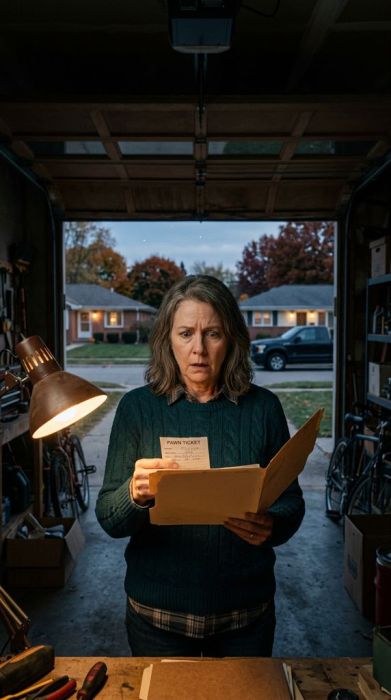
In her garage, in three neatly labeled boxes, they found everything else: Mom's cameo brooch. Mrs. Okafor's cameo. Mr. Ellison's cufflinks. A hatbox of Mrs. Marsh's costume jewelry. Two hundred and eleven items in all, logged and labeled by the woman who'd stolen them, each one wrapped in tissue paper with the owner's name on the lid. Walt found the labels and the ledger she'd kept, matching item to house to date, as if it were a job she was proud of.
Daleen Mercer was charged with five counts of burglary and eight counts of theft from a vulnerable adult, and because she'd stolen federal retirement funds from two of her passengers, the federal prosecutor got involved too. She'd been doing it for years, the investigators said, ever since Harold's medical bills and her own quiet gambling habit had eaten through everything they'd saved. She'd started by selling her own jewelry, then her mother-in-law's, and then, one Tuesday night, a cameo she'd seen a hundred times on a woman who couldn't refuse a ride to church. That was the first one, and I suppose it was the one that taught her she could get away with it.
The items came back to their owners in a meeting at the church hall. I waited in the back while Mom received her brooch, her pearls, and Dad's watch with "To Evelyn, Forever, 1982" still engraved on the back. She cried in front of the whole church, and for once nobody shushed her or patted her hand and told her it would be all right. They were all crying too, holding cameos and cufflinks and lockets that had been explainable losses for years.
As for Maplewood Lane, we changed after that. We started a real emergency-key system with two keys held by two different neighbors and a registry down at the church. And we admitted out loud that we'd done it to ourselves: we'd handed over our keys, our schedules, and our trust to a woman who'd asked for all three with a kind smile and a warm casserole, and none of us had ever thought to look at the boxes in her garage.
These days, Mom wears Dad's ring on a chain around her neck, and she is the undisputed queen of Tuesday night bingo. I still live in the house on Maplewood Lane, and the little tracker lives in the kitchen drawer, retired. On good nights, when the roses are blooming and the porch light is on, I catch myself remembering the look on Daleen Mercer's face in the kitchen that night. Not the fear, and not the shame. The surprise. She truly believed she was the only one paying attention.
That's the part that still haunts me, and the part I hope every person who reads this takes with them: the people who steal from the elderly and the trusting don't look like villains. They look like the neighbor who brings you soup when you're sick. They look like the volunteer who knows your schedule better than your own children. And sometimes the only way to catch them is to let them think no one is watching at all.