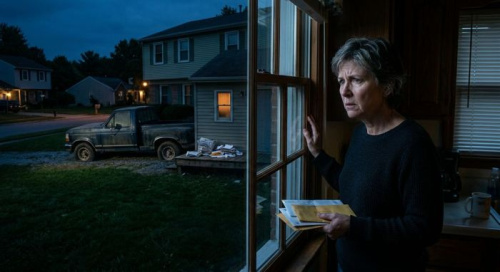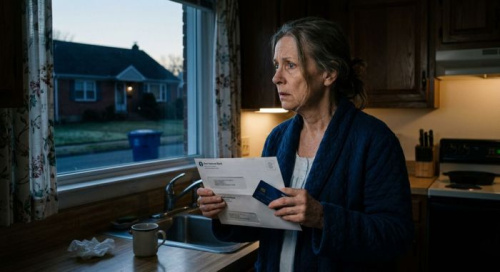
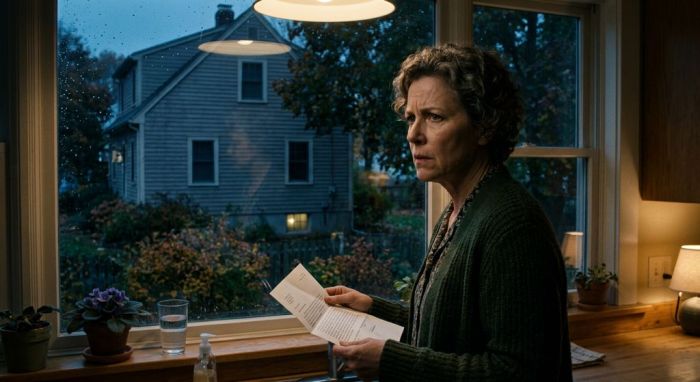
When the letter from the IRS finally surfaced from the pile of mail on my kitchen counter, I almost recycled it with the credit card offers. It was addressed to my mother, Doris Whitmore, at her little gray house next door, and it had been sitting in her mailbox for nine days before I noticed the envelope had been opened and retaped shut. That detail should have stopped me cold. Instead, I read the first line twice before my coffee cup hit the counter. "Your 2024 federal refund of $4,186.00 was direct-deposited to the account ending in 2217 on March 14." My mother's savings account at First Millbrook Bank ended in 4419. She didn't have a second account. She had never had a second account in her life. And she hadn't seen a penny of that money.
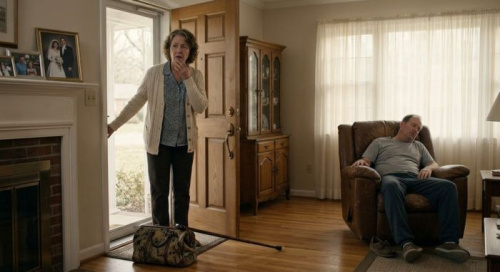
I called her before I could talk myself out of it. "Mom, did Clark help you with your taxes again this year?" She laughed the way she always does when she thinks I'm being silly. "Of course, sweetheart. Clark did them in February, same as every year. He's the only one I trust with my numbers since your father passed." She went on for a full minute about what a saint he was — how he'd driven her to the senior center for coffee, how he'd brought banana bread when my brother's dog got loose, how he'd promised to take her to the big estate sale in September. I let her talk, and I smiled, and behind that smile I was already making a plan. I was going to walk across the fence line and ask the Tax Angel one small, polite question.
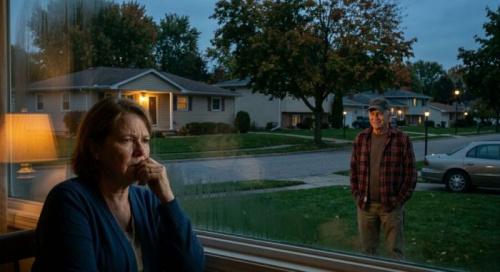
Clark Bannister lived in the gray Cape Cod on the far side of Mom's property, the house everyone on Fieldstone Court waved to every single morning. He was sixty-eight, silver-haired, fond of suspenders and warm handshakes, and he had moved in three years earlier with a U-Haul and a story about thirty years in tax preparation up in Cleveland. Within six months he was the most popular man in our neighborhood association. He shoveled driveways for the widows on Cottage Row. He fixed the loose railing on the senior center porch before anyone thought to complain. And every spring he set up a card table in the community room and announced, "Tax Time Tuesdays — free returns for anyone over sixty-five, and the coffee's on me." The center gave him a little gold plaque and a nickname that stuck like glue: the Tax Angel.
It wasn't only the seniors who loved him. My husband Frank, who trusts almost nobody, called him "a good egg." The mailman joked that Clark ran the friendliest mailbox on the block. And my mother adored him without reservation. The first year he worked her return, he found a deduction my father had missed for a decade and got her an extra nine hundred dollars. She pinned the confirmation to her refrigerator and showed it to everyone who stepped foot in her kitchen. "That man works miracles," she told me at least twice a week. I believed her, because I had no reason not to. I had no reason, yet, to notice the way his eyes flicked away whenever anyone mentioned the folder they'd signed with him. I had no reason to wonder why his den door stayed locked when half the neighborhood had tax papers inside it.
The unraveling started small. In April, my friend Judith Harlow mentioned that her refund came up about six hundred dollars short of what she'd expected. "I must have messed up the form," she said with a shrug, and I agreed without thinking. In May, Mom found a folded postal slip in the back of her desk drawer — a change-of-address card being filled out with my own mother's name and a post office box across town. "Clark said my bank statements probably got forwarded by mistake," she told me cheerfully. "He's going to straighten it out for me." That should have been the moment. Instead, I nodded and told her to be careful, and I folded the slip back into the drawer like a bookmark in a book I'd already read.
The real blow landed in June, at the bank. Mom and I had gone in together to deposit her birthday check, and the teller said something that made my blood go cold: "Would you like that deposited to your regular account, or the 2217?" I asked her to repeat it. She repeated it, reading from the screen. I stood there in the quiet, carpeted lobby of First Millbrook Bank while a woman I've known since sixth grade went pale across the counter from me. Amy Whitfield, the branch manager and my oldest friend in town, took one look at my face and pulled me into the conference room, where she shut the door and poured two cups of coffee that neither of us touched.
The account ending in 2217 had been opened fourteen months earlier in my mother's name at the Route 9 branch, at a time when my mother was home in her recliner with a broken hip. It listed a post office box as the address and a phone number that now rang to a disconnected line. The refund had landed there on March 14 and been drained out in cash two days later. Amy slid the withdrawal slip across the table, and I felt the room tilt. The signature read "Doris Whitmore" in careful, practiced lettering, the kind you copy from a driver's license when you want to get it exactly right. Amy held my mother's real signature card beside it. "A four-year-old could see the difference," she said quietly. "We flagged three of these last year. Always a senior, always with a tax helper, always cash out the same week."
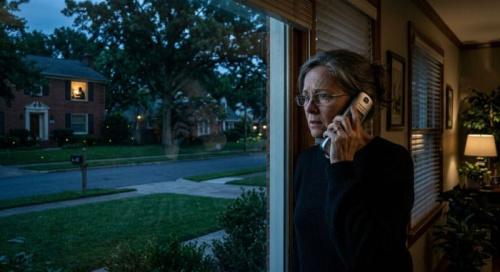
I called the Millbrook Police Department that afternoon, and the officer who answered was apologetic and honest: it was a federal matter, refund fraud, nothing they could do. I called the IRS and spent an hour on hold learning that I had to file a sworn identity-theft affidavit and wait, possibly forever, for someone to care. I called the senior center, and the senior center loved Clark too much to listen to me. Every door closed. And the man himself, seemingly sensing the current, started showing up on Mom's porch with homemade pie and offers to help her keep an eye on her statements. One evening he sat in her kitchen and told her, gently, kindly, "If anyone from the bank calls you with questions, you tell them to talk to me directly. I'm the one who handles your paperwork. We don't want any confusion, do we?" I stood in the doorway and watched my trusting, sharp-minded mother nod at a criminal, and I knew in that moment that the police were not going to save her. I was going to have to catch him myself.
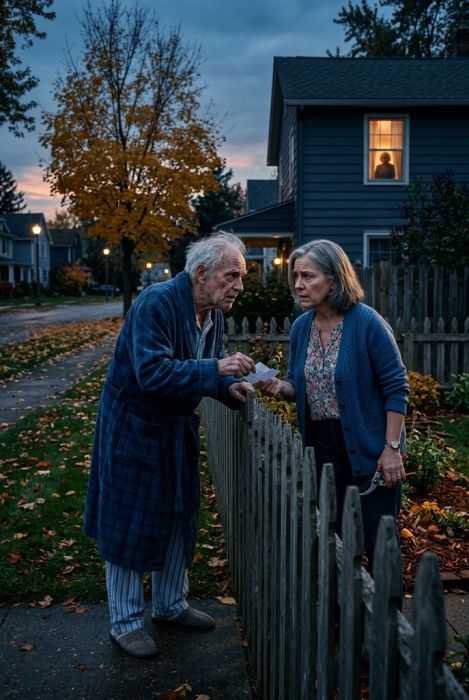
That's where the quiet miracle of Fieldstone Court came in. Earl Corrigan, four houses down, was a retired postal inspector who walked his beagle every morning at six and never missed a thing. I found him beside my fence one morning and told him the whole story, expecting pity. Instead he nodded slowly, like a man who'd been waiting for this conversation. "Pre-addressed envelopes," he said. "Rerouted mail. Same four numbers showing up on statement after statement. Doris's name on a change of address she never signed." He looked at me with old, tired eyes. "I've seen this pattern since the nineties, except we used to call it welfare fraud. The pieces are all there. What you need is someone with a badge and a subpoena." He made a call to a former Treasury contact of his, a woman he'd worked with for twenty years, and by the middle of July there was an open federal case with my mother's name on it.
The trap came together the way quiet things do. Judith went back to Clark in August with her short refund, playing the part of a flustered old woman to perfection, and he took her paperwork with both hands, promising to look into it personally. Earl's Treasury contact subpoenaed the records of Millbrook Credit Union, where Clark's daughter Stacey worked as a teller supervisor. She had opened the accounts, every last one of them, at her father's request, believing she was helping him run a charity program for low-income seniors. She hadn't known about the forged signatures. She hadn't known about the stolen refunds. And when the agents showed her the withdrawal slips, she did what a good daughter does when she finally sees the truth: she gave them everything. The account list. The key to her father's office. And the cardboard box of pre-addressed envelopes, dozens of them, in Clark's own handwriting, every one stamped with a post office box across town that my mother had never once visited.
The arrest happened on a Monday morning in tax season, because Earl's contact had a sense of theater. I was on my porch with my first cup of coffee when two unmarked cars rolled silently to the curb in front of the gray Cape Cod. Three people in windbreakers knocked, and Clark answered in his house slippers, holding a coffee mug, still believing he could talk his way out of anything. He didn't get the chance. Within the hour they carried out his locked filing cabinet, his desktop computer, his shredder, and that box of envelopes, and half the street stood in their driveways in their bathrobes while the Tax Angel was led to the back seat of a sedan with his hands behind his back. Nobody on Fieldstone Court said a word. A woman from the senior center stood at the end of her walkway crying. Somebody's sprinkler was still going, watering a lawn while a very different kind of truth soaked into all of us.
The facts came out slowly at first, then all at once. Twenty-three victims in three towns. Nearly one hundred sixty thousand dollars in rerouted refunds over four years. Accounts opened under the names of seniors who had trusted him with the single most sensitive document in their possession. At the hearing, the prosecutor read the list of names aloud, one by one, and I watched my mother's hand find mine under the wooden bench. Clark pleaded guilty to nineteen counts of wire fraud and identity theft. He was sentenced to federal prison, ordered to pay restitution, and the gray house went into forfeiture. The Tax Angel plaque came down off the senior center wall the same week, and nobody asked where it went.
What I remember most about that autumn isn't the arrest, or the sentencing, or the way the neighborhood learned to read its own mail. It's the check. My mother's full refund, deposited properly this time, into the account ending in 4419 that she'd never once shared with anyone. And then the restitution check after it, which she stared at for a long time before she did something that nearly undid me. She didn't cash it right away. She drove herself to the senior center and put the whole thing toward a real tax clinic, staffed by state-certified volunteers who check IDs and answer to supervisors. "If I'm going to be the reason other old ladies are safe," she told me, "then that's the best money I ever spent." She bought herself a new porch rocker with the refund — a yellow cushion, her favorite color — and she sits in it every morning now, watching the new family move into the gray house, a young couple with a baby who waves at her from the driveway.
I think about the retaped envelope sometimes, the one I almost threw away. I think about how close we came to never knowing. These days I'm the one who reads her mail, and I'm the one who asks who helped you with this, and I'm the one who shakes Frank awake at midnight when something in the trash can at the curb doesn't look right. My mother calls me a worrier. Maybe she's right. But on warm mornings, when she rocks on that yellow cushion and tells the story of the year the whole street learned to look out for each other, I don't feel like a worrier at all. I feel like somebody who finally learned the one lesson this town had been trying to teach us all along: the sweetest neighbor on the block can be the one with the locked cabinet.