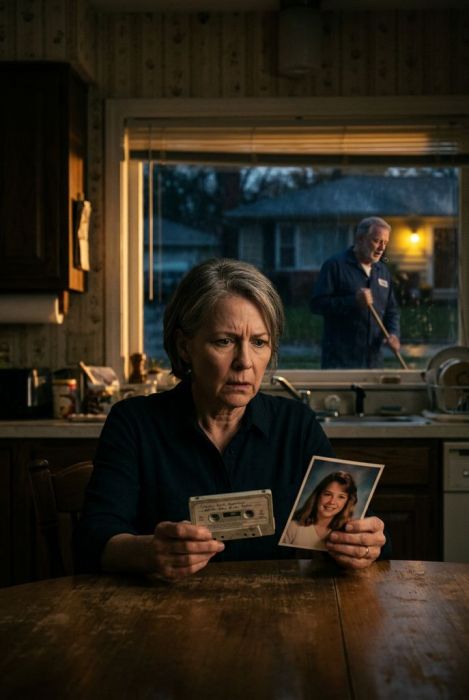
I'm telling you, the worst part wasn't finding the folder. It was realizing that for eight months, every widow on our street had been shaking that man's hand and calling him a saint — while he quietly pulled the rug from under all of us.
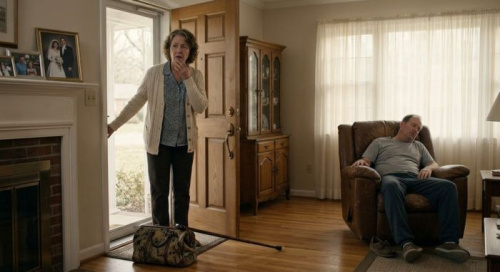
It started the way these things always do. My name is Ellen, and I'd moved back to my childhood home in Ridgeline, Ohio, to help my mother after my father passed. She was a proud woman, seventy-three years old, who'd been married to the same good man for forty-nine years and had no idea how to manage a checkbook on her own. Dad had handled every bill, every savings account, every decision. And when he went, some part of her went with him.
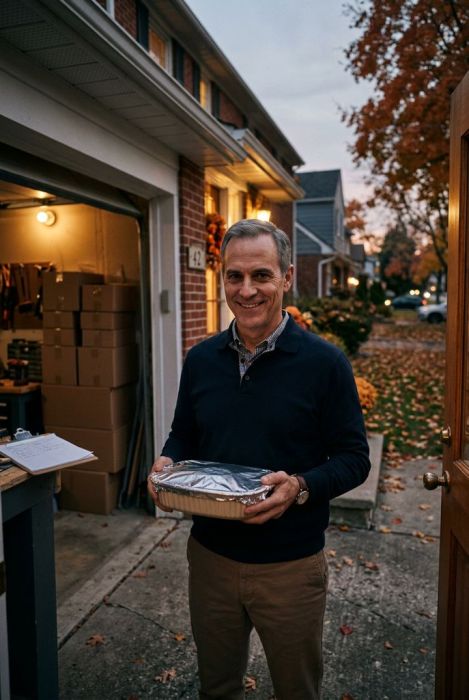
That's when Carl Bradshaw showed up at our door with a plate of banana bread and the warmest smile I'd seen in months.
Carl lived three houses down at the end of Oakwood Lane. Retired from the big regional bank downtown after thirty years, everyone said. A widower himself, with a kind face, silver hair combed neatly, and a habit of remembering everyone's birthday. He'd been the first one on the street to bring casseroles when Dad died. He'd mowed Mom's lawn one Saturday when he saw me struggling with the old mower. And within a few weeks, he'd become a fixture in our kitchen.
"Ellen, dear," Mom said one evening, patting my hand. "Carl's offered to help me sort out the finances. He says these annuities Dad had are a mess, and he knows exactly how to untangle them. Isn't that wonderful?"
I remember smiling back at her, grateful that someone with real knowledge was stepping in. I was a high school art teacher living four hours away. I knew nothing about annuities, trusts, or inheritance tax. The idea that a trusted neighbor — a retired banker — would guide her through it all was a relief I didn't have to question.
I should have questioned it. I should have asked why a retired banker, a man with no financial obligation to us, would volunteer so eagerly to manage an elderly widow's affairs. But he was so kind. So patient. So utterly convinced of his own helpfulness.
The first red flag came in late October, and I nearly talked myself out of it.
I'd stopped by Mom's to pick her up for a doctor's appointment, and she was in the kitchen with Carl, both of them hunched over a stack of papers. Carl had that reassuring, low voice he used whenever he talked money. "Now, Margaret, if we consolidate these into the family trust, it protects everything for Ellen later. It's the smartest thing we can do."
When Mom saw me, she beamed. "Carl's setting up a trust for you, sweetheart. Isn't that thoughtful? He says it'll keep your inheritance safe from taxes."
I nodded, grateful, and took it at face value. That was my mistake. Because I was so focused on trusting the wrong thing, I never noticed that Mom's eyes had grown a little glassier lately, a little slower to focus. That she'd started asking me to repeat things. That she'd started mentioning that Carl had been "looking after" a few of the other widows on the street, too.
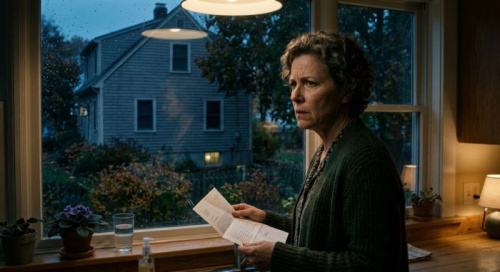
By November, I noticed Mom's mail behaving strangely. Her pension statement came, and I happened to glance at it while she was in the garden. The numbers looked... off. Smaller than they'd been the month before. I studied it, frowning, but that was the thing — I didn't know what they'd been before. Dad had handled everything, and I'd never paid attention to the details. So I pushed it aside, chalking it up to taxes and Medicare premiums.
The penny jar was what finally broke me open.
It sat on the kitchen windowsill, an old glass jar Dad had kept for years. He'd always tossed his loose change in it, a little habit that meant nothing to anyone but him. After he died, Mom kept it there, full of quarters and dimes, a small monument to him. One December afternoon, I went to grab a handful of change for the parking meter, and the jar was nearly empty. Barely a few nickels rolling around the bottom.
"Mom, what happened to all the change?" I asked, holding it up.
She looked at me blankly, then smiled her sweet, slow smile. "Oh, Carl came by and said he was collecting for the senior center's holiday drive. He took it all. He's so generous with his time, Ellen. You should really thank him."
Something cold settled in my stomach. A retired banker, collecting loose change out of an old woman's penny jar to donate to charity? It didn't add up. Not the money — the story. It was the first time I felt, really felt, that something was deeply, quietly wrong.
That night, I couldn't sleep. I lay in my childhood bed, staring at the ceiling, and I started to think. About the pension statement. About the way Carl always seemed to be at the street's elderly houses. About the "trust" he was so eager to set up. And I remembered something my father had said to me once, years ago, about people who were too eager to help. Dad had been a careful, suspicious man when it came to money. He'd never have handed his finances to a neighbor.
The next morning, I went to visit the other widows on our street. That's when everything started to crack open.
There were three of them, all in their late seventies, all living alone. There was Ruth at the corner house, whose husband had died two winters ago. There was Dorothy two doors down, a former school principal. And there was Gladys, sweet Gladys, who'd lost her husband to a sudden heart attack just months before Dad. Every single one of them told me the same thing, almost word for word: Carl Bradshaw was helping them with their finances out of the goodness of his heart. He'd set up trusts for them all. He was protecting their futures.
Four elderly widows. Four trust funds. One retired banker volunteering to manage every dollar.
I called my brother, who lived in Arizona and worked in insurance fraud investigation. I described what I'd seen, keeping it vague, worried I might be wrong. My brother went very quiet for a long moment.
"Ellen," he said slowly, "get me the paperwork. Anything you can find. And whatever you do, don't confront him yet."
The trap began to close, and I became something I'd never been before: a patient, quiet investigator. I started visiting Mom more often, and while she napped, I went through the drawers and files she kept in the hutch. I found copies of documents Carl had her sign — agreements I couldn't fully parse, but which all seemed to funnel toward something called the "Oakwood Family Trust." And on every single one, Carl had listed himself not as an advisor, but as a trustee. As someone with legal control.
The thing that truly undid me was the folder in his shed.
I'd noticed Carl kept a small detached shed at the back of his property, always locked. He was fastidious about it, more than seemed normal. One afternoon, while he was away visiting his daughter for the weekend, I found myself walking past it. The lock was old and cheap — the kind of lock a man would use to keep kids out, not to protect secrets. And it was hanging open.
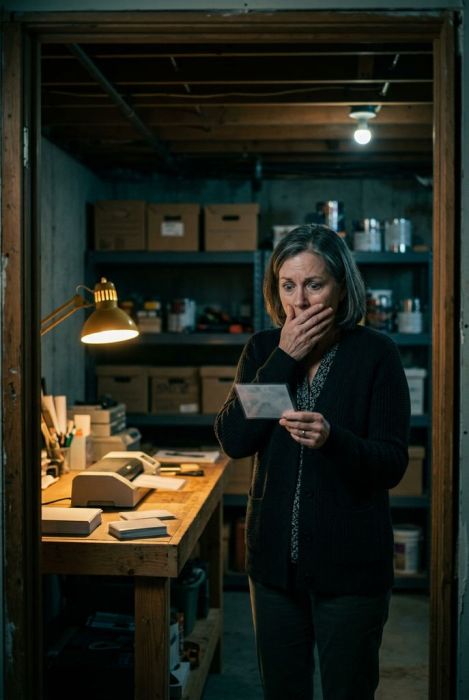
I know I shouldn't have gone in. I know that. But I couldn't stop myself. I pushed the door open, and my heart nearly stopped.
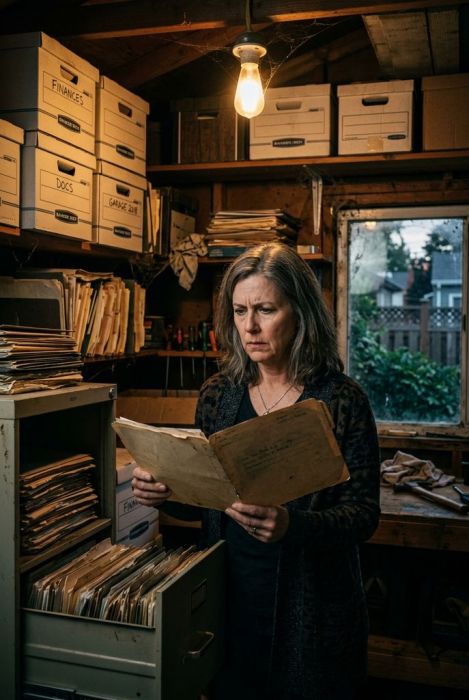
The shed wasn't full of tools. It was an office. There was a metal desk, a filing cabinet, and stacks upon stacks of manila folders. And every single folder had a name on it. Ruth. Dorothy. Gladys. Margaret — my mother.
I pulled the folder that said Margaret, my hands shaking. Inside were copies of my mother's pension statements, her bank records, her annuity documents — and a signed power of attorney, dated just three weeks after Dad died, that gave Carl Bradshaw the legal authority to manage all of my mother's money. The signature was faded, shaky. It didn't look like Mom's handwriting at all.
And there, clipped to the front, was the folder label that would haunt me: "The Oakwood Trust — In Trust For: Ellen."
I didn't understand it at first. I thought it was for me, for my inheritance — something Carl had set up to protect my future. But then I studied the document more closely, reading the small print for the first time with the eyes of a woman finally looking. And I understood: the trust wasn't protecting me. It was a transfer document. It moved control of my mother's assets to a trustee. And the beneficiary named wasn't me.
It was Carl Bradshaw's own holding company.
I stayed in that shed for a long time, reading. I found Ruth's folder, and Dorothy's, and Gladys's — all of them the same. Power of attorney obtained weeks after each woman's husband died. Trusts that named Carl's company as the managing beneficiary. And a neat little notebook where Carl had penciled in amounts, like he was balancing a ledger for groceries: "Ruth — $47,000," "Dorothy — $31,200," "Gladys — $18,900," "Margaret — $52,400."
I was trembling when I photographed every page, one by one, with my phone.
I didn't confront him then. I called my brother, and he helped me book a meeting with the county prosecutor's financial crimes unit, along with a detective who specialized in elder fraud. They listened to my story, looked at the photographs, and went very still. "Ma'am," the detective said, "you may have just helped us break open a case we've been trying to build for years."
It turned out Carl Bradshaw hadn't just retired from the bank. He'd been quietly suspended from it, years ago, over irregular handling of elderly clients' accounts — but the matter had been settled privately, and his record had been wiped clean. He'd moved to Ridgeline, Ohio, exactly the kind of quiet town where a charming widower could build trust, and he'd been circling elderly residents for years. The widows on our street weren't his first. They were just the ones we could prove.
They arrested him on a Thursday morning in January, as the first snow fell on Oakwood Lane.
I watched from my mother's front window as two county sheriff's cruisers pulled up to Carl's house, their lights flashing red and blue against the gray sky. The neighbors came out of their homes, wives in bathrobes and husbands in coats, all of them with the same confused, frightened look. And then they led Carl out in handcuffs — the man who'd brought banana bread, who'd remembered everyone's birthday, who everyone on the street called a saint.
My mother stood beside me at the window, holding my hand. She was quiet for a long time, watching. Then she said, in a small, clear voice, "Ellen, did I do something wrong?"
"No, Mom," I said, squeezing her hand. "You trusted a bad man. That's never your fault."
The fallout was slow and painful. The prosecutors told us Carl had been siphoning money from all four trust funds, moving it into accounts he controlled, planning to vanish before the women's confusion could turn into questions. He'd gotten most of the money back — most, but not all. Gladys lost nearly six thousand dollars that couldn't be recovered, and she cried in my mother's kitchen for an afternoon when she heard. But then the whole street rallied around them. The county had officially labeled it elder fraud, and suddenly everyone remembered all the little signs they'd ignored.
Ruth remembered that Carl had once asked to see her late husband's safe-deposit box key "to help inventory it." Dorothy remembered the time Carl offered to "hold onto" her Social Security card for safekeeping. And my mother, my sweet, grieving mother, remembered that Carl had been the one to suggest she sign the power of attorney, in the weeks right after Dad's funeral, when she couldn't think straight and would have signed anything a kind man put in front of her.
Carl Bradshaw was convicted of six counts of felony financial exploitation of an elderly person. He was sentenced to nine years in state prison, and the judge ordered him to pay restitution — every cent he'd stolen, plus interest. The house at the end of Oakwood Lane went up for sale, and the realtor told me a young family had put in an offer. The street would get new neighbors, eventually, and they'd never know what the old ones had done.
But here's what I carry with me now, what I want to tell every family with an aging parent, every adult child who lives hours away from a mother who's alone:
Nobody is too kind to watch. Nobody's banana bread is worth a signature you don't understand. The retired banker next door, the friendly widower who remembers every birthday, the man who volunteers to "take care of" your mother's money — they can be exactly what they appear to be, or they can be something far worse. And the only way to tell the difference is to actually sit down with the paperwork, to read the small print yourself, to ask a stranger in authority to look at it before you sign.
I moved back to Ridgeline permanently that spring. I got a job at the high school, teaching art, and I bought a little house three blocks from my mother. We have lunch together every Sunday. And every time she reaches for a pen to sign something — a petition, a credit card slip, a donation form — I'm right there beside her, reading every line before her hand touches the paper.
People thought I was being paranoid after what happened. Maybe I was. But I'd rather be the daughter who reads everything twice than the one who signs her mother's life away to a man with a warm smile and a folder in a shed.
These days, when I see my mother laughing on the porch with Ruth and Dorothy and Gladys, trading stories the way they did before Carl, I feel a peace I didn't think I'd ever have again. She's safe. They're all safe. And the man who tried to take everything from them is spending his nights behind bars, learning what it feels like when someone else controls your future.
That's the part nobody warns you about, when you're young: the people who will hurt the people you love most won't look like monsters. They'll look like help. They'll bring casseroles. They'll remember your birthday. They'll smile, and they'll manage your mother's money, and they'll be gone with it before you ever realize the folder with your name on it was never meant for you at all.
So if you have a parent who lives alone, and a neighbor who's suddenly become very, very helpful — take a real look. Not at the smile. At the paperwork. Because the kindest thing that man ever did for us was get arrogant enough to leave his shed unlocked. And the kindest thing I can do for you is tell you to never, ever trust a stranger with the people you love, no matter how nice they seem.