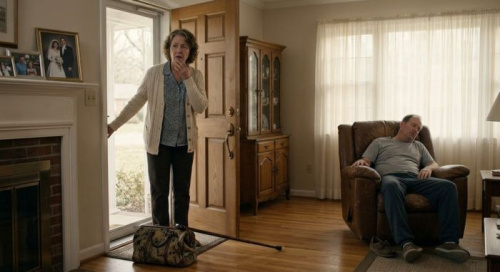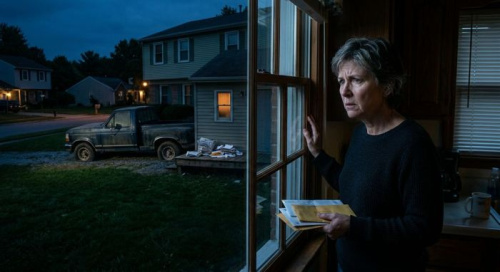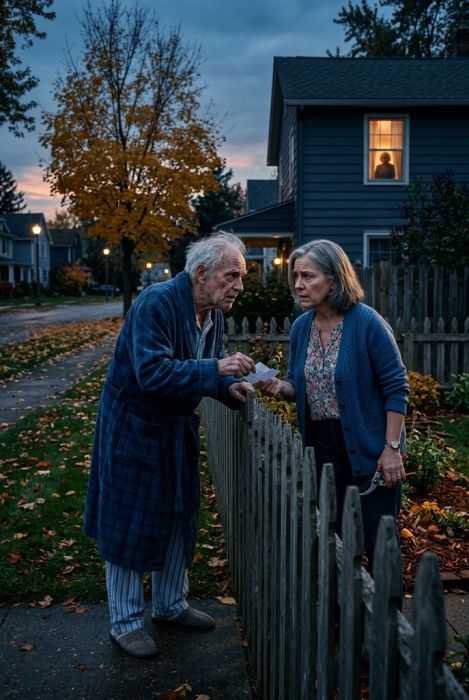
The third fire happened on a Tuesday, and I remember thinking how quiet the street was while the fire trucks screamed past my front window. That was the weirdest part. After the first blaze on Willow Court, the whole neighborhood had stood out on the pavement in their robes, clutching pets and pointing. After the second one, we formed a little watch group. But by the third, people had just gone numb. Only old Mrs. Delgado, at number twelve, had still been frantic — because her house was the one smoking that time, and because she was old and slow and barely made it down her porch steps before the back wall caught.
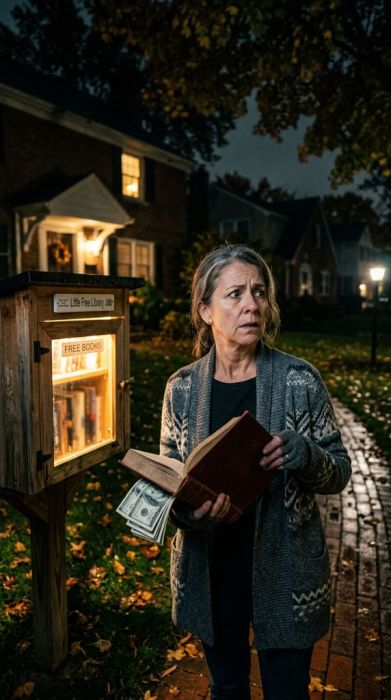
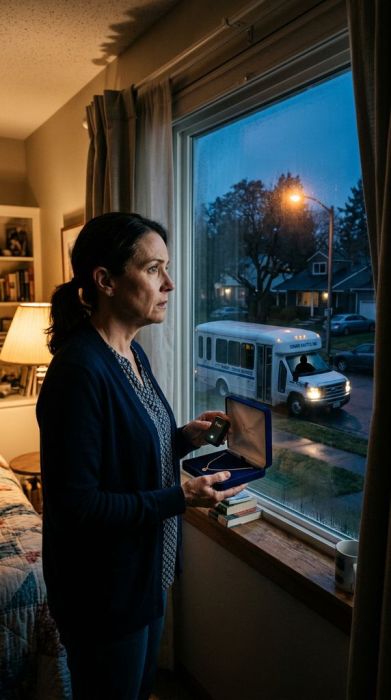
I was the one who called it in. I was the one who ran toward her too, and the one who caught her arm when her legs gave out on the lawn. My name is Linda, and I have lived on Magnolia Court for thirty-one years. My husband Frank passed five years ago, and my daughter lives two states away now, so this house and this street are pretty much all I have left. I know every single person on this block. I know whose dog barks at the mail truck, whose teenager plays music too loud, who leaves their trash cans out a day too long. And I knew, absolutely knew, that Dale Perkins from number nine was the best neighbor God ever put on a street.
Dale was the man who mowed my lawn for free when Frank got sick. He trimmed every hedge on the block, hung our Christmas lights, fixed Mrs. Delgado's porch step, shoveled driveways before anyone even asked. Everyone called him Uncle Dale. He was sixty-one, divorced, a retired electrician who kept a shed full of tools and a truck full of goodwill. When the first fire burned down the Galvestons' house at the end of March, Dale was the first one there with a fire extinguisher and a blanket. When the second one gutted the Parks' garage in June, he was standing in the road crying like it was his own roof.
So on that Tuesday in September, with Mrs. Delgado's house smoking and her shaking against my shoulder, the strangest thing in the world happened. Dale's truck was gone. His driveway was empty. The man who had rushed to comfort the whole street twice was nowhere to be found for the one fire that mattered most to me.
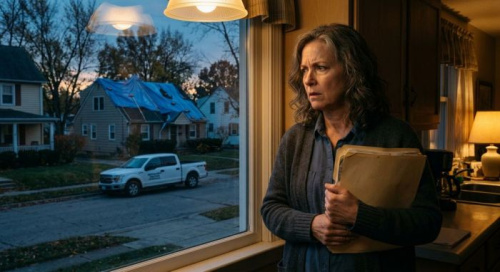
The fire chief said it was faulty wiring. Old houses, old electric, and a woman in her eighties who'd never updated anything. It was believable. It was almost comforting. But there was a detail that kept snagging in my mind like a loose thread — Mrs. Delgado had told me, weeks earlier, that she'd hired Dale to rewire her downstairs fuse box. She trusted him. Everyone trusted him. And a house that had just been worked on by an electrician, a retired electrician, had gone up in flames.
I told myself I was being paranoid. That's the thing about getting older — you start noticing patterns, and people start telling you that you're imagining them. My daughter certainly did. "Mom, you're exhausted," she'd say over the phone. "You've been through so much. Let the investigators do their job." And maybe she was right. Maybe I was just a lonely widow seeing danger where there was only grief. But I wasn't imagining my insurance agent's voice on the phone the next morning, strangely cheerful, asking if I'd gotten a quote from Dale's "good friend" in claims yet. He meant the adjuster, a cheerful young man named Cooper who'd handed me his card at the Galveston fire and had been oddly present at the Parks' garage too.
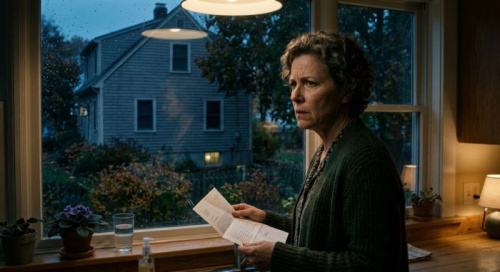
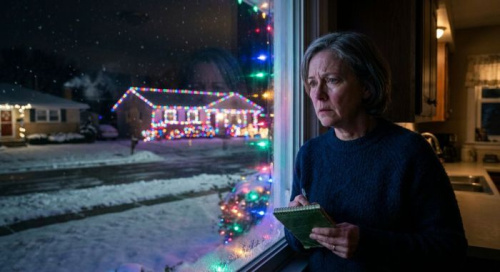
I started writing things down in a little notebook, the way my mother used to write down every check. Dates. Times. Who was home. Where Dale's truck was. And slowly, against every ounce of my loyalty to the man who'd shoveled my walk, I noticed that Dale was always somewhere near a fire scene — except the moment it actually started. I noticed he talked a lot about the Galvestons' insurance payout, about how "lucky" they were. I noticed that Cooper, the adjuster, and Dale were always at the same coffee shop, always at the same corner table.
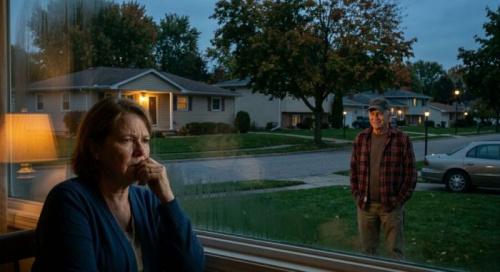
I didn't want it to be true. I honestly didn't. Dale had held my hand at Frank's funeral. He'd made sure my gutters were clean. He was the last decent man left in this world, as far as I was concerned. So I did what anyone does when they don't want to believe something — I ignored my own notebook and busied myself with normal things. I went to church. I tended my roses. I told myself the wiring story was true and that my grief had turned me suspicious.
Then Mrs. Delgado called me, crying, the following week. She'd gone to her bank to deposit her social security check and her whole account had been cleaned out. Every last dollar. She was terrified, and she kept saying the same thing over and over: "Dale set me up for it. He asked me all my security questions once, sweet as can be, said he wanted to help me set up auto-pay. Oh, Linda, I gave him every answer he needed."
My heart dropped into my stomach. Dale hadn't just torched her home for the insurance money. He'd drained her life savings and left an eighty-four-year-old woman with nothing but a burned house and a wrecked heart. And I finally understood what the fires were really for. They weren't accidents. They weren't even just insurance fraud. They were a curtain — a smokescreen, literally — behind which a beloved man could empty the very neighbors who trusted him most.
I drove straight to the police department that same afternoon. I laid my little notebook on the detective's desk, Mrs. Delgado's name and every pattern I'd seen. And I watched his face change from polite patience to something much colder as I talked. He'd had his eye on Dale already, he admitted. Cooper the adjuster was under investigation for a dozen suspicious claims across three counties. They'd just been waiting for a pattern, a witness, a neighborhood voice that would break the silence. He told me to keep quiet, to go home, and to call him if anything else felt off. Easy for him to say — he didn't have to sit across the street from a man I'd once called a friend.
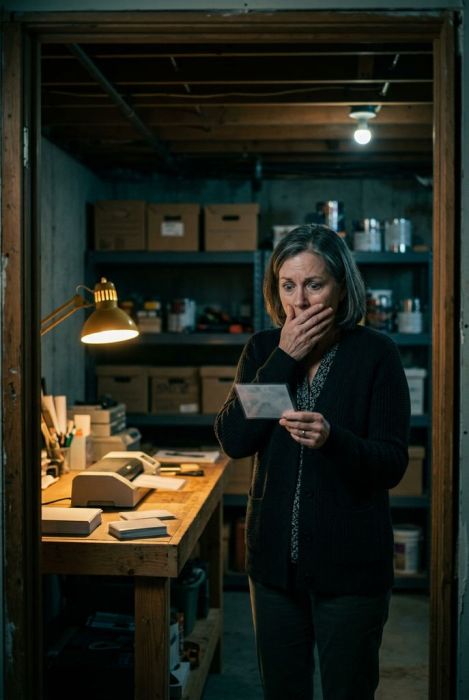
But patterns and notebooks aren't proof. And Dale was smart enough to never touch a clean surface, never burn anything that would show obvious accelerant. The department needed something more concrete or they'd never get a warrant. So I did the one thing I should have done weeks earlier. I remembered the old security camera Frank had mounted on our back gutter — the one that had dead batteries for years and that I'd meant to fix after he passed. I fixed it. I aimed it down the fence line toward Mrs. Delgado's shed. And I waited.
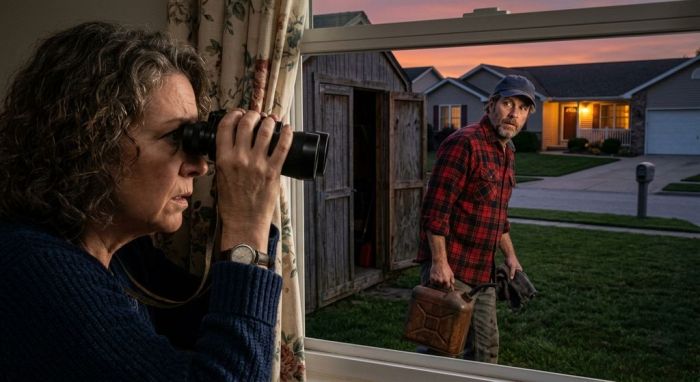
For three nights, nothing. Dale avoided the property like the plague. I started to think he could smell the trap. But then, at 2 A.M. on a moonless Saturday, my phone buzzed with a motion alert, and there he was — Uncle Dale, the man who trimmed every hedge on the block, slipping out of Mrs. Delgado's unlocked shed with a five-gallon can and a bundle of oily rags. He walked straight past her blackened house, past the pile of her salvaged furniture on the curb, and loaded it all into the trunk of Cooper's sedan parked one street over.
I pulled up to my phone and called the detective with my hands shaking. I told him what I'd caught on camera. And then I did something I never thought I'd have the nerve to do. I walked outside in my robe and slippers, turned on my porch light, and stood at the end of my driveway so the street — the whole silent, given-up street — could see me. Dale saw me too. He froze halfway across the lawn, the can still in his hand, and for one long moment he just stared at me with a look I'll never forget. Confusion. Then anger. Then, finally, a flicker of fear.
"You were always the sharp one, Linda," he said, and his voice was so calm it made my skin crawl.
I didn't answer. I just held up my phone so he could see the red REC dot that had been recording the whole exchange. And I heard, behind me, the wonderful sound of someone else on their porch. Then another. Then Mrs. Delgado's nephew, home from out of state. Then the Galvestons, who'd moved back into a rental across the street. One by one, the porch lights came on, like a slow sunrise.
By the time the sirens came, half the neighborhood was standing in their driveways, and Uncle Dale was standing alone in the middle of the road with his can of accelerant like a man who'd finally been caught in the one lie that mattered. The police arrested him and Cooper within the hour. In his basement they found Mrs. Delgado's savings in cash, the Galvestons' jewelry, the Parks' garage tools, and a folder of forged wiring reports for every fire he'd ever "helped" start.
The trial took the better part of a year. Dale Perkins was convicted of arson, insurance fraud, and financial exploitation of an elderly person, and he was sentenced to twenty-plus years. Cooper got a similar deal in the federal case. The Galvestons' insurance company quietly paid out in full once the truth came out, and the neighborhood formed a fund that put Mrs. Delgado's savings back to something close to what she'd lost. She lives with her nephew now, in a safe little house an hour away, and she sends me a card every Christmas with the same shaky handwriting. "You saved me," she writes. I save them all, up on my fridge.
Some people thought I was the one who broke the trust that held Magnolia Court together. I think it's the other way around. Trust doesn't live in a man who trims your hedges. It lives in neighbors who stand on their porches and watch your back. And I learned, the hard way, that the sweetest smile can hide the coldest fire.
Frank's camera is still up on my gutter. It's always on now. That old wire has been replaced, my detector batteries get changed twice a year, and I sleep with my door locked. Not because I'm scared. Because I'm aware. And awareness, it turns out, is the one thing that fire, or fraud, or a fake friend, can never burn away.