The old alarm clock on Mrs. Vance's porch said 5:58 when I walked past, same as it had said every morning for three years, and for a second I thought that was the strangest thing I'd see all day. I was wrong. I turned up my own walkway still buzzing from the phone call, and unlocked my door, and the first thing I did was drop my keys on the entry table the way I'd done a thousand times. Only this time the table wasn't mine anymore.
My daughter Lucy's engagement ring had been sitting in that little porcelain dish beside the bowl. It had been there since the weekend before, when she'd taken it off to knead bread dough and laughed about forgetting to put it back on. She'd left it right there, plain as day, and she'd trusted that it would still be sitting in that dish when she came back from her honeymoon planning trip to Chicago.
It wasn't there.
I stood in my own hallway with my heart hammering, telling myself I'd moved it, that I'd put it in the jewelry box upstairs, that surely I'd been the careless one. I tore the house apart. I checked every drawer, every coat pocket, the bathroom counter, the cabinets. Nothing. By the time I'd emptied the linen closet onto the floor, I was shaking, and I had to sit down on the bottom stair before my legs gave out.
Here is the part I still can't say without feeling foolish. Richard Coates from three doors down had the spare key to my house. So did Old Man Drummond on the corner, and so did the Pattersons across the street, because that was just how our block worked. For twenty years Richard was the one everyone called when they went on vacation, the one who picked up our mail and watered my roses and turned the porch light on and off so it looked lived-in. He was the neighborhood's watchful uncle, the first one to bring a casserole when my Henry passed, the man who knew every dog's name on the street and every schedule of every homeowner lucky enough to count him a friend.
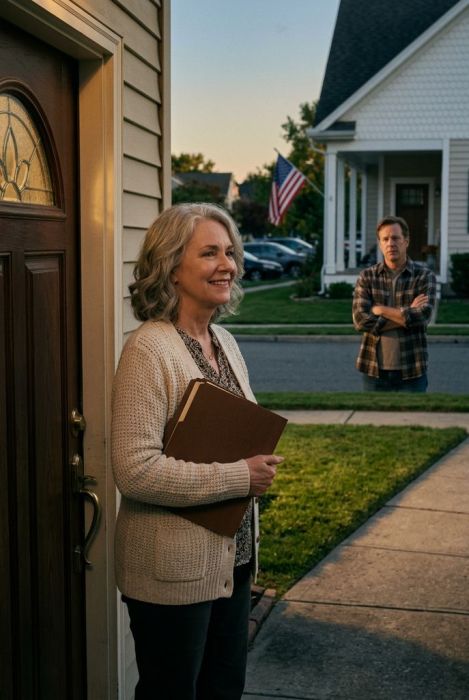
I walked to his door that evening thinking I'd simply ask if he'd noticed anything, if he'd seen any strangers near my porch, if maybe the ring had slipped down between the floorboards. He opened the door in his cardigan and his reading glasses and he looked so genuinely worried for me that I almost cried right there on his stoop. Come in, come in, he said, and he made me tea and listened while I told him about the ring, and he promised he'd keep an eye out, and he warned me about the new family at the end of the street, the way he always did. People you don't know, Nora. That's who you have to worry about.
The funny thing is, I almost believed him.
I want to tell you what losing that ring meant to us. Lucy had wanted a ring with her mother's old diamond reset — my daughter Melissa had passed away when Lucy was just a girl — and that diamond meant everything to our family. It was the only thing of my Melissa's I had left, the ring Henry put on her finger at her wedding, and now it was gone, and the grief of losing it felt sharper than the value of the gold holding it. I would have done anything to get it back. I would have accused anyone. That is exactly what Richard was counting on.
Over the next week Richard was everywhere, being helpful, being kind. He organized a small neighborhood search, printed flyers, drove me to the pawn shops in town and stood beside me while I explained to the owners what my daughter's ring looked like. He told me three separate times that he'd seen the new family across the street lingering near my porch, and each time he said it, I found myself looking at their windows with new eyes and feeling a cold knot in my stomach. The whole street was on edge, and Richard was the one holding it together. He was the calm center of our little storm.
I might never have looked twice at him if not for Mr. Finley.
Mr. Finley lived at the far end of the block in a house with a big wiry dog and hedges he never trimmed. He was a retired detective from the city, gruff and private, and most of the street found him a little unfriendly. But one afternoon he stopped me at his mailbox and said something that made my blood run cold. That ledger book of Richard's, he said. I've seen it. I've seen him in the shed behind his garage at all hours, writing in it, and I've wondered for years what he was keeping track of.
I laughed it off. Richard kept meticulous records of everyone's plants and mail and pets, I told him. That was just his way. Mr. Finley gave me a long, steady look and said, You know, I've been watching this street my whole retirement, and I've noticed that every time a family goes out of town and Richard offers to watch their house, something small and precious goes missing from their home within a year. Never anything big. Nothing that would scream burglary. Just Grandma's brooch, or the silver cufflinks, or a diamond they always meant to get appraised. And nobody ever blames Richard, because Richard is the one who tells them how sorry he is.
I wanted to tell him he was a bitter old man with nothing better to do. But I couldn't. Because the moment he said it, I remembered the Pattersons' missing silverware, and the quiet way the Drummonds had mourned an old watch, and how Richard had been the one everyone comforted when their things turned up gone, as though losing his neighbors' treasures hurt him more than it hurt them.
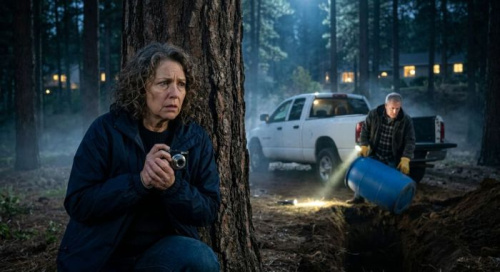
I started paying attention. I started noticing that Richard always knew exactly when I'd be out, that he'd mention my grocery store trips and my dentist appointments with the casual precision of a man who kept a schedule of everybody's absence. I noticed the shed behind his garage that he locked with a padlock and never opened, even in summer, and how he'd glance toward it whenever anyone mentioned the word burglary. And I noticed that the week my ring vanished, his truck had fresh mud on the tires and a folded tarp in the bed, even though he swore he hadn't left his house.
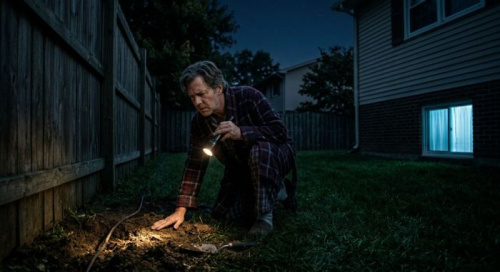
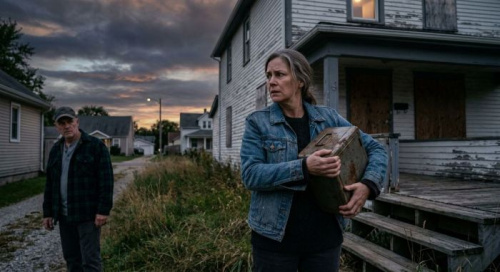
The night I decided to look, I didn't tell a soul. I waited until I saw his kitchen light go out, crept through the hedges at the edge of his property, and tugged on the shed door just to see if the padlock was really as ironclad as he wanted us to think. It wasn't. It was a cheap one, and the hasp was rusted, and when I pulled harder than I should have, the whole thing gave way with a groan that sounded like thunder in my own ears.
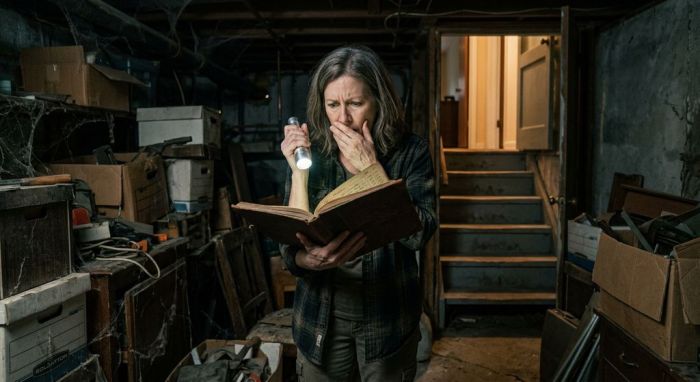
I have thought about what I saw in that shed a hundred times since, and I still get a chill, the honest kind, when I do. There was a filing cabinet against the far wall, unlocked, with a stack of ledgers on top. And sitting under an old tarp, in a shoebox, wrapped in a scrap of felt, was my daughter's ring. My Melissa's diamond caught the beam of my flashlight and answered me in a flash of light so familiar it stopped my breath.
I stood there a long while. I should have called the police right then. But something made me open the top ledger first, and I'm glad I did, because what I found in those pages changed everything. Richard hadn't just kept a list of houses. He'd kept a ledger of every home on our street, every family, every schedule, and every single small, precious thing of theirs he'd ever taken in twenty years. Dates. Names. Descriptions. Values he'd guessed at in his own tidy handwriting. Nine houses on our block, and a mailing address in the next town where he sent the best pieces, and a note in the margin beside my own name that I read with my hands shaking.
With the ring in my pocket and those ledgers tucked under my arm, I went straight to Mr. Finley. For the first time in his life, the old detective smiled at me. We drove to the station together, and I laid the ledgers out on the desk, and the officer who looked through them went very quiet and then went green around the gills. He'd had a string of reports over the years, little ones, never big enough to add up to anything, spread across three towns. Richard had been picking the pockets of an entire county for two decades, and nobody had ever connected the dots because the thief was always the kind, helpful neighbor who was the first to pray for your loss.
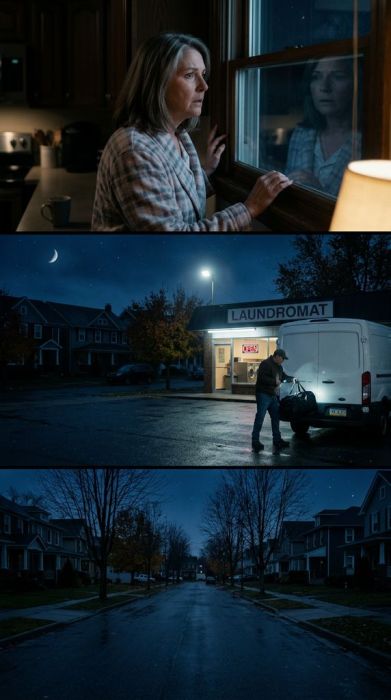
The night they came for him, I watched from my living room window. Two cruisers pulled up silent, lights off, and I saw Richard step onto his porch in his cardigan and his reading glasses with a look on his face I'd never seen before — not kindness, not worry, but the flat, startled panic of a man finally caught. They walked him out in cuffs past half the street that had gathered, and I remember the way Mrs. Vance started crying and saying it couldn't be, and the way nobody could quite look at me.
What he'd done with most of what he'd taken, nobody will ever fully know. But they found my ring. They found the Pattersons' silverware in a lockbox in his garage, and the Drummonds' watch, and a dozen other pieces that had families who'd mourned them for years. The judge took his time reading all nine counts, and when he gave Richard seven years and ordered him to pay every restitution he could, I sat in the back row and let myself finally breathe.
Some people on this street still feel guilty about Richard. That's what he did to all of us — he never stole just our things, he stole our trust in our own judgment, our belief that we were good readers of people. But I don't regret trusting him, and I don't regret being fooled. We were decent neighbors, and decency is what he counted on, and decency is also what finally caught him, because a decent neighborhood notices when its own begin to cry, and a decent retired detective pays attention to a thing that never added up.
These days the shed behind his garage stands empty and unlocked, and the new family that moved in painted it a cheerful yellow. There's a little glass dish on my entry table, and my daughter's ring sits in it, reset in a new band, and every time I pass it I think about how close I came to losing it forever because I was too sure of a man who was too good to be true. I lock my doors at night now, and I don't hand spare keys to anyone, not even the nice ones. And whenever a neighbor tells me they've gone out of town and asked the kind man next door to watch their house, I think about Mr. Finley's last words to me, the ones I'll carry with me always. There's no crime in being kind, Nora. But there's no shame in being careful either. The two should never be strangers.