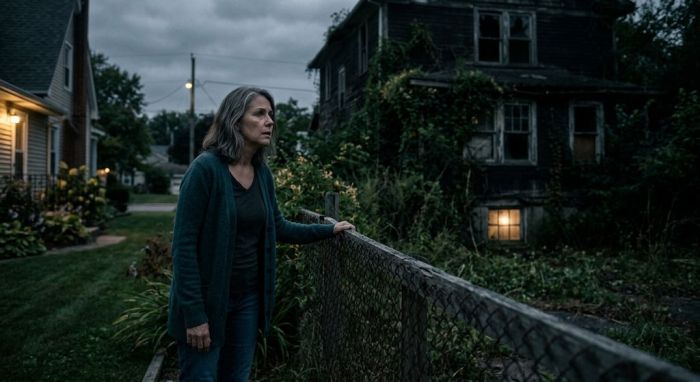
I remember the exact moment the lock finally gave, because life on our street changed the instant that old door swung open. My granddaughter's cat, a gray tom named Buster, had slipped through a broken slat in the fence between my tidy yard and seventeen years of neglect. He vanished into the weeds of the house next door like he owned the place, and I stood at the edge of my lawn calling his name while the August heat pressed against the back of my neck.
The house at 449 Cedar Springs Lane had been empty since before my own daughter was born. Once it had been the Delgado place, home to a gentle old couple who kept roses along the sidewalk and waved from their porch every evening. When Mrs. Delgado passed and her children scattered across three states, the house just sat there, tangled in honeysuckle, its windows dark and its soul slowly rotting out. Nobody blamed anyone. The estate was tied up, the family gone, and everyone agreed it was a sad leftover — a house too expensive to save and too confusing to sell.
For seventeen years, that's what I told myself whenever I glanced at it over the fence. I never dreamed, not for one second, that somebody in this neighborhood understood that crumbling house far better than I ever did.
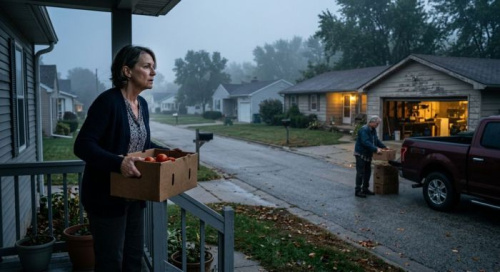
The one man who seemed to genuinely care about it was my neighbor Paul Mercer. Paul lived two doors down and was the unofficial caretaker of everything on our street. When a storm took down a shingle, Paul had a ladder up before the rain stopped. When the Murphys' water heater died on a Sunday, Paul was there with a wrench and a thermos of coffee. He was retired from the county, a widower, quiet and dependable, the kind of man a neighborhood thanks at its annual block party and never thinks twice about. For years Paul told us he handled the Delgado estate "out of the goodness of his heart," keeping the property from falling into total ruin until the family's affairs could be settled. We all believed him. We all admired him. That was the trap.
I had been keeping an eye on my granddaughter Lily for the summer while her parents worked. At nine years old, she was all scabby knees, boundless curiosity, and a natural talent for finding trouble. She loved Buster more than anything, and Buster loved running off more than he loved her. So when he slipped through the fence that afternoon with a flick of his tail, neither of us hesitated. Lily grabbed my hand. "Gran, we have to get him," she said, and I couldn't bring myself to say no.
I climbed over the fence the way I had as a girl, careful not to snag my blouse, and dropped into the tall grass of the Delgado yard. Lily followed, and together we pushed through the honeysuckle toward the house. It felt wrong, trespassing like that, but the cat was family and that changed everything. The windows stared at us like empty eyes. The porch sagged under its own weight. And beneath it all, I heard something that stopped me cold.
Not Buster. A low, mechanical hum, like a refrigerator running somewhere deep in the building, and the faint click of a lock. For a house that had sat dark and dead for seventeen years, that sound didn't belong. I told myself it was just the old wiring, a trick of the heat. But my skin prickled all the same, and I reached for Lily's hand a little tighter.
We found Buster at the back of the property, crouched under the broken lattice that covered a low basement window. The window itself was filthy, smeared with years of grime, but through a corner where the glass had cracked I could see a thin, wavering light — a lamp burning somewhere below. Buster mewed at it, fixated, as though something on the other side fascinated him. I knelt down and squinted, my heart starting to thump in a way I didn't like. That's when the screech of a door hinge cut through the yard behind me.
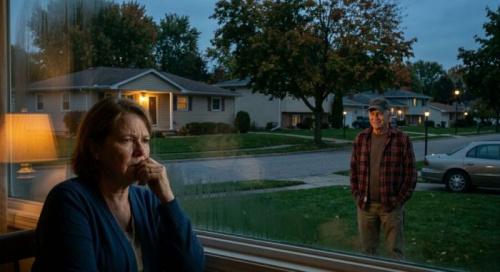
I spun around, expecting to see a stranger, and instead found Paul Mercer standing at the back door of the Delgado house, holding a ring of keys in his hand. He was smiling, that easy neighborly smile, but his eyes had gone flat and watchful in a way I'd never seen before.
"Nora," he said, pleasantly enough. "What brings you two all the way back here?"
I babbled something about the cat, about Lily, about how sorry I was for trespassing. Paul nodded along, that smile never slipping, but I noticed he was blocking the door, and I noticed the keys on his ring — modern, shiny, brand new. Keys to a house that was supposed to be locked up and forgotten.
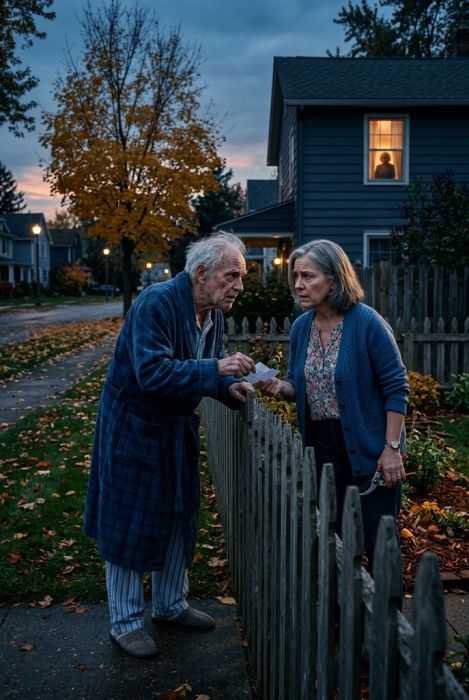
"Buster's a wanderer," Paul said, chuckling. "I've seen him poke around here. You're welcome to grab him — but let's keep this between us, alright? The family doesn't like folks poking around the estate. You understand." It sounded reasonable. It sounded exactly like the Paul Mercer everyone trusted. But something in the way he said "between us" made my stomach drop, and I knew, with the sudden clarity that only a mother or grandmother can have, that I had just stumbled into something I wasn't supposed to see.
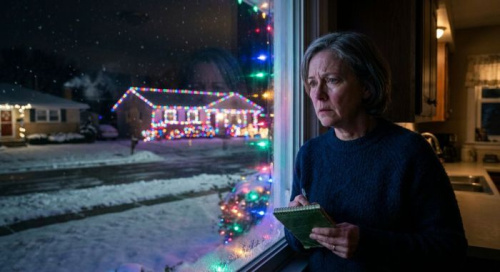
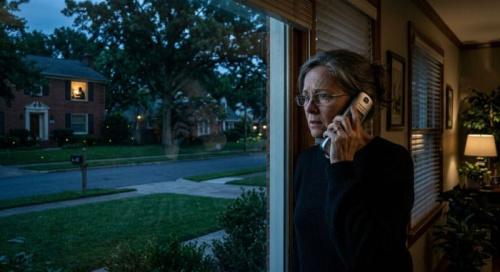
I scooped up Buster, made my excuses, and walked home with my granddaughter's hand in mine, my mind already racing. All night I thought about that lamp burning in a dead house, and those brand-new keys, and the way Paul Mercer had looked at me through that back door. I told myself I was being paranoid, that a widower caretaker keeping a light on in a vacant property was none of my business. But I couldn't let it go. The next morning, while Lily watched cartoons, I did something I had never done in fifty-eight years of living on that street: I started quietly paying attention.
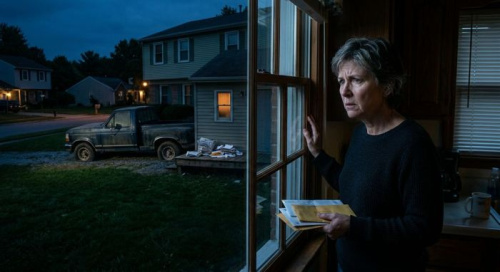
Over the next week, I watched Paul Mercer the way a detective watches a suspect. I noticed his truck parked at the Delgado house at odd hours, always with the garage door shut and the engine cut. I noticed he never used the front door, only the back. I noticed that no matter how much he talked about protecting the family's affairs, the house never got a single repair — the shingles stayed loose, the porch kept sagging, and not one lawn crew ever came. Paul wasn't maintaining the place. He was guarding it.
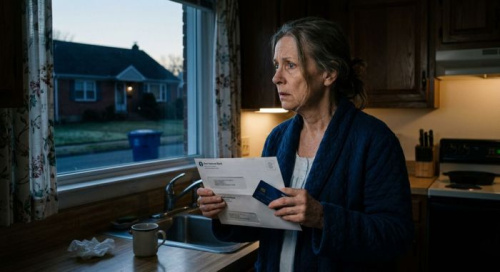
The thing that finally cracked it open was a small accident of paperwork. On a Tuesday, my sister in Ohio called to ask if I could dig out a copy of our late mother's old property deed for some estate nonsense of our own. I spent an afternoon in the county clerk's office, and because I was there anyway, with nothing better to do, I looked up the Delgado property out of idle curiosity. Ten minutes later, I was standing at the counter with my hands shaking, staring at a document that changed everything.
The Delgado house had been signed over to a trust the year Mrs. Delgado died. The terms were simple and heartbreaking: the property was to be held for her three grandchildren, to be turned over to them when the youngest turned twenty-five. That date had passed four years ago. The trust should have been wound up. The house should have been theirs. Instead, the records showed a string of extensions and "irregularities," every single one filed by a man I knew very well, under the title of court-appointed conservator.
The signature on each extension was Paul Mercer's.
I stood in that quiet county office with the air conditioning humming and my heart hammering, reading the name over and over. Paul Mercer had been appointed to look after the Delgado estate seventeen years ago. And instead of handing the house to the grandchildren who had waited and grown up and waited some more, he had quietly extended his own authority, year after year, filing paperwork that a busy clerk would never question. The question burning in my chest was why. What was so valuable about that crumbling old house that a respected man would steal years of three people's lives to keep it?
And that's when I remembered the lamp in the basement, and the brand-new keys, and I understood that the answer was probably still sitting inside those four dark walls.
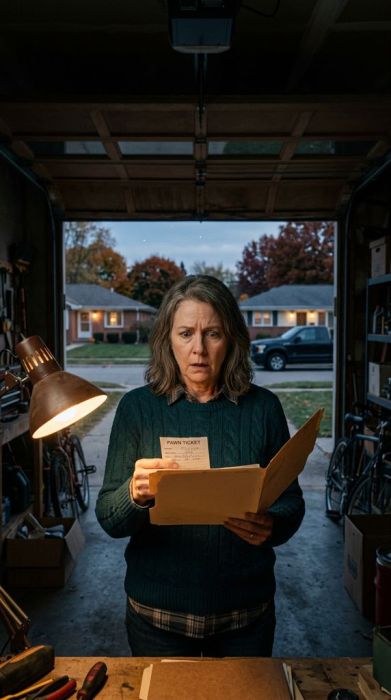
I decided I wasn't going to do anything reckless. Watching crime shows had taught me that much. So I called the only person I could trust — my daughter's husband's father, a retired detective named Frank who lived forty minutes away and had always been good to Lily. I told him everything: the keys, the lamp, the trust documents, Paul Mercer's name on every forged extension. Frank listened without interrupting, and when I finished he let out a low whistle.
"That kind of pattern," he said slowly, "that's not maintenance, Nora. That's a man protecting an asset." He told me to stay away from the house, to not tip Paul off, and to give him the county records. Then he said the words that made my blood run cold. "People do a lot of terrible things to hang onto a place that's hiding something. Whatever he's got down there, he's kept it secret for seventeen years. Don't you go down there alone."
I promised him I wouldn't. I meant it, too. But that promise didn't survive one rainy afternoon and a missing cat.
It was my own fault, really. I had let Lily run out to feed Buster through the rain, and a few minutes later she came back white-faced, her voice thin. "Gran, Buster got under the Delgado fence again. And Gran — there's a truck in the back. Paul is there. He's, he's carrying boxes into the basement."
Every instinct I had screamed at me to stop, to call Frank, to do the sensible thing a sixty-year-old woman should do. But none of those instincts could overpower the terror in my granddaughter's voice, and before I knew it I was standing in the rain at the back of the Delgado property, watching Paul Mercer's silhouette load box after box through the broken lattice window of that basement, one by one.
He must have heard me — a wet footstep, a sharp inhale — because his head snapped up, and for a long, terrible moment we just stared at each other across the rain-slicked yard. Paul's face went through a series of emotions in about three seconds. Surprise. Recognition. And then a cold, flat calm that was somehow worse than anger.
"Nora," he said, setting the box down. "I told you to keep this between us."
I didn't run. I couldn't, with my granddaughter hiding behind a bush thirty feet away, terrified and watching. So I did the only brave thing I had in me. I walked toward him, letting the rain soak my hair, and I called his bluff. "I know about the trust, Paul. I've seen the papers you forged. I know those grandchildren are still waiting for a house you stole from them." His eyes flickered, and I pressed on. "Whatever you're hiding in there, it's over. People are on their way."
I was lying about the people. Frank was still forty minutes out, stuck on a flooded back road. But I gambled on Paul's nerves, on seventeen years of a man who had gotten very, very good at pretending. And it worked. He laughed — a harsh, broken laugh that had nothing kind in it — and he looked at me with a strange mixture of defeat and relief, as if a part of him had been waiting his whole life for somebody to finally figure him out.
"You want to know what's down there?" he said quietly. "Take a look. You earned it." He stepped aside, and for the first time he let me stand at the open edge of that basement window, peering down into the dim lamplight. And what I saw stopped my heart.
The basement of the Delgado house wasn't a damp, empty cellar. It was packed floor to ceiling with stolen goods — stacks of unopened boxes, electronics, jewelry, tools, all of it tagged and organized like a warehouse. There were bank slips, fake IDs, shipping labels for dozens of county addresses. For seventeen years, my trusted neighbor Paul Mercer hadn't been caretaking a dead woman's house at all. He had been using it as the hub of a criminal fencing operation, laundered through the veneer of the neighborhood's most dependable man. The lamp I'd seen burning wasn't a ghost. It was the workshop of a thief.
I stood there in the rain, shaking, and I realized the awful truth: the neighborhood secret wasn't in the house. It was standing right next to me, in the smiling, helpful man everyone had brought their broken appliances and their troubles to for nearly two decades.
I don't remember much of what happened next, only fragments. Lily screaming from the bushes. Sirens — Frank must have called it in on the way, or a neighbor heard the commotion. Paul Mercer standing very still as deputies crossed the yard with handcuffs and a warrant, his face going slack as the rain soaked his shirt. The three grandchildren of Mrs. Delgado, who arrived two days later from three different states, standing in the sunlight on the porch of a house that finally, after seventeen years, belonged to them.
The police found the extent of it all in the records I'd pulled from the county office and in the meticulous ledgers Paul had kept in that basement — a man who organized his crimes with the same tidy care he used to fix a neighbor's faucet. He was charged with forgery, grand larceny, and defrauding an estate, and he pled guilty without a fight. The Delgado grandchildren, who had grown up thinking their inheritance was nothing but an abandoned ruin, discovered that their family home had real value, and that the man they'd been told was kindly protecting it had stolen years of their lives instead.
On the day they finally sold the place, a lovely young woman — the oldest grandchild, with her grandmother's wide eyes — came to my door with a box of Mrs. Delgado's old roses and a card that made me cry. "Thank you for finding our house," she wrote. "And for trusting us when no one else did." We hugged on my porch, Lily tugging at my sleeve, Buster weaving between our ankles as if he knew he'd started something extraordinary.
Standing there, I thought about all the small things I'd seen over the years and dismissed — the keys, the lamp, the careful smile. I thought about how easy it is to trust a man who's always there to help, and how rarely we ask why. The house at 449 Cedar Springs Lane is being loved again now, restored by a family that finally has it back. And Paul Mercer is where he belongs, the seventeen-year secret of our quiet street finally, mercifully, over.
As for me, I keep a new little habit. When a neighbor offers me a helping hand, I smile and accept it — but I remember to ask the questions that kept our street safe. Because the truth is, the scariest secret in any neighborhood isn't always locked in a basement. Sometimes it's wearing a friendly face, holding a thermos of coffee, and waiting for you to look the other way.