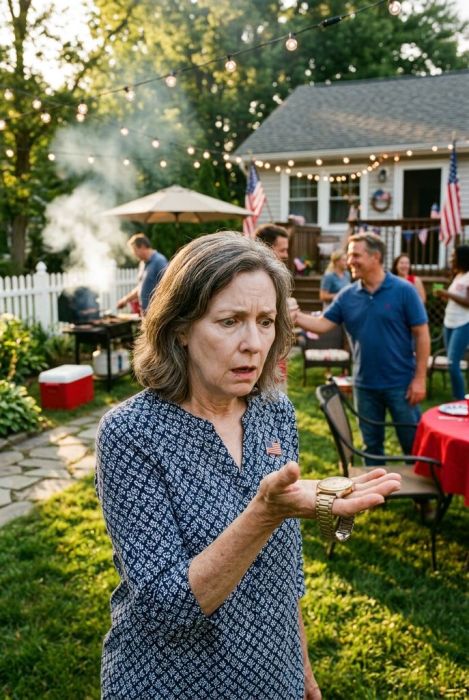
The potato salad sat untouched on my plate while I stared at the watch in Dale Bishop's hand. The Fourth of July sun was still high over Juniper Lane, and the whole block was out — kids chasing each other through the sprinklers, smoke curling off the grill, somebody's spaniel barking at the badminton net. Dale held the watch up so everyone could admire it, turning it so the face caught the light.
"Estate sale over in Dayton," he said, beaming. "Guy didn't know what he had. Paid sixty bucks for this."
My heart made a sound I could hear in my own ears. I knew that watch. I had watched it on my husband's wrist for thirty-one years — an Omega Constellation, gold with a black face, and on the back an inscription Frank's father had paid a jeweler in Cincinnati to engrave back in 1987. To Frank — with love, Dad. I had read those words a thousand times. I had also spelled them out for a police report eight years ago, the morning after our house was broken into, when I sat in my robe in a room full of overturned drawers and listed everything that was gone. The gold watch. The engraved watch. Gone.
Dale handed it around the circle of neighbors like a show-and-tell prize, laughing that the beauty of estate sales was other people's loss and his gain. I set down my plate before my hands could shake it off the table. Then I took a picture of the watch with my phone, pretending to check a text, and excused myself to the bathroom, where I stood with my back against the door and counted to sixty.
I am not a suspicious person, and I never was. I taught high school English for thirty-two years and believed the best about people the way my mother taught me to. When Dale Bishop moved onto Juniper Lane ten years ago, I was the first one over with a pie. He was a compact man in his late forties then, with a salesman's smile and a story about a wife who had "taken off" a few years earlier. He said he was a retired machinist, which raised eyebrows, but he had a way of making questions feel rude.
Dale ran a little online business called Whitfield Estate Finds, the name painted on the side of his van. He would drive out to estate sales and auctions all over Ohio, buy up boxes of other people's lives, and resell the good pieces online and at local flea markets. Nothing ever looked stolen. It all looked exactly like what it was supposed to be: a friendly neighbor making an honest living off other people's clutter.
For years, that was all he was to me. He shoveled my driveway without being asked, brought over soup when Frank got sick, and stood at the back of the church at Frank's funeral. He was the kind of neighbor you thank your lucky stars for.
I thought about all of that on the night of the cookout, lying awake at two in the morning, staring at the ceiling. And I thought about the burglary.
Frank and I had been at his sister's house in Toledo that weekend. We came home on a Sunday evening to find the back door splintered, the kitchen drawers dumped on the floor, and the upstairs turned inside out. They had taken my mother's cameo brooch, Frank's father's gold watch, a coin collection he'd inherited, some silver, and a jewelry box my grandmother gave me when I turned sixteen. The police were sympathetic and honest: no prints, no witnesses, no leads. It was one of a string of break-ins that year on the west side of town, all of them unsolved.
Frank never got over losing that watch. He'd wind it every Sunday morning, even after it stopped keeping good time, just to hear the tick. When the insurance check came, he wanted to replace it, but nothing on the market felt right. "It's not about the money," he told me once, in the only moment I ever saw him cry about it. "It's my father's. It's the only thing of his I had left."
And now it was in Dale Bishop's hand at a neighborhood cookout, fresh from an "estate sale in Dayton."
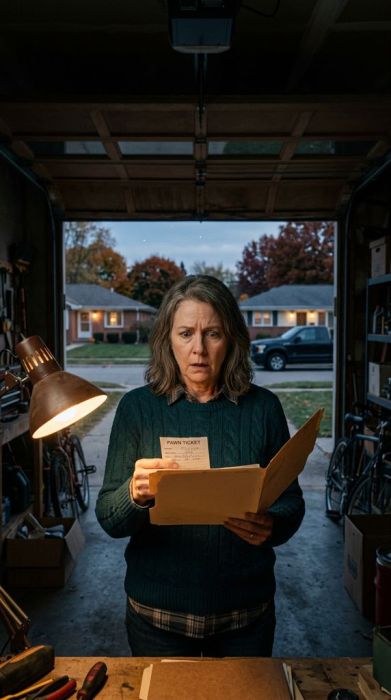
I didn't sleep that weekend. I dug out the old photo albums and found the picture of Frank's father pinning the watch on Frank's wrist at graduation; the engraving was visible, a thin line of script across the case back. In a safe-deposit box I found the insurance paperwork, and I wrote down the exact words of the inscription from memory, because I had written them before, once for insurance and once for the police. To Frank — with love, Dad. 1987. They matched perfectly.
The next week, I started paying attention to Whitfield Estate Finds. Dale advertised it everywhere — local Facebook groups, the farmers market booth he rented every Saturday. And the more I scrolled, the colder I got. There was a Fabergé-style egg I remembered seeing on Mrs. Kowalski's mantel before her house was hit two years after ours. There was a set of silver dollars that looked identical to the ones Mr. Hendricks had shown me at a block party, shortly before his break-in. There was a cameo brooch that made my chest tighten, though I couldn't prove it was my mother's from a photograph alone. Hoping wasn't evidence. Neither was rage.
I called the police, of course. I spoke to a detective named Mills, who listened politely, took the photos I emailed, and told me the truth: without the watch in hand and a warrant, there was nothing they could do. "Ma'am, if you can get us proof he knows it's stolen, we've got something. Until then, it's a watch and an old police report." I understood. Frank had been a high school principal, and fairness mattered to him more than almost anything. But fairness didn't make my hands stop shaking when I saw Dale's van pull into his driveway.
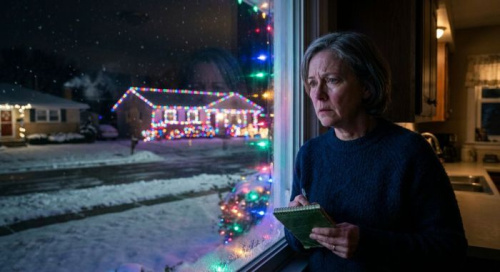
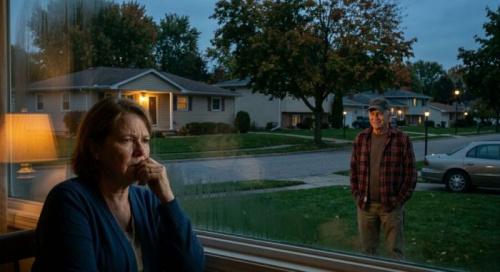
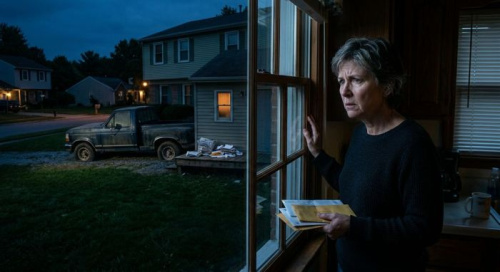
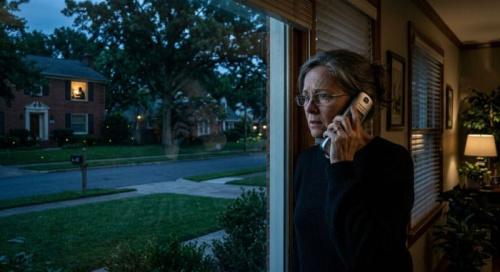
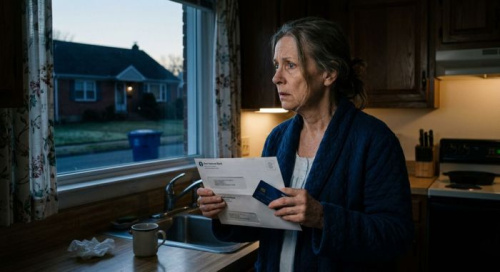
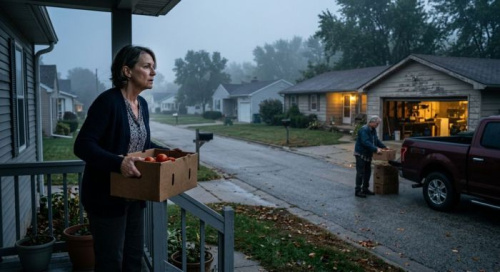
That was when Dale started to notice. He caught me staring at his house and gave me a long, careful look instead of a wave. A few nights later, I came home from the grocery store to find my garbage can tipped over in the driveway and a handwritten note tucked under my windshield wiper. Block letters, all caps, on lined paper torn from a notepad. SOME THINGS ARE BETTER LEFT IN THE PAST. I stood in my driveway for a long time with that note in my hand, and I felt something I hadn't felt since the burglary itself: watched.
I nearly told my son Brian to come get me. He was in Columbus, three hours away, and he would have driven through the night without a second thought. But I had stopped sleeping, and somewhere in the fog of those sleepless hours I decided I wasn't going to be run out of the home Frank and I had built. I was going to prove what I knew.
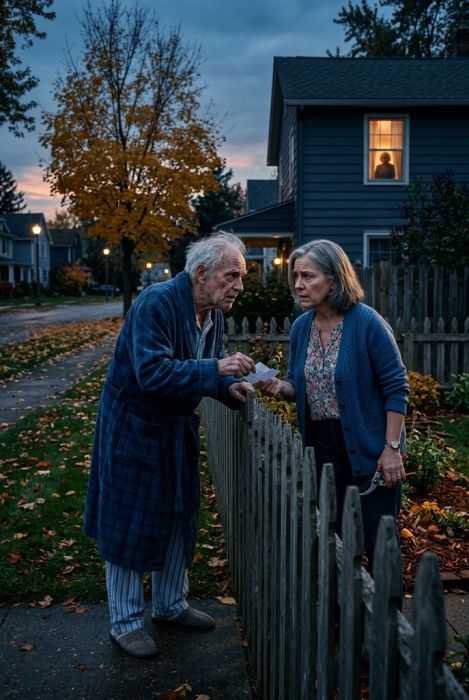
My ally came from the end of the street, and he came with coffee. Sam Okafor was a retired Columbus PD detective who had moved to Juniper Lane to be near his daughter and her grandkids. He was seventy, soft-spoken, and walked his golden retriever past my house every morning at seven. When he stopped that Tuesday and asked, gently, if I was okay, I broke down on my own front steps and told him everything — the watch, the inscription, the online shop, the note.
Sam didn't laugh. He didn't tell me I was imagining things. He listened the way old detectives listen, with his coffee cup balanced on his knee and his eyes on the middle distance. Then he asked if he could look at the photos on my phone, and after that, if he could keep the note. "Calling this man took a lot of nerve," he said finally. "And you've got an investigator's eye, Ruth. You noticed things nobody else noticed for eight years." That was the first time in weeks I felt like I could breathe.
Sam did what retired detectives do: he looked where nobody else thought to look. Whitfield Estate Finds was a real, registered business, but its history was shallow — a four-year-old address, a P.O. box, no previous address trail for Dale Whitfield anywhere in Ohio. He ran the name through contacts he still had at the bureau and came back with something that made him sit down at my kitchen table with a very long exhale.
Twelve years ago, in three states, there had been a pattern of burglaries tied to a man who ran "estate clearing services" — someone who befriended grieving families, offered to clear out a deceased relative's house cheaply, and quietly pocketed the valuables. Some of those items had later surfaced as "estate finds" sold online, often with forged certificates of authenticity. The man had never been caught. He had simply moved on. The old case file didn't have a clear name, but it had a description, and a habit — a habit of living next door to the people he robbed.
"We're not going to arrest him on a hunch," Sam said. "But I know a judge in Canton who owes me a favor and a county sheriff who likes old-fashioned sting work. The question is whether you're brave enough to stay out of it and let me work." I told him I had never been good at staying out of things.
The plan was simple, which is why it worked. Sam told a few people that his favorite aunt had passed in Canton and he had to clear her house before the bank took it back. He mentioned the trip at the barber shop and the coffee stand, worried aloud that it was too big a job for one old man. Whether Dale heard it through the grapevine or watched Sam's empty driveway himself, we'll never know. But on a Friday morning three weeks later, a silver van with WHITFIELD ESTATE FINDS on the side pulled up to the address Sam had given him.
Dale spent seven hours inside that house. Later, we would watch the footage Sam's hidden cameras caught: Dale nodding sympathetically, writing numbers in a little notebook, slipping a vintage ring into his pocket when he thought Sam was in the kitchen. He quoted a price, took the cash, and shook Sam's hand at the door with a smile that made my skin crawl. "Sorry for your loss," he said. "This stuff, I'll find it a good home."
The next morning, Sam called me from his porch. "It's done. Come to my house at nine. And bring a thermos, because we're going to watch the rest of it together." What I didn't know — what none of us knew until nine o'clock — was that while Dale was in Canton playing the sympathetic estate-clearer, a judge in Hamilton County had signed a search warrant for 57 Juniper Lane. Sheriff's deputies and two postal inspectors went in through the front door and found a basement that looked like a warehouse for other people's memories.
I saw it for myself. Sam drove me over, and I stood on the sidewalk with the whole street while officers carried out the evidence in clear plastic bags. There were engraving tools and blank certificates of authenticity. There was a heat-seal machine and rolls of counterfeit jewelry packaging. There were shelves of watches in little velvet boxes, a coin collection that made my knees go weak, a cameo brooch that could have been my mother's — and an old jewelry box with my grandmother's inlaid lid, the one I'd described to a police officer eight years ago. Frank's cufflinks were in a ziplock bag, still monogrammed. And in a small wall safe in the corner, wrapped in a felt cloth, they found an Omega Constellation with a black face and an inscription on the back. To Frank — with love, Dad. 1987.
Dale Bishop — or Daniel Wexler, the name he had used in three other states — came home in the middle of the raid. He pulled into his driveway and sat there for a full minute, staring at the police cars and the neighbors on the sidewalk with their phones out and their mouths open. I watched his face change. I watched him see me. For a second, something ugly moved behind his eyes, and I felt Sam's hand close on my shoulder, steady as a fence post. Then Dale got out of his van very slowly, and he did not resist, and the deputies put him in the back of a cruiser in handcuffs while the whole street watched in silence.
Mrs. Kowalski stood across the road in tears, clutching the photograph of the egg her mother had left her. Charlie kept saying, "That's the man who shoveled our driveway," like a record stuck. I said nothing. I just stood there with Sam's hand on my shoulder and watched the cruiser turn the corner, thinking about Frank, and about his father's watch, winding its way home after eight years.
Dale Bishop was charged with receiving stolen property, forgery, and burglary conspiracy. Once the accomplice — a cousin in Dayton — began to talk, the picture got clearer. They had run the same scheme in three states: the cousin broke in, Dale turned the goods into "estate finds," and the money flowed through a shop that never met a single customer in person. The total value of the items recovered from that basement exceeded four hundred thousand dollars. Four of the eight burglaries from our old unsolved string were closed in a single afternoon. Dale took a plea deal. He's serving nine years, and the judge ordered restitution that won't be done when he gets out.
Some of us got our things back. Mrs. Kowalski's egg came home in a padded envelope, Mr. Hendricks got his silver dollars, and my mother's cameo brooch — confirmed by a tiny scratch on the back that nobody but me would have known to look for — sits on my dresser where it belongs. Frank's watch came home too. The detective who returned it was the same Detective Mills who had taken my call weeks earlier, and he had the decency to look sheepish when I opened the box. "I owe you an apology, Mrs. Callahan. You told us. You told us exactly what you saw." I didn't say I told you so. Frank would have hated that. But I did wind the watch that night, and I've wound it every Sunday since — for the tick, and for him.
Things are different on Juniper Lane now. There's a neighborhood watch sign at the corner, and nobody leaves a spare key under the mat anymore. Sam still walks his golden retriever past my house every morning, and sometimes I walk with them.
People ask me, every now and then, whether I'm afraid after everything that happened. I'm not. Fear shrinks the moment you stop carrying it alone. I told one person — just one — and a good memory and a career of reading liars was enough to take a whole operation apart.
If there's anything I'd want anyone to take from my story, it's small and simple. When someone is that eager to help you sort through what you've lost, pay attention to where the good things end up. And when you see something that doesn't belong, say something — tell someone. The worst that happens is you're wrong. The best is you bring something home that everyone said was gone forever.
I'm looking at Frank's watch on my wrist as I write this, ticking along like it never left. Some things do come back. Some things, if you're patient and brave and a little bit angry, come back to you in the end.