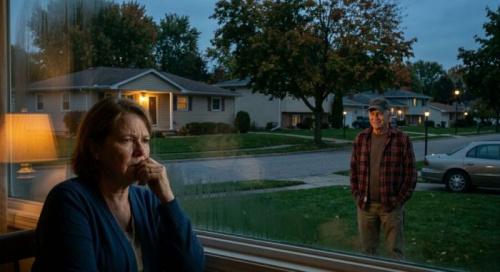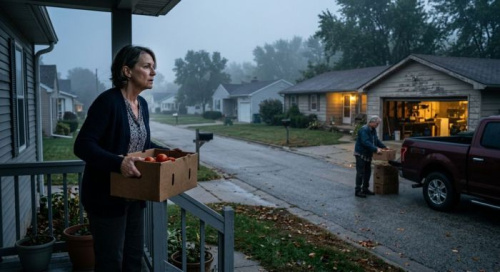
I noticed that Frank Hendricks, the handyman at 61 Juniper Street, always insisted on being paid in cash. Everyone on our block adored him — he fixed porches, unclogged drains, and never charged more than a fair day's work. My husband Jack and I had lived next door to Frank for eleven years, and in all that time, he had never once given me a reason to doubt him.
He was a fixture of our little community, the kind of man you waved to from your car and trusted with a spare key to your house. When a fence post rotted or a screen door squeaked, Frank was the first person everyone called. He never hurried, never overcharged, and always left a job looking better than when he started.
Then came the oddest thing. When our daughter Becca got married last fall, Frank did all the carpentry for the reception arbor as a wedding gift. It was his proudest work, a beautiful piece of arching wood he sanded by hand until it gleamed. I wanted to give him something back, so I wrote him a check. He smiled, shook his head, and handed it right back.
"I don't do banks, Marge," he said with that folksy drawl. "Cash is cleaner. Truth is, the banks and I don't get along."
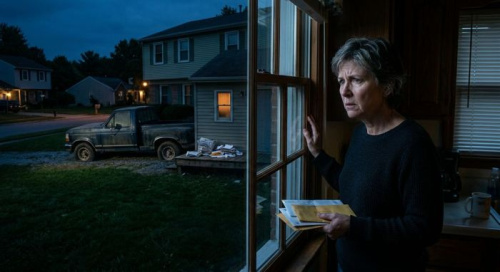
I chalked it up to an old man's stubbornness. Plenty of retirees my age distrusted banks, and Frank was one of the most honest people I had ever known. He wore the same quilted flannel, drove the same dusty Ford, and kept his tools sharper than any professional I had met. Money, I figured, was just something he preferred to keep out of the system.
But then something happened that made me go cold. I gave Frank a crisp fifty-dollar bill for fixing our leaky kitchen sink, and a week later when I went to pay the newspaper carrier, I realized that same fifty had somehow ended up right back in my purse, folded the way he always folded his cash.
That could have been a coincidence. But it wasn't the first time I had seen the same crisp bills drifting around our street, bills that looked just a little too new, a little too perfect, with plates that gleamed under the right light. They turned up in the collection plate at church, in the register at the corner market, even in the birthday card my sister sent me from across the state.
The trouble began, really, with my son Danny. He was twenty-six, saving up to buy his first home, and he had quietly started doing odd jobs for Frank on the weekends. Frank paid him in cash, of course — always in cash. Danny thought nothing of it. He was young and dazzled by the idea of tax-free earnings on the side.
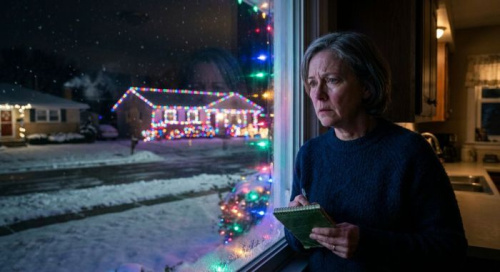
It was Danny who noticed Frank's basement light burning at strange hours.
"Mom," he said one night, sitting at our kitchen table with a strange look on his face. "Frank's been down in that basement every single night this week. Sometimes till three in the morning. And I keep hearing a machine running — something that thumps and hums, like a big old printer."
I laughed it off. Frank had mentioned he was helping a nephew start a small print shop, and he had set up some old equipment downstairs. It seemed harmless enough — a lonely widower keeping busy, staying out of his own empty house. I told Danny not to be so nosy.
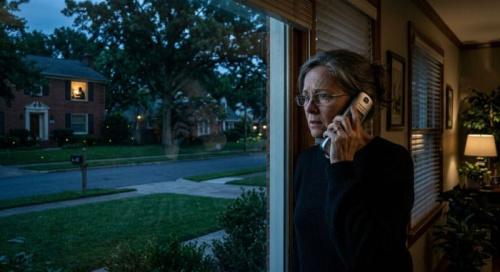
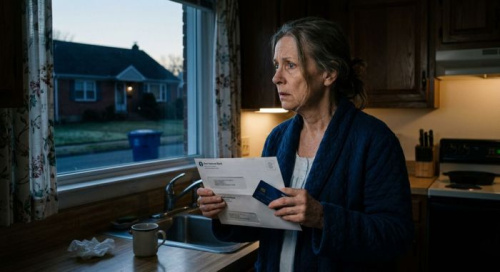
But the next week, my church held its annual bake sale, and Mrs. Albright, our organist, tried to pay me for a pie with one of those gleaming new twenty-dollar bills. Something about it caught my eye. The texture felt wrong — too slick, like it had been printed on better paper than the bank used. I held it up to the window light, and my heart dropped into my stomach.
The watermark was there, but the little security thread shimmered at the wrong angle. The ink on the portrait had a faint purple tinge under the corner of the lamp. I had worked eighteen years at Citizens National Bank as a teller before I retired. I knew real money like I knew my own children's faces.
This bill was nothing but a beautiful, nearly perfect fake.
I didn't want to believe it. I told myself Mrs. Albright had gotten it somewhere innocent, that plenty of counterfeit money floats around a town without anyone meaning it. But the more I turned it over in my shaking hands, the more I thought about Frank's cashed checks, his burning basement light, and the unnervingly crisp notes that kept circulating through our little neighborhood.
I remembered, too, the night I had stayed late at the market during a storm, an old habit from my bank days of keeping an eye on the till. I saw a man in a cowboy hat pay for his groceries with three brand-new hundreds, and the cashier had to run them through the counterfeit pen twice. It had felt like nothing at the time. Now it felt like a piece of a puzzle clicking grimly into place.
That night I barely slept. I lay awake staring at the ceiling, running through every year I had known Frank Hendricks. He had been kind to my kids when they were small. He had driven my mother to her doctor's appointments. He had wept at my husband's funeral more sincerely than some of my own relatives.
But the counterfeit twenty sat on my nightstand like a piece of ice, and I could not shake the feeling that the sweetest man on our street was hiding something far darker in his basement.
I decided I had to see for myself. On a night when Frank went to his Tuesday Kiwanis meeting, I did something I never imagined I would do. I borrowed a spare key his late wife had once given me for emergencies — a key I had honestly forgotten I kept — and I let myself into his house.
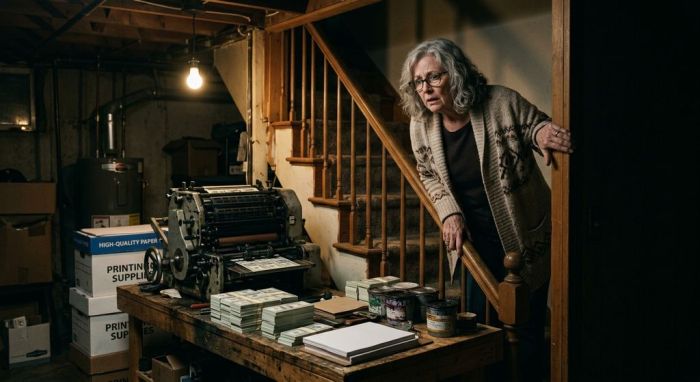
The basement stairs creaked under my weight. The air smelled of ink and solvent and warm metal. And there, under a single hanging bulb, sat a machine I recognized from a fraud seminar I had attended at the bank years ago: an offset printing press, freshly cleaned, with a dark plate still mounted and ready.
Rolls of crisp, uncut paper lay stacked on a workbench beside a jug of specially mixed ink. A box of perforated sheets sat underneath, waiting to be sliced into perfect little rectangles. And pinned to a corkboard above the press was a list, handwritten in Frank's tidy old-fashioned script, with names and dates and dollar amounts — people who had paid him in cash, and the exact counterfeit notes he had slipped back to them in change.
My own name was on that list. And so was my son Danny's.
I stood there shaking, understanding at last the full depth of the betrayal. Frank hadn't been charitably avoiding banks. He had been laundering his own fake money back into the hands of the very people who trusted him most, turning our street into a quiet little counterfeit economy where no one dared ask where all the shiny new bills came from.
That was the detail that truly chilled me. It wasn't greed for wealth alone that drove him — it was the quiet thrill of outsmarting an entire town, of being loved while secretly robbing everyone who loved him. Every time a neighbor thanked him for a cheap repair, he was counting their fake money and thinking himself a genius.
I wanted to call the police right then. But I knew that if I did, Frank — the beloved handyman, the town's sweetest old man — would never face what he truly was. The evidence could be destroyed in minutes, and everyone would think I was just a bitter old widow with a grudge against a kind soul.
So I did something smarter. I used the one thing Frank never expected me to have: the memory, and the training, of a woman who had spent eighteen years catching people just like him.
I went to the county sheriff that week, not with accusations but with facts. I brought the counterfeit twenty from Mrs. Albright, and I showed the deputy exactly where to look. I told him about the press, the plate, the acid-free paper, and the careful list of victims pinned to the corkboard. I even told him about the cowboy hat in the market, and the three new hundreds that had made the cashier reach twice for the counterfeit pen.
At first the sheriff was skeptical. Frank Hendricks was a pillar of that community, a man who had helped rebuild half the porches in our county. But I had the proof, and I had patience, and I knew down to my bones that I was right.
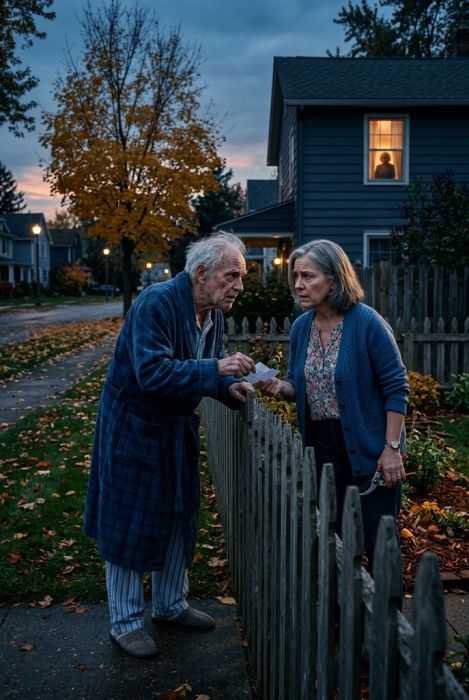
The night they came for him, the whole block gathered in their front yards, shivering in the cold, watching as three sheriff's cruisers pulled up to 61 Juniper Street with their lights off. Frank came to the door in his quilted flannel, looking genuinely confused, asking what all the fuss was about.
They found the press running. They found the plates. They found a box of freshly printed bills still warm from the machine, and the ledger with names that included half the people on our street. The deputy who had doubted me pulled me aside afterward, apologized, and told me I had saved a lot of elderly folks from losing their savings.
The neighbors were shocked. Some of them cried. A few of them, I know, were angry at me for a long time, because Frank had been so good to them. But when the authorities totaled it up, they found Frank Hendricks had been counterfeiting money for nearly seven years, flooding our little town with dozens of thousands of dollars in near-perfect fakes that he discreetly traded back into the hands of friends and neighbors.
The judge did not go easy on him. Frank Hendricks pleaded guilty to federal counterfeiting charges, and because of the sheer scope of the operation and the way he had knowingly passed fake money to elderly and vulnerable neighbors, he was sentenced to serve several years in federal prison.
Our street was quiet for a long time after that. The silence where Frank's basement press used to thump was the heaviest of all. Some neighbors kept their distance from me, unable to reconcile the gentle handyman with the man who had betrayed them so completely.
But I have never regretted it. Not for one moment. Because I think about my friend Ruth, who lived on the corner and was always a little too trusting, and who traded her real savings to Frank to help him "fix her roof." I think about the young couple who paid Frank a cash deposit for a fence he was going to build, money they can never get back.
Frank Hendricks was a good man to everyone who never looked too closely. And that is exactly why he was so dangerous. The ones who hurt us the most are almost always the ones we trust the most.
I still live at 59 Juniper Street. Jack is gone, and Danny is finally in his own home now, paid for honestly. When I go to the bank with my daughter Becca, she teases me for holding every bill up to the light before I fold it away.
I tell her that's not paranoia. That's just memory. And memory, I have learned, is the one thing no counterfeiter can ever forge.