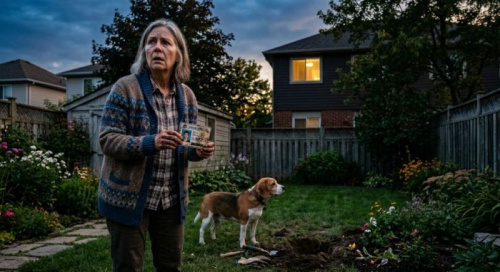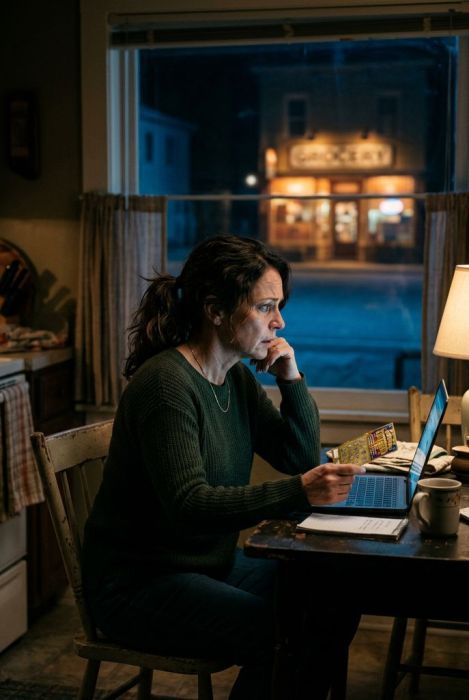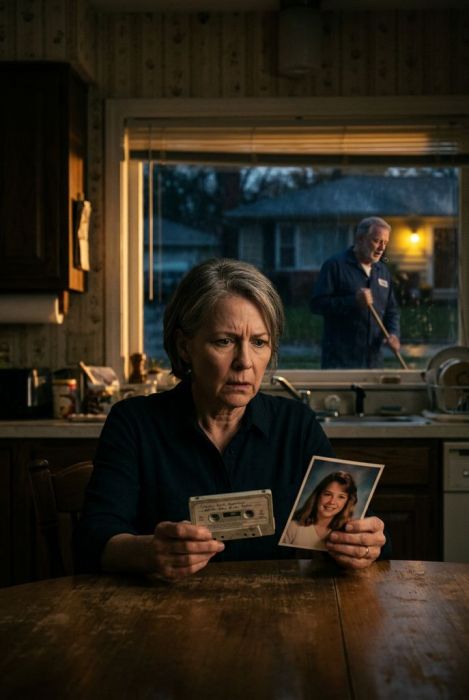
The flyer was still taped to the telephone pole when the rain dissolved it into a sad gray rag, and I stood there in the drizzle, the grocery bag cutting into my fingers, looking at Emma's wobbly eight-year-old handwriting. HAVE YOU SEEN BISCUIT? it said, with a crayon beagle underneath, one floppy ear and a heart-shaped patch on her chest. That was the third morning since my granddaughter's dog vanished from Todd Mercer's doggy daycare, and I still hadn't let myself say the thing I'd been thinking since the second night.
Todd Mercer was the most loved man on Dogwood Lane. That was the part nobody wanted to hear later, when the cruisers sat in his driveway and the evidence boxes came down the steps one by one. For six years he had run Furry Friends Kennel out of his converted garage, and for six years he had been the first person every family called when a dog sneezed wrong or needed a sitter for the long weekend. He kept a bowl of milk bones by his front door. He knew every dog on the street by name, including the ones whose owners barely knew each other.
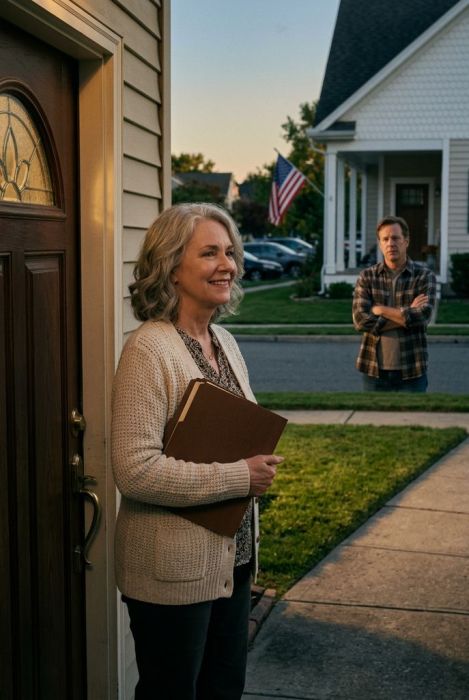
I am Carol Mays, fifty-eight years old, a retired school librarian, and I have lived at 14 Dogwood Lane for thirty-one years, long enough to watch three generations of kids ride bikes on this asphalt. My granddaughter Emma is the light of my life, and Biscuit — a beagle we adopted the summer Emma turned six — is the light of Emma's. When my daughter and her husband took their anniversary trip to Nashville for five days, they boarded Biscuit at Todd's like they'd done a dozen times before. Todd walked her down our street every evening with his own lab mix, Hank, and waved at me from the fence.
The evening he waved was the last time anyone saw Biscuit until Thursday, and by then I had aged about seven years.
You have to understand how good Todd was at grief. He seemed to feel it deeper than you did. When Mr. Whitaker's basset hound, Waffles, "got loose" from Todd's care three years ago, Todd printed flyers, trampled half the county, and stood in the middle of the search with red eyes and a voice that cracked when he told the old man he was sorry. Waffles never came home. Todd cried at the memorial — a basset hound memorial in a neighbor's back yard, for a dog that was, as far as anyone knew, simply lost. That was the kind of man we thought we had.
Dogs went missing on our street more than they should have. Looking back, I can count them the way Dr. Reyes later did, on her fingers, in her quiet kitchen: Waffles. The Okafors' Yorkie, Pepper. A border collie from the end of the block that belonged to the teenagers. A golden retriever named Gus, found two weeks later in the next county with a new collar and no memory of his name. Each time, the shape of the story was the same: the dog vanished from a yard or a sitter. Each time, Todd was the first to search, the loudest to grieve, and the most convincing when he said, "Some people just don't deserve dogs, I guess." Each time, everyone nodded and clipped another flyer to the pole.
Nobody ever once asked why the dogs Todd boarded or walked were the ones that vanished. Nobody, that is, except a retired veterinarian named Alma Reyes, who lived at number 22 and kept records the way librarians keep books: alphabetically, faithfully, and forever.
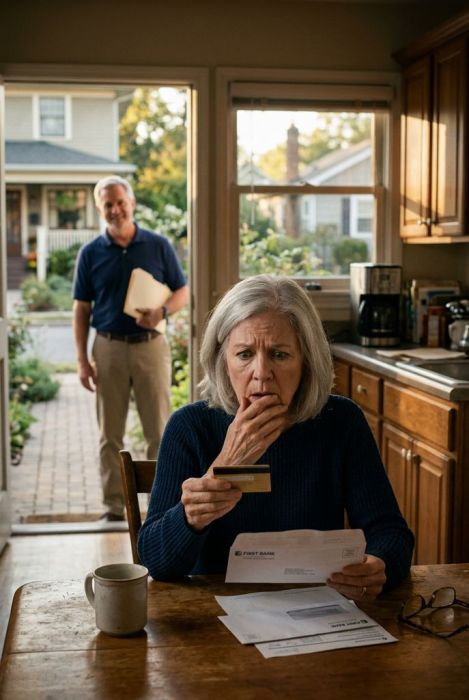
The morning Biscuit disappeared, Todd called my daughter with the news before eight, three hours before they were due home from Nashville. "I'm so sorry, Bethany," he said, and his voice really did shake. "Biscuit dug under the side gate. The dog hasn't done that in a year, I swear to you. I've got flyers up at the vet and the feed store, and I've driven every road between here and the interstate. I will not stop until I find her." By noon he was on my porch with a laminated photo of Biscuit, asking me if I'd seen anyone strange, telling me he'd already filed a report with the county. He was the picture of the devastated friend. He was so good at it that even I, who had begun to feel the cold edges of a thought I was ashamed to think, cried in his driveway and thanked him.
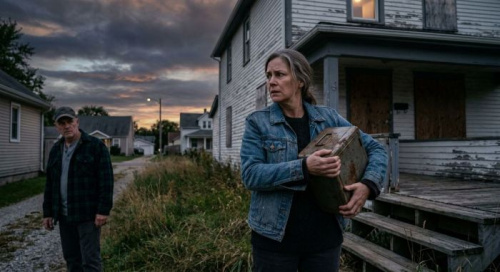
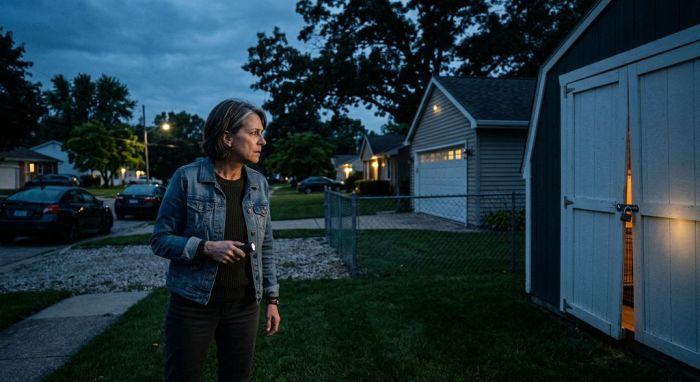
Emma sobbed for two days straight. She drew more flyers. She slept in my guest room with Biscuit's blanket, and every time the phone rang, she launched off the couch like a rocket. By the third day I was taking the long way past Todd's house on my evening walks, telling myself a librarian notices things, that's all. I noticed that his new shed — the one he'd built in May and padlocked, the one he said was for "feed and supplies" — had a chain on the door now instead of a latch. I noticed that the gravel beside it was gouged with tire tracks, fresh and deep, the kind a heavy vehicle makes. And I noticed that when I asked him, as casually as I could, whether he'd had any luck, his smile never dimmed, but his eyes went somewhere else entirely.
Thursday came, and with it the call that split the sky open: a farmer had found a beagle wandering County Road 12, twelve miles from home, and the tag on her collar had Todd's number on it. Biscuit was alive. Biscuit was home.
I wept. Emma wept. The whole street wept, because that was the kind of news that made the neighborhood feel like family again, and Todd was the hero who'd arranged the ride and driven out himself to bring her back. I was so relieved that I almost missed the details. Almost.
Biscuit came home wearing a cheap red nylon collar that was not the blue one she'd left in. Her harness was gone, and so was the little ID tag with Emma's crayon drawing on the back. And when I knelt down to hold her, she flinched. My beagle flinched away from me — no, not from me. She pressed against my legs. She wagged her tail. But when Todd stepped into the doorway of my kitchen with his milk bones and his soft voice, Biscuit pressed herself flat against the floorboards and trembled like she'd seen something no dog should ever see.
I told myself she was traumatized from being lost. A dog that's spent three nights in the woods is not the same dog, everyone said that. Then my daughter, checking Biscuit's microchip registration online the way the vet always advised after a scare, found the thing that tore the whole story open: the chip had been scanned, four days earlier, in a town called Elm Creek, Indiana, by a business called Midwest Canine Exchange. And then, two days after that, it had been flagged "RETURNED — BUYER DECLINED" and re-registered to Biscuit's original home.
You don't need to be a detective to understand a paper trail. You just need to have spent a career alphabetizing. Biscuit had not been lost in the woods. She had been scanned, sold, and sent to a buyer in another state, and the buyer had sent her back when the chip revealed she belonged to a family who would come looking. The only person who could have handed Biscuit to that scanner was the man with the milk bones in his pocket.
I decided, in the way of librarians, to verify before accusing. That night I walked past Todd's house after dark, and in the bin at the end of his driveway, under a torn bag of potting soil, I found a shipping label from a company called Creekside Pet Transport. It listed one beagle, female, thirty-four pounds — the exact measurements of Biscuit — addressed to a holding facility in Elm Creek, Indiana. Beside it, folded into a little square, was a paper receipt for a four-hundred-dollar wire transfer with the word "RETURN" penciled across the bottom.
I stood in the dark with that label in my hand, the way you stand at the edge of a cliff you didn't know was there, and I understood that the man who had cried at Waffles' memorial had been selling the dogs of the people who trusted him the most. Dogs that "ran off" had never run off. They had been loaded into crates and driven away in the night, and the only reason Biscuit was alive in my kitchen was that her microchip had made her too identifiable to keep.
I called Alma Reyes instead of the police. Alma had watched this street with her vet's eyes for fifteen years, and as she told me that night, with the label smoothed out on her kitchen table, she had a folder. She had had a folder for three years. "Every dog that's vanished on this street since Todd put that fence up," she said, pulling it out. "Eleven dogs, Carol. Every one of them either boarded or walked by him. Every one of them gone within a month." She turned to a page near the back. "And when I scanned the chips in my clinic — the ones that had chips — every one showed a transfer ping to Midwest Canine Exchange within forty-eight hours of disappearing. I didn't say anything because I told myself I was paranoid. A veterinarian sees a lot of strange things. I did not want it to be true."
We set the trap together, Alma and me, the way old women do when they've decided to be dangerous. Alma had a rescue labrador named Gus, a big derpy yellow boy she'd fostered for two years, an AirTag from her son's birthday, and a plan that would have made a TV detective blush. On a Friday, she boarded Gus at Furry Friends for the weekend. On Saturday night, Dr. Reyes called Todd in tears: Gus had gotten out of her back yard at home, and had she seen him? No, Todd said, sweetly, sympathetically. He'd keep an eye out. But Alma had not put Gus in her back yard that night. Gus was in a crate in Todd's kennel with an AirTag hidden in his collar.
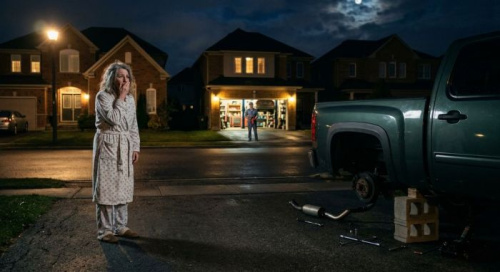
At 2:14 in the morning, Alma's phone lit up. The tracker was moving — not toward home, but south, down County Road 12, toward a fenced lot with a rusted sign that said CREEKSIDE PET TRANSPORT. She called me. I called the sheriff's department, which by then had our whole story in a folder of its own, and I drove to the lot in my robe and slippers, and I watched from the dark shoulder of the road as the cruisers rolled in behind the van backing up to the loading dock.
They found Gus in a crate on the dock, along with nine other dogs in nine other crates, all destined for the morning run to Elm Creek. They found Todd Mercer standing beside the van with a clipboard in his hand and explanations on his lips — "rehoming fees," he said, "I'm a facilitator, I help dogs find new homes" — until a deputy opened the kennel office door and found the ledger. The ledger changed everything. It was written in Todd's neat block letters: eleven dogs' worth of names going back five years, with breeds, weights, and prices. Waffles, sold, $300. Pepper, sold, $250. Biscuit — $1,200, RETURNED — CHIP FLAGGED, with a note that read: "Do not take chipped dogs. Too hot."
The county charged him with theft of personal property, cruelty to animals, and operating an unlicensed interstate trafficking operation, and the feds came down from Columbus to talk about the Elm Creek side of the pipe, which turned out to be a broker with a customer list of puppy mills in three states. Todd was out on bail for exactly nine days, and then a judge revoked it at the preliminary hearing after the Okafors, the Whitakers, the teenagers, and a retired veterinarian all stood up, one after another, to tell the court about the dogs that ran away.
The thing I'll remember longest is the afternoon the Okafors' Yorkie came home. Pepper had been sold two years before, and the broker in Elm Creek had passed her along once, twice, three times, until a woman in a town called Carthage saw the news coverage and called the number on the screen. Pepper was nine years old now, gray-muzzled and half deaf, but when Mrs. Okafor knelt in her own driveway, Pepper put her paws on her shoulders and screamed — there's no other word for it — a little Yorkie scream of joy that half the street heard. The woman who'd bought her, who hadn't known she was stolen, apologized on camera.
Waffles never came home. Neither did two of the others. But nine dogs came home over the next six months, one by one, like scattered mail finding its way back, and Dogwood Lane grew a microchip station at the community center where Alma volunteers, and a pet-sitter checklist that starts with the words "Ask to see the kennel. Ask to scan the chip. Ask the vet about transfer pings."
Todd Mercer lost the house, the business, and — the week of sentencing — his name in the paper, and he got five years for the thefts and two more for the cruelty counts to run at the same time. The judge said, at the end of the reading, that it wasn't the dollar value of what he'd taken that mattered to this court. It was the trust, he said. The neighbors who handed him their animals, their keys, their love, and watched him smile while he wrote down the price.
I think about that a lot. We hand over our dogs the way we hand over our mail and our spare keys and our old parents, because the alternative — that the friendly face next door could be a ledger dressed in a polo shirt — is too ugly to hold in your head. But it was true all along, and it took a nine-year-old's crayon flyer and a retired vet's filing cabinet to prove it.
Emma's drawing of Biscuit is framed in my hallway now. Biscuit sleeps in her blue collar again, with a GPS tag I check every morning like a nervous parent checking a thermometer, and she still flinches sometimes when a man in a polo shirt walks past the fence. Dogs know more than we give them credit for, and they forgive less than we'd like to believe.
At the block party in October, the new family at Todd's old house brought their rescue mutt, a three-legged terrier named Lucky, and Emma sat on the grass feeding him bits of hot dog while Biscuit watched with the patience of a queen. Somebody hung a banner across the cul-de-sac that said DOGWOOD LANE: EVERYBODY'S DOG IS HOME, and I laughed until I cried, and Dr. Reyes laughed with me.
I still check the recycling bin when I walk past number 26, out of habit. But the shed is gone from behind the garage, torn down in August, and the grass grows over the place where it stood, and there is nothing left of Todd Mercer's legacy on this street except eleven dogs' worth of lessons and one framed crayon drawing of a beagle with a heart patch on her chest.