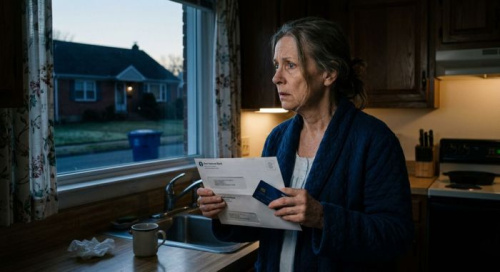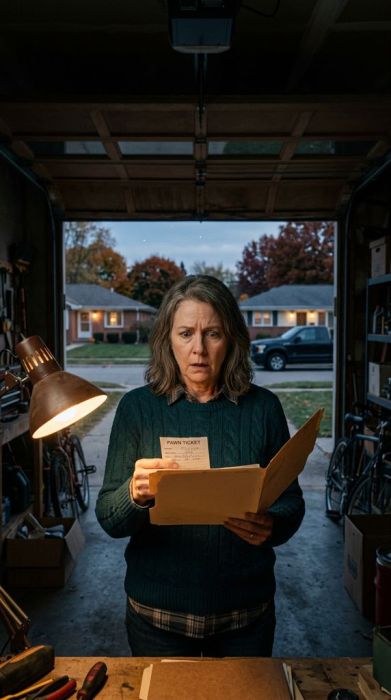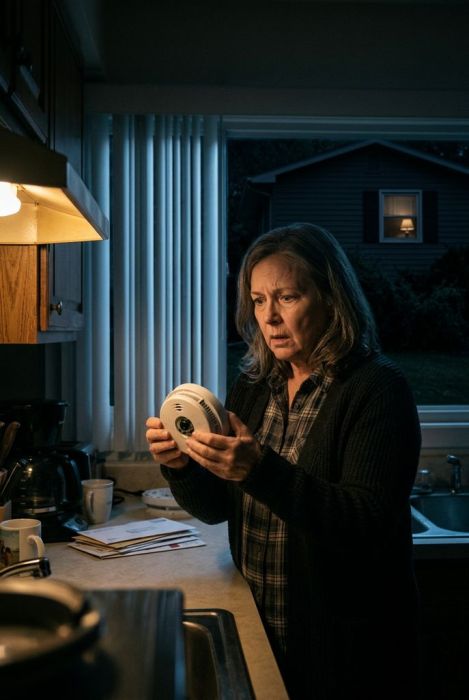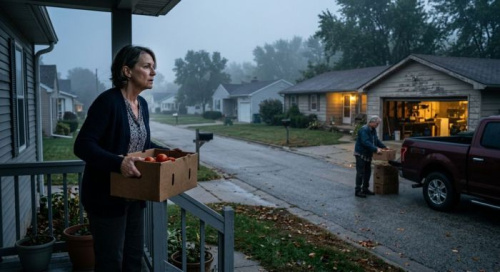
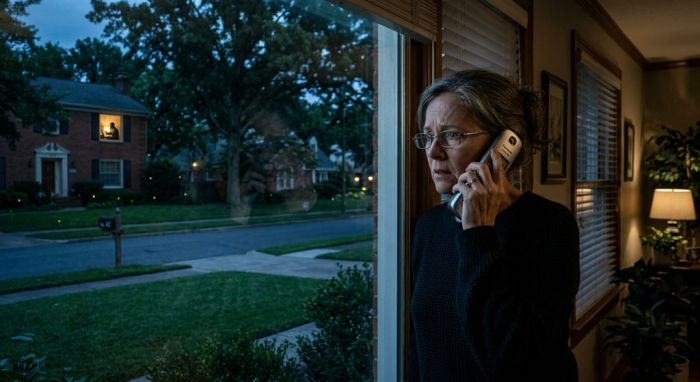
The call came on a Tuesday afternoon, and I knew it was trouble the instant my sister Diane said my name in that particular voice — the one she used when she was working very hard to stay calm. "Marge, thank God you answered," she said. "It's Caleb. He's in jail in Montreal, and they won't let him call anyone but me."
I sat down on the arm of the couch before my knees could make the decision for me. Caleb is Diane's only grandson, a nineteen-year-old sophomore who wouldn't know what to do with a parking ticket, let alone a foreign jail cell. Diane is sixty-two, widowed six years, and that boy is the sun her whole world orbits around. If someone convinced her he was in trouble, there was almost nothing she wouldn't do to save him.
"Don't send a dime," I said. "Not yet. Not one penny. Give me five minutes."
Diane read me the story the man on the phone had told her. Caleb had been arrested after a night out with friends — something about a bar fight, a misunderstanding, a passport. The man was very sorry, very professional. He introduced himself as an officer with the Montreal consular unit. He said the court required immediate bail, that Caleb was being held pending transfer, and that the only acceptable payment was a wire transfer or gift cards. And he'd made Diane promise not to call Caleb's parents, because the boy was ashamed and didn't want his father to know.
That last part — the shame, the secrecy, the urgency — is what made my blood go cold. My sister is not a foolish woman. She balances her checkbook with a fountain pen. But fear makes smart people do dumb things, and these people know exactly which buttons to push.
I called Caleb's dorm room myself. He answered on the second ring, mid-sentence, telling a roommate something about chemistry homework. He was in Ohio. He was fine. He'd never been to Montreal in his life.
Diane cried a little from relief, and then a lot from embarrassment. I told her the only person who should be embarrassed was the stranger who tried to rob her. But for the next several nights, I couldn't sleep. Because somewhere out there was a man with a voice like warm syrup who made his living terrifying widows, and I was furious in a way I hadn't been furious in years.
The next week, Diane and I called the real consulate, filed a report, and I made her promise to hang up on any caller who mentioned bail, gift cards, or a grandson in trouble. She promised. I started leaving my phone on the kitchen counter at night, just in case. What I didn't expect was to hear that voice again — from my own backyard.
Two weeks later, on a Saturday, I was out back deadheading the roses when the wind shifted and carried a voice through the open window of the house next door. It was Russ — Russell Capwell, who'd moved in last fall and told everyone he did voice-over work from home. Audiobooks, mostly. Commercials when they came. He was a nice enough man, kept his yard immaculate, made a point of introducing himself at the block party with a bottle of red wine and a compliment about my lawn.
That Saturday he was doing some kind of customer-service recording, or so I thought at first. "Ma'am, I understand you're upset," the voice said, smooth as a radio deejay, "but this situation requires your immediate attention." I froze with the clippers in my hand.
It was that voice.
I knew it the way you know a song you can't name the artist for — the rhythm, the friendly patience, the way he let certain words hang in the air. "Your immediate attention." That was the phrase. That was the exact phrase the man had used with my sister.
I went inside and called Diane. "Play me the recording," I said. She'd saved the call on her answering machine out of spite, the way you keep a rock that broke your windshield. I held the phone up to the window screen, and we played them back to back — Diane's call, and the voice from next door.
It matched. Not just close. Matched. Same cadence. Same phrasing. Same little cough before the word "immediately."
I didn't sleep that night either.
For three days I watched Russell Capwell the way you watch a wasp nest you don't want to disturb. I told myself I was being paranoid. Voice actors copy other voice actors all the time; maybe the scammer had listened to his audiobooks and mimicked him. But the more I watched, the less I believed that.
Russ's "studio" had a strange rhythm. Every weekday, a little before nine in the morning, a rotation of young men and women in cheap, forgettable cars pulled into his driveway. They carried thermoses. They never waved, never said hello, never once looked in my direction. They'd leave around five, all together, in the same bored silence. I'd lived on Woodbine Lane for twenty-three years, and in all that time I'd never met a single one of them, though they passed my mailbox twice a day.
A delivery van came every other Thursday with boxes that looked innocent enough — office paper, headsets, cell phone accessories. Russ told Gladys from across the street it was "proofing equipment for the copywriters." Gladys believed him. Gladys believes everyone.
I started taking walks past his house at odd hours. The window over his driveway was always covered with blinds, but one warm night in late August he'd left a side window open to catch the breeze. Through the gap I could see what the blinds usually hid: a long folding table, three cheap partitions, computer monitors glowing, and four people in headsets talking into microphones in low, patient voices. Somewhere in the middle of it all was Russ, wearing a headset of his own, smiling the way he smiled at the block party.
It was a call center. It had always been a call center. There was no audiobook studio.
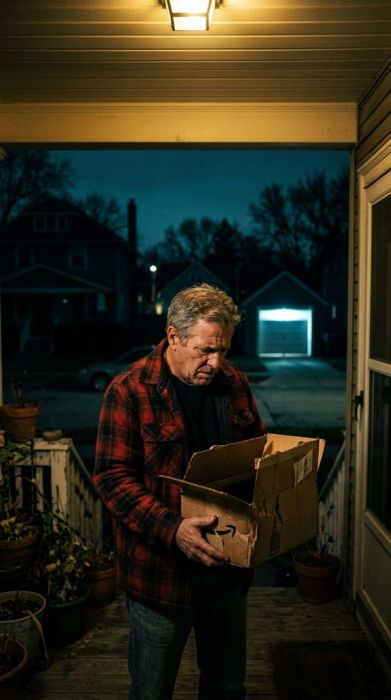
The piece that broke me came from the recycling bin. Russ put his cans and paper out on Thursday nights, and on the third Thursday I found a small orange folder sitting on top, weighted down by a wine bottle he'd probably meant to crush. It must have fallen out of his bag. I told myself not to touch it. Then I thought about my sister crying in her kitchen, and I touched it.
Inside were printouts. Names, phone numbers, little notes in the margins. "Widow — lost husband 2019, two sons out of state, one grandson, college." "Calls Sunday mornings. Church lady. Lonely." Reading those pages felt like opening someone's diary, and I couldn't stop. Because three lines from the bottom, in neat block letters, was a profile I knew better than my own: Diane W., age listed wrong by a year, phone number correct, and a note that read: "Grandson Caleb — her whole heart. Bail-in-jail script works best. Use urgency."
They had her profiled. They had profiled my sister the way a fisherman profiles a hole in the ice, and once they'd missed, they'd written notes on how to try again.
I photographed every page with my phone. Then I put the folder back exactly where I'd found it, the way you learn to do in twenty-three years of neighborhood watch, and I went inside and made myself a cup of tea that I did not drink.
That Saturday I drove forty minutes to my nephew Tommy's apartment with the folder, the photos, and a recording of Russ's voice on a thumb drive. Tommy is my sister's boy, and he works fraud cases for the state attorney general's office. He's the one who told me, years ago, that the worst criminals don't look scary. They look like the guy who brings you a bottle of wine.
I showed him everything. I braced myself for him to tell me I was an old woman seeing patterns in the wallpaper.
Instead he got very quiet. Then he said: "Aunt Marge, this is a grandparent scam boiler room. We've been chasing this one for eight months. The calls originate from a rotating list of suburban addresses, and the servers are offshore. We've got victims from fourteen states — a retired teacher in Iowa, a veteran in Florida, a widow in Ohio who is not, I'm sorry, not my mother." He said the name of my sister's town and then stopped, because he'd already figured it out from the folder.
The twist nobody saw coming was that Russell Capwell wasn't the kingpin. He was a manager. A very good manager, which is why he'd lasted — Tommy's team had identified his voice in recorded calls for months but never managed to place him. He leased that house through an LLC registered in Delaware. He owned nothing, not even the desk he sat at. He was paid in cash and cryptocurrency, and supposedly, when the heat came, he was supposed to disappear into the same nowhere he'd come from.
Tommy asked me one question: could I testify to the voice? I said yes. He asked if I could keep watching, carefully. I said yes. Then he looked at me the way he used to when he was eight, and I was the only adult who believed he hadn't thrown the ball through the window. "Don't confront him, Aunt Marge," he said. "Whatever you see, don't confront him."
I promised.
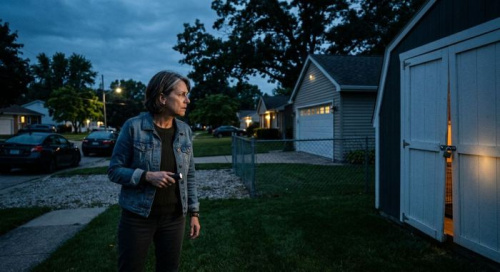
I kept that promise for nine days. Then, on the tenth evening, I made a mistake. I was standing at my kitchen window with my phone in my hand, photographing a white van that had just pulled into Russ's driveway, and I didn't realize the porch light was on behind me.
When I turned around, he was standing on the walkway at the edge of my lawn, halfway between our houses, not quite smiling. "Margaret," he called out, friendly as ever. "Thought you might want to know — I heard a raccoon's been getting into trash cans this week. Keep an eye on your bins."
Then, softer: "You've been watching my house. That's not very neighborly."
I stood very still and said the first true thing that came into my head. "I've been watching the street, Russell. The whole street. That's what neighbors do."
He nodded the way you nod at a dog who's growled but hasn't bitten yet. "Good," he said. "Good. You keep watching, then. I'll do the same."
He walked back to his house. I locked every door, double-checked the deadbolt in the basement, and called Tommy from the bathroom where the porch light couldn't reach me. "He knows," I said. "He knows."
Tommy said two words I will never forget: "We're ready."
The raid came on a Wednesday morning at 9:14, right on schedule — the employees were all in their seats, headsets on, scripts up, because the shift always started at nine sharp. I was standing at my own window with a cold cup of coffee, watching two unmarked cars and a county prosecutor's SUV roll up without sirens.
They went in through the front door with a warrant the size of a small book. They came out with evidence boxes, laptops, burner phones, and the four young people from the cheap cars, who looked less like criminals than like kids who'd answered a strange ad. They came out last with Russell Capwell, handcuffed, in the same polo shirt he'd worn to the block party.
And then he did something I'll never understand. He looked across both lawns and straight at my kitchen window, and he nodded. The same nod he'd given me from the edge of the lawn. I'd like to think it meant "you got me." I'll never know for sure.
The case made the local news for exactly one evening, which is about all it deserved. The ring turned out to be bigger than even Tommy guessed. The offshore servers were located, the call logs recovered, and prosecutors identified more than two hundred victims across fourteen states — retired teachers, veterans, widows, people like my sister who'd been too ashamed to tell anyone they'd been fooled.
Russell Capwell pled guilty to wire fraud and elder exploitation. He was sentenced to six years, with restitution ordered against assets seized from the LLC. The house on Woodbine Lane was leased, so the landlord got it back, and the "voice actor" nobody really knew became a cautionary tale the neighborhood told at the next block party, where a new bottle of wine appeared without a note and no one claimed it.
Diane got a letter from the attorney general's office, and then a check. Not everything. But something. She framed it, which I told her was morbid, and she said, "No, it's proof," which I think was the braver thing to say. Caleb graduated two springs later. She cried at the ceremony, but this time they were the good kind of tears.
As for me, I put a small card by the cash register at church bingo night with the number for the state fraud hotline, and I gave a short talk at the senior center about the call that almost took my sister's money. I told them about the voice, and the folder in the recycling bin, and the way the nicest man on the street can be the one holding the script. A lot of them took the cards.
The house next door sat empty for four months, and then a young couple moved in — teachers, both of them, with a golden retriever and a vegetable garden. When they introduced themselves with a pan of brownies, I shook their hands and told them to keep their yard as nice as the last tenant did. And then I went inside and opened every one of my windows, because a woman my age deserves to sleep with the night air coming in.
Somewhere out there, a man with a voice like warm syrup is counting down the days in a gray institution. I don't think about him much anymore. But when I hear the leaves moving outside my kitchen window, I still listen — because the most important lesson that summer taught me is that the scariest voice a neighbor can have is the one that sounds exactly like a friend.