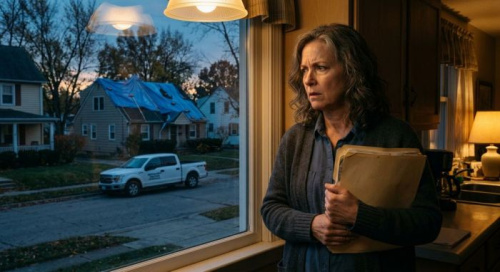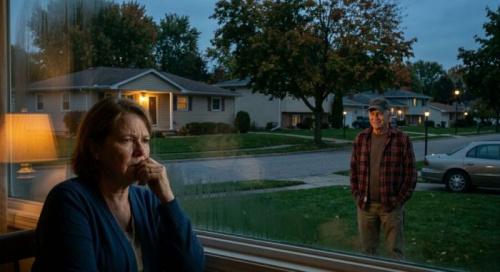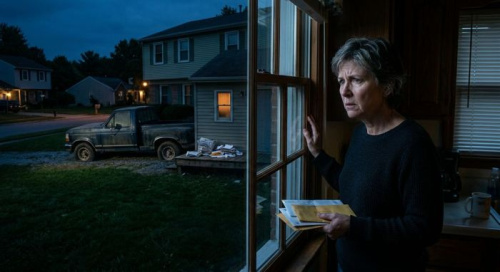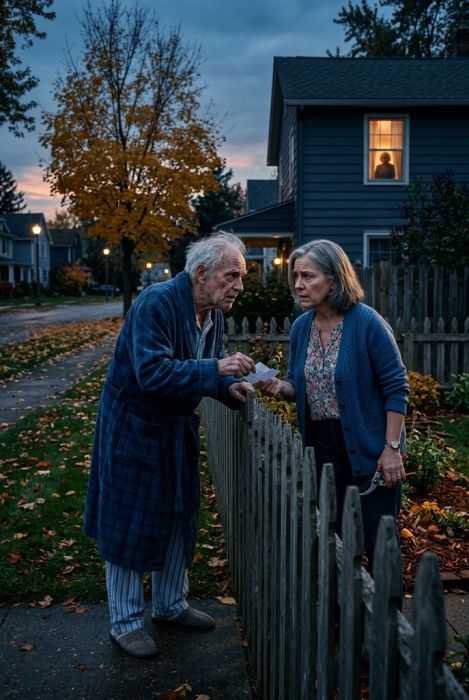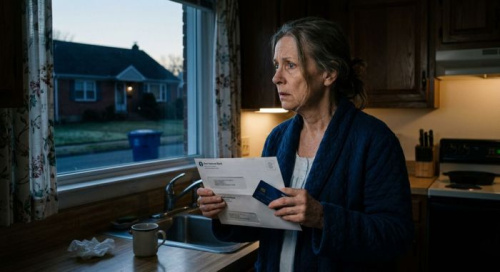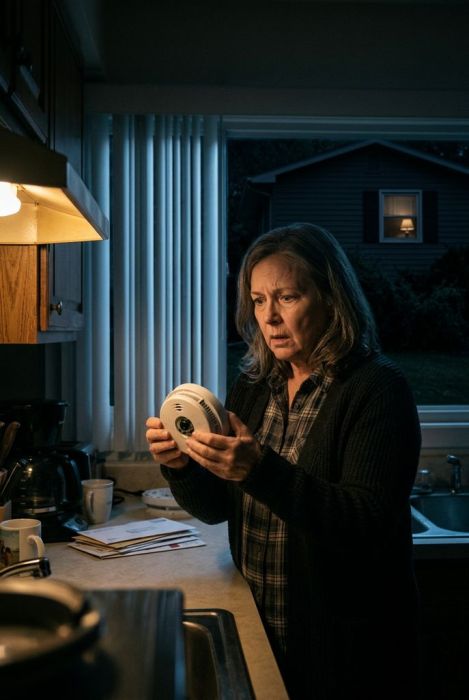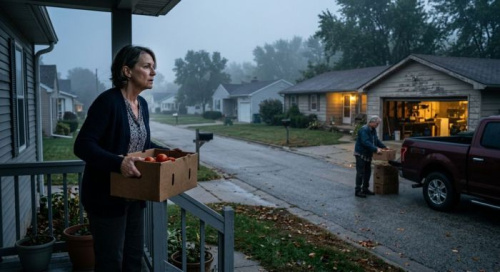
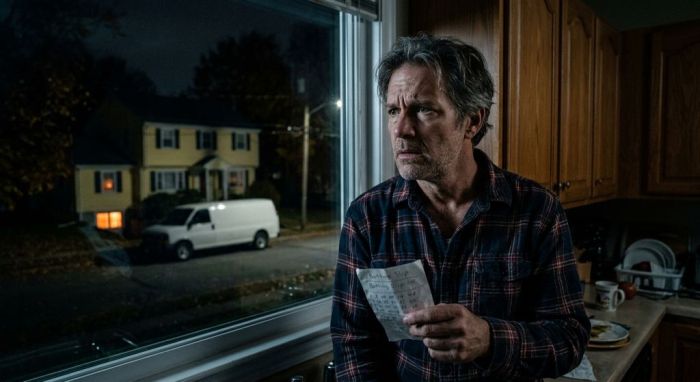
The last loaf of bread Pete Calloway ever set on my porch was still warm when I found the betting slip in my son's jacket. That's the kind of detail that stays with you — the smallness of the moment before everything broke open. It was a Sunday in late October, the kind of crisp morning when everyone on Juniper Court was still shuffling around in slippers and robes. I walked out for the newspaper and came back with Pete's weekly gift: a sourdough round wrapped in brown paper, a tag looped under the twine that read From our oven to your table. I set it on the counter, hung Justin's jacket on the hook by the door, and a folded slip of white paper slid out of the pocket and landed at my feet. I picked it up and read it three times before the words meant anything. Calloway's Kitchen — Week 8 — $18,400 — Pending. The handwriting was neat, almost pretty. That made it worse.
I should back up, because you need to understand what Pete Calloway was to this street before I tell you what he really was. He and his wife Rhonda moved into the yellow colonial at the end of the block fourteen months ago, and within a week he'd introduced himself to every household with a warm handshake and a story about a misspent youth in Chicago and a dream about a quiet life. He was forty-eight, barrel-chested, with laugh lines around his eyes and the kind of voice that made you want to agree with him. Rhonda taught piano lessons to the neighborhood kids. They had no children of their own, which somehow made them everyone's favorite aunt and uncle.
Pete's home business started small — a sourdough starter he'd been tending for years, he said, and a convection oven he'd installed in the garage. He sold loaves at the farmers market in town, then started taking orders online, and pretty soon the whole street smelled like baking bread every Friday afternoon. He brought samples around like he was the mayor running for reelection. My neighbor Donna, who'd lived on Juniper for thirty years and trusted almost nobody, admitted after three months that Pete was "the nicest thing to happen to this block since the sewer lines."
The truth is, I liked him too. I'm Dan Whitaker, fifty-three, a fleet mechanic for the county. I've spent thirty years with my hands in other people's engines, and I'm a decent judge of a person — or I thought I was. After my wife Karen passed, it was just me and Justin in the house on Juniper Court, and those first years were hard in a way I don't like to talk about. Pete didn't know any of that when he showed up at my door with a warm loaf and a joke about his starter having more patience than he did. He just knew a lonely widower when he saw one. He befriended me the way he befriended everyone, with effortless charm and an endless supply of baked goods. That should have been my first clue, looking back. Generosity like that is never free. It's an investment.
The signs were there all along, if I'd been paying attention. The white van that started appearing in Pete's driveway on Friday nights, usually around midnight, no logo, no markings. The way Pete's smile tightened when I mentioned it once, before he told me it was his flour supplier and changed the subject. The customers who'd pull up in the middle of a Tuesday morning, honk twice, and drive away without ever taking a loaf of bread. I told myself it was online orders. I told myself a lot of things.
The real warning was closer to home. Justin turned twenty-two in March, working the sales lot at the Ford dealership downtown, and in September he started changing. New watch. New phone. Money out of my wallet — twenties here and there, which I noticed but didn't confront him about, because he was an adult and I'd learned the hard way that hovering doesn't help. He'd stay out until one or two in the morning on weeknights, answer questions in grunts, and twice I caught him staring at his phone with a face like a man reading his own obituary. I thought it was a girl. I pray every day that I'd been that lucky.
It was a Tuesday night when the bottom fell out. I'd come home from the bus depot, bone tired, and found Justin sitting at the kitchen table in the dark, the only light coming from the fridge when I opened it. He looked like he hadn't slept in days. "Dad," he said, and that one word told me everything I needed to know. "I messed up." He told me about the first bet — twenty dollars on a college game, placed on a whim through a friend of a friend, settled in cash behind the car dealership. Then fifty. Then a hundred. The friend of a friend had introduced him to the operation, and the operation, it turned out, was a few doors down from where we sat. Pete had started taking his bets directly in the back room of the bakery. The bakery was a front, Justin said. The real business ran on football Sundays and basketball nights, and it was deep. Deeper than I wanted to believe.
"Eighteen thousand four hundred dollars," he whispered. "That's what I owe." I sat down because my legs went out from under me. Eighteen thousand dollars was six months of my paycheck. It was Karen's life insurance money, the last of it, which I'd been saving for Justin's future. Only it wasn't my money he'd lost. It was his, borrowed from Pete, on credit, with interest that grew like mold. "He knows where we live, Dad." I thought he meant it as a comfort. It wasn't.
The next morning I walked down to the yellow colonial with the loaf of bread Pete had given me still sitting on my counter, untouched. I rang the bell and Rhonda answered with a smile that didn't reach her eyes — I'd see that smile a hundred times in the weeks that followed, and I'd learn to read it like a warning label. Pete came out wiping his hands on an apron, delighted to see me, already launching into a story about a failed croissant. I interrupted him. "My son owes you money." The warmth in his face didn't flicker. It just... adjusted. "Justin's an adult, Dan. Adults make wagers. Adults pay their debts." I told him it was a crime, running a book in a residential neighborhood, and he laughed — a soft, pleasant laugh that made my skin crawl. "A book? Dan, I'm a baker. I sell bread. Ask anyone." He stepped closer then, close enough that I could smell the yeast on him, and he dropped his voice to something almost kind. "Here's what's going to happen. Your boy pays what he owes, at a reasonable pace, and we never speak of this again. Or the man I work for sends someone to collect. You don't want to meet him. He doesn't bake."
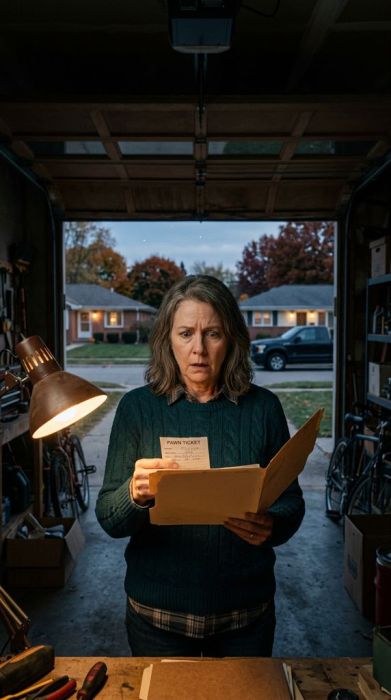
I walked home with my hands shaking and called the only person on Juniper Court I could trust. Marv Kowalski lived three houses down — retired state trooper, sixty-eight years old, a man who'd spent so long looking for lies that he'd developed a sixth sense for them. I told him everything over bad coffee in his garage, and he listened without interrupting, his jaw getting tighter and tighter. When I finished, he said, "Pete Calloway. Son of a bitch." He'd pulled Pete's name up on the county records the week the Calloways moved in, old habits, and found nothing — no record, no flag, nothing. Which, Marv said, was the first thing wrong. "A man like that doesn't leave no fingerprints on paper. That means he's either clean as a preacher, or he's had practice."
The plan we built over the next three weeks was Marv's, with a lot of help from a friend of his at the county task force, a lieutenant named Harmon who'd been chasing an unlicensed gambling ring for two years. The ring had tentacles everywhere — Chicago, Toledo, three counties in Indiana — and the bakery on Juniper Court, it turned out, was a spoke in a much bigger wheel. Harmon didn't care about eighteen thousand dollars. He cared about the wheel. And Pete, greedy and confident, walked right into the trap. The task force needed to catch Pete receiving a wager, on the record, with witnesses. That's where I came in. And where Justin — terrified, shame-faced Justin, my son who'd made a stupid mistake and then done the bravest thing he'd ever done — came in too. He agreed to wear a wire.
I'll never forget the Saturday before the big game. The whole street was out picking up leaves, and Pete was at the end of the block, passing out fliers for a Super Bowl bake sale — chili, cornbread, a giant screen in his garage, the works. He played the neighborhood like a fiddle, and half the street signed up to come. I signed up too. I smiled at him, and he smiled back, and I thought, you have no idea what's coming to your door. The next morning, Sunday, I put on my best flannel and walked down to the yellow colonial with a casserole dish in my hands and a wire taped to my chest. Marv was three houses away, out of sight, with a burner phone in his hand. Justin was parked in the high school lot, two miles south, with Lieutenant Harmon sitting beside him and two unmarked cars idling behind them.
The garage was a picture of small-town hospitality — string lights, a folding table loaded with food, kids running around, neighbors laughing. Pete clapped my shoulder like I was his favorite customer and poured me a cup of coffee. "Glad you came, Dan. Life's too short for grudges." I asked him, quiet, just between us, if Justin's debt could be consolidated — I'd taken over the payments, I said, and I wanted to talk terms. His eyes lit up. That was the hook he couldn't resist. "Terms? I'm a reasonable man. Let's talk in the back." The back room of the bakery smelled like flour and something else — something old, like counting-house dust. There were two folding chairs, a wall of betting boards written in neat grease pen, and a laptop on a desk with a stack of rubber-banded cash beside it. Pete closed the door. "How much do you want to put down tonight, Dan?" I heard a faint click from Marv's relay, and I heard my own voice say, "Everything I have."
The raid came during the third quarter, when the garage TV was roaring and nobody was looking at the driveway. I don't know who called it in — Harmon's team, obviously — but the first thing I knew of it was the red and blue lights washing through the garage windows like a sunrise you don't want. Lieutenant Harmon came through the front door with four other officers, badges out, and the room went silent except for the TV, which no one thought to turn off. "Pete Calloway," Harmon said, loud enough for the whole street to hear, "you're under arrest for felony bookmaking, money laundering, and witness intimidation." Pete stood there in his baker's apron, a spatula in his hand, and for one second he looked less like a king and more like a man who'd never touched a keyboard in his life. Rhonda started crying, though I couldn't tell if it was for him or for the life she was losing either way.
They found the books in the laptop — two years of wagers, names and numbers, cash flow in the hundreds of thousands. They found a ledger in the flour bin, of all the ridiculous places, wrapped in wax paper like a loaf. And they found the message Pete's people had left on my truck three weeks before the raid, the one I'd never told Justin about, the one that said PAY OR ELSE in letters cut from a magazine like a bad movie. I'd kept it in an envelope in my sock drawer, and I handed it to Harmon that night, my hands steady for the first time in a month. It turned out Pete's "boss" was a Chicago man named Salvatore Greco, who was arrested the same evening across state lines. The wheel came apart. All because a mechanic on Juniper Court decided his son was worth more than his fear.
The trial took eleven months, which for a man who wanted it over is a long time to stare at a neighbor's back in a courtroom. Pete got six years. The judge called him a predator who'd wrapped his crime in the smell of fresh bread, and I'll never forget the look on his face when she said it — like the loaf had finally gone stale. Rhonda left him. The yellow colonial went into foreclosure, and a young couple with two kids and a golden retriever bought it last spring. The white van never came back to Juniper Court.
Justin spent four hundred hours of community service and paid back every dollar of what he owed — not to Pete, who forfeited everything, but to the state, as part of his plea arrangement. The service he did was teaching shop classes to kids at the youth center, which the judge thought was a fitting trade, and I think it was too. He's twenty-three now, works at the dealership, and on Sundays he comes over and we make breakfast together. He burns the pancakes every single time, and every single time it's the best meal of my week. He'll tell you that lesson cost him a lot. I'll tell you it bought him back.
Marv and I started a neighborhood watch that winter, and it's still going. We have a barbecue every fall, and I'm the one who volunteers to bring the bread — store-bought, from the bakery in town, the one with the big glass windows where everybody can see the ovens. People on Juniper Court wave at strangers now the way they did in the old days, and they lock their doors, too. That's the thing nobody tells you about living next to a secret. It's not the secret that scares you. It's how long it took you to see it.
I still have the tag from that last loaf, the one that said From our oven to your table. I keep it in the drawer with my good tools, where I keep the things that remind me what I'm made of. Sometimes I take it out and read it, and I think about how close we came. But mostly I think about the Sunday after the raid, when the bread stopped coming and the street held its breath — and then Justin walked out of the house next to me, wearing his own jacket, and said, "I'm sorry, Dad." And the thing is, I'd already forgiven him. Forgiving myself for not seeing it sooner took a little longer. But we got there. We got there together, on Juniper Court, where the ovens are quiet now and the neighbors finally know the truth.