It started with a box of my mother's china that never arrived.
For three weeks I'd been waiting on it. Mom had passed the previous winter, and my sister Cora had finally cleared out the attic and shipped the good set — the delicate white one with the tiny blue forget-me-nots painted around the rims that Mom always said would be mine someday. FedEx said it had been delivered, left on the front porch at 2:47 on a Tuesday afternoon. Signed for by a "D. Marsh."
There was no D. Marsh on Maple Grove Court. And there was definitely no box on my porch.
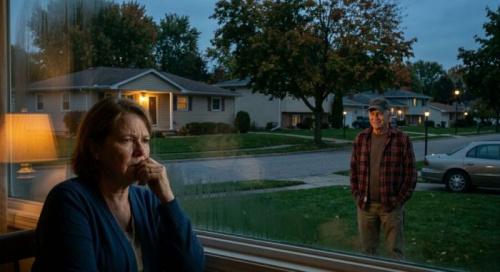
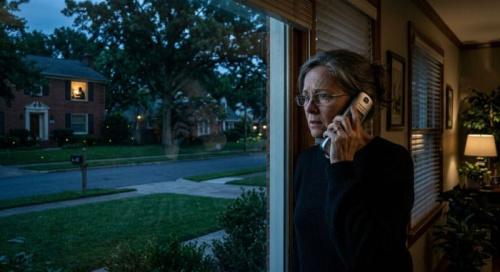
I called the shipper, I called FedEx, I filed a claim. Everyone was polite and useless. Somewhere between the sort facility in Scranton and my front door, three generations of dishes had simply evaporated. My neighbor Dale, who happened to be raking his own leaves right next to my mailbox, heard me on the phone and offered the same gentle smile he gave everyone.
"Ah, that's a shame, Diane," he said, leaning on his rake. "You know, stuff like that happens all the time around here. People snatch 'em right off the porch these days. You ought to get one of those camera doorbells."
He was always like that — helpful, cheerful, full of neighborly advice. Dale had moved onto Maple Grove Court about a year earlier with a grown daughter and a friendly retired hound dog named Rufus. He'd told us he was winding down a career in logistics and starting a small line of things he sold online, something about hand-poured candles and gift sets. We'd all nodded and welcomed him to the block with a casserole and a bottle of wine.
Within months, Dale had become the unofficial mayor of our little cul-de-sac. If you had a package coming and had to work late, Dale would take it in. If you were going out of town, he'd grab your newspapers and pull in your bins. If an ambulance was on the street, Dale was already standing at the neighbor's door before the paramedics got out. He seemed to know everyone's schedule better than their own families did.
At first I thought it was endearing. Looking back, I realize it was surveillance.
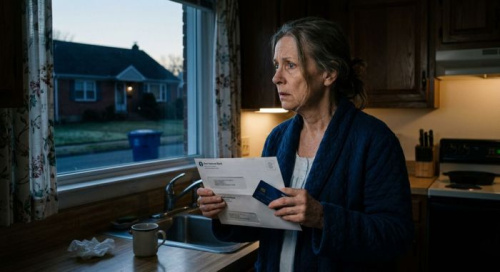
It was in early October that I first felt the prickle. I'd ordered a new cast-iron Dutch oven — on sale, a real bargain — and it was supposed to arrive on a Friday. When it didn't show, I checked the tracking: delivered, left at front door, 1:12 PM. Signed for by "D. Marsh" again.
By then I'd asked around. Five other people on the street had lost packages in the last two months. A tablet meant for the Whitman boy. A birthday gift for old Mrs. Alvarez. A box of winter coats. Every single one tracked as delivered but never found. And every single one, it turned out, had been signed for by suspiciously similar initials.
I should have been furious. Instead, I was confused. Maple Grove Court was the sort of neighborhood where everyone waved, where kids sold lemonade on the corner, where you left your garage open all summer. We didn't have porch pirates. Or so I thought.
I mentioned it to Dale one afternoon while he was out checking his mailbox. "It's just odd," I said. "All these deliveries getting lost."
He tilted his head, all sympathy. "You know what, I bet it's that new crew they've got running the routes. They're sloppy. They just scan it delivered and drive off." He tapped the side of his nose. "I keep telling folks, get it sent to the pickup point instead. Safer."
I nodded along, embarrassed to be taking up his time. It was only later, replaying the conversation in my head, that I noticed he'd never once asked me what was in the missing boxes. He hadn't wanted to know. He already knew.
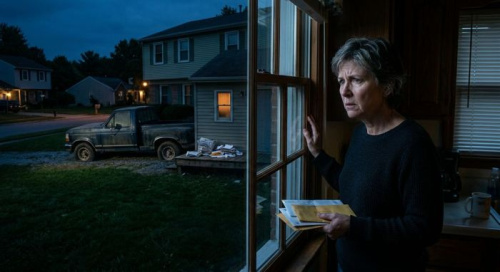
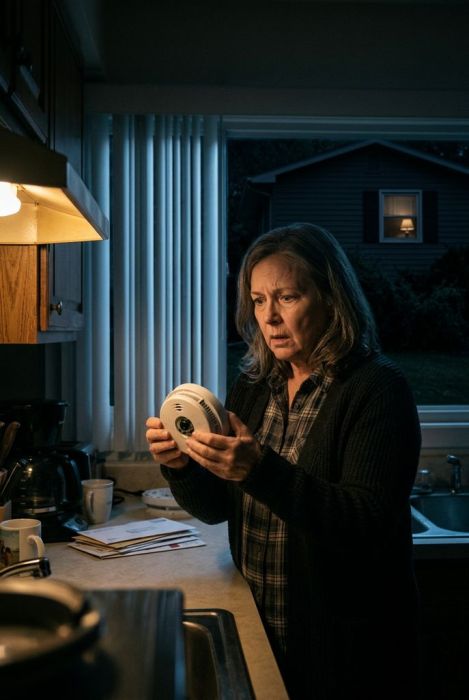
The turning point came the following week, on a gusty Tuesday night. The power flickered during a storm, and I'd gone down to the basement to reset the breaker when I heard it: a scraping, dragging sound coming from my side wall, right where my utility room met Dale's garage.
I froze and listened. There it was again — something heavy being dragged across concrete. Then a low grunt, then the unmistakable sound of cardboard being torn open.
My heart hammered. I pressed my ear against the cold wall and heard a muffled voice muttering, and then the soft thump of something being set down. What I didn't hear was the front door hinge. Whoever was in that garage had gone in and stayed in, and every so often another package came in through the house.
I didn't sleep that night.
The next morning I did something I'm not proud of. I walked over to Dale's during the hour I knew he was at the gym, clipboard in hand, faking a neighborhood poll for the upcoming HOA meeting. His daughter, a quiet college kid named Peyton, answered and let me in to use the bathroom — everyone knew everyone on this street, and nobody locked their doors.
I didn't need the bathroom. I slipped into the hall and found the closed door at the back. It wasn't locked.
What I saw inside stopped my breath. The room that Dale had described to us as a "little workshop" for his candle business was wall-to-wall cardboard. Stacks of unopened boxes, still sealed with tape, many with addresses on them — the Whitman tablet, Mrs. Alvarez's birthday gift, a dozen others I recognized from the neighborhood chatter. Along the far wall sat a shipping scale, a label printer, and a stack of pre-printed reshipping labels bound for a P.O. box in Jersey City.
Dale Marsh wasn't stealing packages for himself. He was a middleman in a stolen-goods pipeline — fencing parcels he'd weaseled out of our own porches, repackaging them, and shipping them off to a buyer who wiped and resold the contents. The friendly neighbor who signed for everyone's deliveries was the reason those deliveries vanished.
I took pictures with my phone, shaking hands and all. Then I got out of that house before my legs gave out.
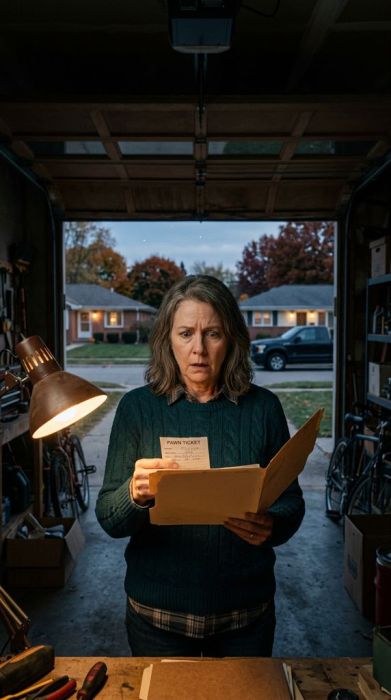
For two days I sat on the evidence, terrified and unsure. I couldn't go to the police with just my word and a blurry photo of a cluttered room. And the longer I waited, the bolder Dale got. When the Whitman boy's replacement tablet arrived, Dale was there first, smiling, offering to hold it "safe" until the family got home. They never saw it again.
I needed help, and I found it three doors down in the person of Ed Kowalski, the retired postal inspector who'd moved in after thirty-two years chasing mail fraud across the whole Eastern District. Ed was a quiet man with thick glasses and a limp, and the street mostly thought of him as the guy who grew prize tomatoes. But the moment I showed him the photos, his eyes went sharp and cold.
"Well, I'll be," he said softly. "Cookie-cutter operation. He does porch-pickups, documents them as your signature, then reroutes the inventory through a reshipper. He's been at this so long he's gotten greedy — using the same initials over and over." Ed tapped a photo. "He stopped being careful. That's how we get them."
Over the next week, Ed and I built a trap. He knew the game better than Dale ever would. We set up a string of bait packages at three different houses on the street — cheap, trackable decoys — and Ed quietly looped in a local detective he'd worked with for twenty years. Dale, predictably, took every one of them in. We watched through Ed's new camera, trained on the cul-de-sac, as Dale carried each decoy into his house and, an hour later, a box headed for Jersey City appeared at his curb with the recycling.
The arrest came on a Thursday morning, the way these things always do, when no one is expecting it. Two unmarked cars pulled up before the coffee was done brewing. A detective in a windbreaker went up Dale's walk and knocked. There was a long, awful silence, and then the door opened and the shouting started.
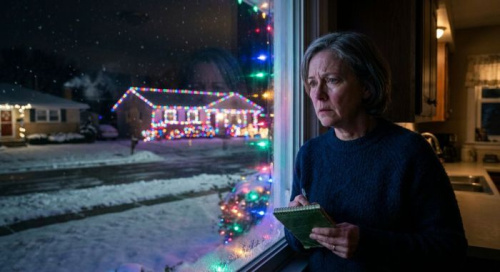
I stood at my own window, watching it all, my hand pressed flat against the glass. The neighbors came out onto their porches, one by one, the way they always did. They watched as Dale Marsh came out in handcuffs, his face a blotchy red, protesting that it was all a misunderstanding, that he was a good neighbor, a good man. Nobody believed him. There were too many reminders on their own doorsteps, too many empty porches where packages used to sit.
In his garage, the police found more than a hundred unopened parcels — packages that belonged to half the street, to families who'd given up on them. They found the label printer, the scale, the shipping logs, a ledger of every address on Maple Grove Court and every time that house had a delivery scheduled. They found out exactly how long he'd been planning it: Dale hadn't moved here to make candles. He'd moved here specifically to build a one-stop fencing network, picking the quietest, most trusting cul-de-sac he could find.
The charges were heavy — theft by deception, mail fraud, organized retail crime, a dozen more. Ed told me, over a cup of coffee and a split tomato plant cutting, that the federal attention meant Dale would be looking at real time. Not a slap on the wrist. Real consequences.
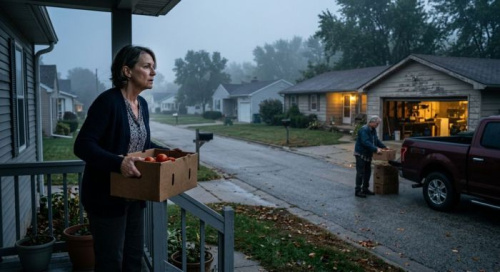
But here's the part that stayed with me. After the police left and the neighbors drifted back inside, the Whitman boy walked over and set a small package on my porch. It was a box of shortbread cookies his mom had baked, with a note that just said "Thank you." Mrs. Alvarez waved at me from her yard. Old Mr. Hendricks, who'd lost a whole box of his late wife's letters in the chaos, walked over and just shook my hand, his eyes wet.
That was when it hit me, standing there in my driveway with the leaves blowing past and the October sun finally warm on my face. Dale Marsh had tried to take something from every single one of us. But in the end, all he'd done was show us what we had, and what we protected for one another.
The missing china? A detective called two months later to say they'd recovered it in a reshipping warehouse in New Jersey, still wrapped, the little blue forget-me-nots intact. My sister drove up with it herself, and we set it out on the table for Thanksgiving that year, the first holiday in a long time where the whole street seemed to breathe easy.
Dale sold his house from a jail cell, at a loss, to a young couple with a new baby. Ed supervises the block's package deliveries now, and everyone on Maple Grove Court has a camera doorbell and a new rule: if a box arrives and you're not home, it goes straight to the pickup point. No exceptions.
Some people say I'm a bit paranoid now. Maybe I am. But when I think about a friendly neighbor with a gentle smile and a garage full of other people's lives, I think about that afternoon at my window, and I'm grateful I looked. Because the same kindness that almost cost us everything — the trust we gave so freely — was the exact thing that saved us in the end.
And on my porch that October morning, beneath the shortbread cookies and the notes of thanks, there was one last box, delivered properly, signed for in my own hand. My mother's china, finally home.