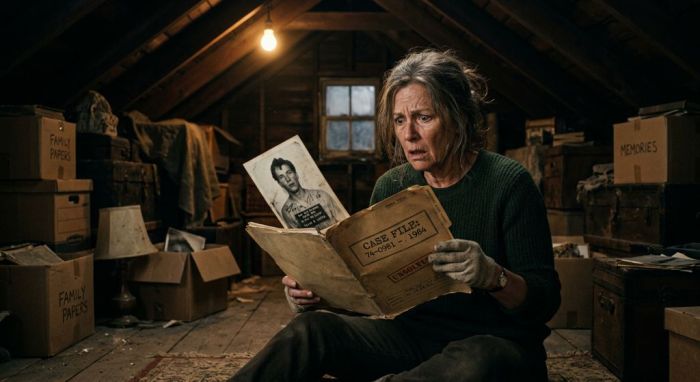
The truth about Ray Collier did not announce itself. It did not arrive with sirens, or flashing lights, or the dramatic knock of a detective at my door. It came the way most terrible truths do — quietly, on a Tuesday afternoon, in the dusty light of my mother's attic, when I lifted a cardboard box that should have been full of Christmas ornaments and found instead a manila folder with my father's handwriting on the tab.
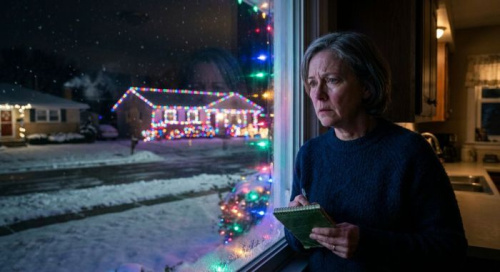
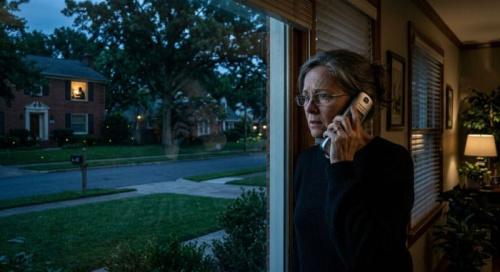
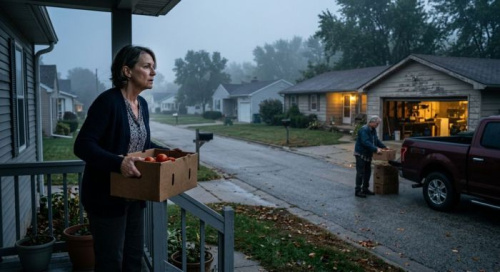
I am Eleanor Vance, sixty-four years old, and three weeks earlier I had buried my mother beside my father in the cemetery at the edge of Juniper Court. It was the same quiet street where I had grown up, where children still raced their bikes past the mailboxes and the same old couples still waved from their porches. I had come back one last time to clear out the family house before the Realtor's sign went up, and I did not expect to find anything more painful than a carton of old photographs.
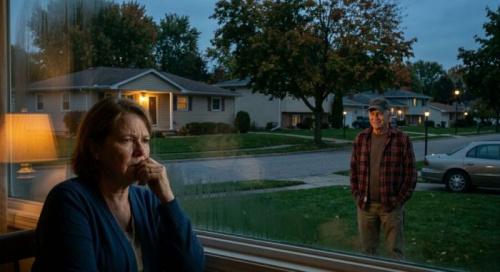
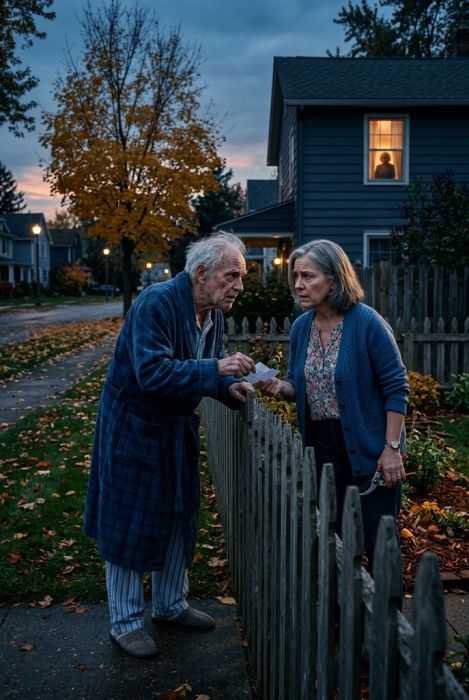
The trouble was Ray Collier. He had lived at the end of the street my whole life, and he was the sort of neighbor everyone described as the heart of the block. White-haired, warm-eyed, always ready with a story about how the town used to be. He mowed Mrs. Danforth's lawn when her knees went bad. He coached the Little League team for thirty years. When my own mother grew frail, Ray was the one who brought her soup and sat with her while I drove up from two states away.
"Your folks were the best neighbors a man could ask for," he told me at the funeral, clasping my hand with both of his. "I've watched over this street for fifty years. I knew your daddy better than almost anyone."
I believed him. Everyone believed him. That was the whole terrible point of Ray Collier.
My father, Joseph Vance, had been a detective with the state police for thirty-four years. He was a quiet, methodical man who never talked about his work at the dinner table, and he died when I was thirty, of a heart attack that my mother always swore was brought on by a case he could never let go of. I never pressed her on which one. I was young and full of my own life, and it is one of the regrets I carried into old age that I never asked him what haunted him.
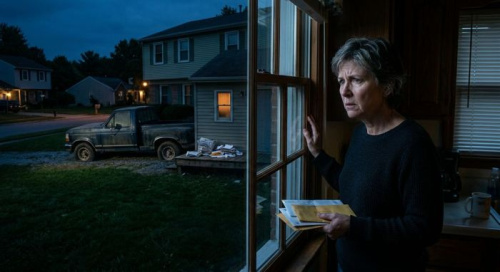
So when I found that manila folder in the attic, with his neat, angular handwriting reading COLLIER, DN — UNSOLVED in capital letters, I did not know what I was opening. I only knew my father's handwriting like I knew my own breath, and I had never seen this file before in my life.
The folder was thick, held together by a rusted metal clip. Inside were typed reports, faded carbon copies, a hand-drawn map of a gas station on the old county road, and a black-and-white photograph that had been clipped to the cover. It was a booking photo from the summer of 1974, the kind they took at the county jail before they let a man walk out again. The boy in the photo was young, maybe twenty, with a shock of dark hair and a defiant, narrow-eyed stare that had not yet learned to soften into kindness.
But I knew that face. I knew the set of the jaw. I knew the way the left corner of the mouth turned up, just barely, even in a mugshot. I had seen that same expression a hundred times on the porch at the end of the street, softened by fifty years and a grandfather's warmth, but unmistakeable all the same.
The name written beneath the photograph was not Ray Collier. It was Danny Colman. And beside it, in my father's handwriting, was a single word: FUGITIVE.
For a long moment I sat there in the attic dust and did not move. The photo was dated forty-nine years before. The case file said that on a hot night in August of 1974, a gas station attendant named Harold Beck was shot during an armed robbery on the old county road. A young man named Danny Colman, twenty years old, was the prime suspect. He had been questioned and released for lack of evidence, and the very next morning he had vanished — his apartment emptied, his truck gone, his family claiming they had not heard from him in days.
Harold Beck had survived, but just barely, and he had never walked without a limp again. The case went cold. Danny Colman was never found. There was a note in my father's careful script near the end of the file, dated 1991, three years before he died: I am certain this man never left the county. Somewhere here, living under a new name. I will not stop until I prove it.
My father was certain. And my father had been right.
The wonderful neighbor who had brought my mother soup, who had wept at my parents' funerals, who had told me he watched over our street for fifty years — Ray Collier was Danny Colman. He had not fled the state like everyone assumed. He had simply changed his name, stayed in the same little town, and spent half a century becoming the one man no one would ever suspect.
And my father, who suspected him all along, had died with the case open.
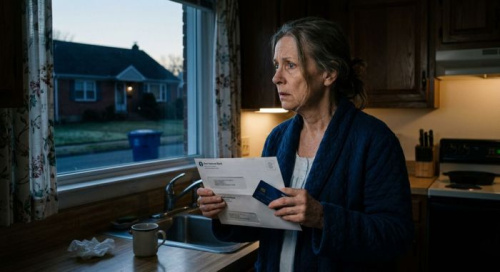
I did not sleep that night. I sat in my mother's kitchen with the file spread across the table, reading every page, and the more I read the angrier I became. Not just at Ray — at myself. At the years I had spent trusting him, laughing at his stories, letting him hold my arm as I walked with him to the mailbox. My mother had loved that man like a brother. She had kept his soup bowls on her shelf. And all the while he had been the reason my father came home late and distracted, the reason my father's hands shook around his coffee in the mornings.
The file also revealed what my father had kept hidden even from my mother. In 1992, the year before he died, he had written to the state attorney's office asking them to reopen the case based on new information he claimed to have. He said he had placed critical evidence in a secure location in the family home — evidence that would confirm Danny Colman's identity beyond any doubt. The attorney's office had declined, citing the statute of limitations and the weakness of the old case. My father had written I will hold the evidence until justice is possible on the final page.
Evidence. Still in the house. After all these years.
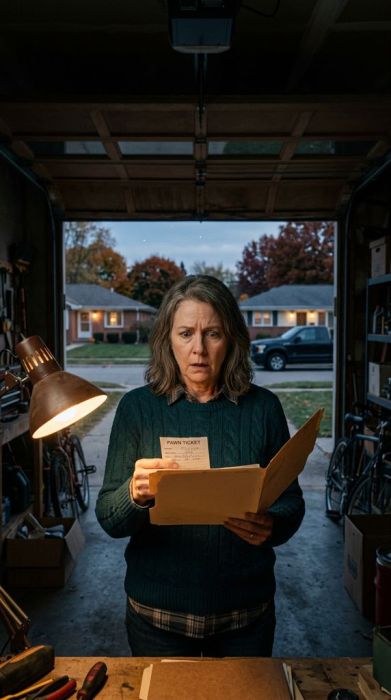
I tore that quiet house apart over the next two days. I went through every closet, every drawer, every loose floorboard. I checked the attic beams, the crawlspace, the backs of the kitchen cabinets. And on the third morning, in the back of my father's old workshop, behind a false panel in the workbench he had built himself, I found a small metal lockbox wrapped in oilcloth.
Inside was everything. A single marked twenty-dollar bill from the 1974 robbery, crisp and uncirculated, still tied with a piece of twine — the bait money that a young gas station attendant had slipped to the robber, a bill the bank had tracked and recorded the serial number of. There was a rain-soaked receipt from a hardware store dated two days after the robbery, made out to a Danny Colman. There was a photograph, curled at the edges, of a young man in front of a truck with the same defiant stare. And there was a small notebook, the last pages filled in my father's trembling final handwriting, listing every name Danny Colman had used over the years, every address, every small lie he had told the county.
My father had tracked him for decades. He had never stopped. And now I held the proof in my hands.
I knew I could not do this alone. The statute of limitations on the old robbery had long passed, but Harold Beck was still alive, still walking with that limp in a nursing home two counties away. And attempted murder in the second degree carried no statute of limitations at all. The case could be reopened. The only question was whether anyone would believe a grieving daughter who had found her father's old files in the attic.
That is when I thought of Walter Grimes. Walt had been my father's partner for years, the last detective who had worked the Danny Colman case beside him. He was eighty-one now, sharp as a tack and twice as stubborn, living alone in a little house on the other side of town. I had not seen him since my father's funeral, but I drove straight there with the lockbox and the file in my lap.
Walt read the file in silence for almost an hour. When he finally looked up, his eyes were wet. "Your daddy," he said slowly, "was the best detective I ever knew. And he was right about this wicked man the whole time. I knew it. I told him I'd back him whenever he was ready to move. He just never got the chance."
He reached across the table and took my hand. "We're going to finish this for him, Ellie. Together."
What Walt did next was the reason I still believe in old friends. He had kept the case alive in his own way, quietly, for thirty years. He knew the young county prosecutor, the one who had grown up on this very street. He knew the current sheriff, who had been a rookie when Walt retired. And he knew, with the deep certainty of a man who had seen every kind of lie, that the old marked bill was all we needed to make the whole thing stick — if we could catch Ray holding it, or connect it to him in a way the law could not ignore.
So we set a trap. Not a dramatic one, but the kind my father would have appreciated. Quiet. Patient. Built on a man's own pride and greed.
Walt called the county clerk and, acting as an old detective tidying up an ancient case, asked them to quietly reopen the file on the understanding that fresh evidence had surfaced. He did not name Ray. He let the machinery of the law turn slowly. Meanwhile, I played my part — the slightly addled daughter clearing out her father's house, grateful for any help. The plan was to let Ray believe he could still control the situation, to give him just enough rope to hang himself.
It worked faster than we expected. Word spread through the quiet little county that the Vance house was being emptied, and that among the old man's belongings there might be something of value. Ray began stopping by more often, his smile a little too bright, his questions a little too careful. Did I find anything interesting in all those boxes? Anything my father kept that he meant to pass along? Was there a safe, a lockbox, anything of that sort?
I told him, very honestly, that I had found a few old tools and a lot of dust. I watched his eyes flick to the workshop, then back to me, and I knew he was calculating. He had spent fifty years certain that my father had never gathered proof. Now he was not so sure. And a man who has spent half a century outrunning one truth will do almost anything to make that truth vanish for good.
The climax came on a warm Saturday in June, at the block's fiftieth anniversary celebration on Juniper Court. Ray had organized it, of course — the neighborhood historian, the beloved patriarch, the man who had planned every party on the street for decades. There were long tables of food, a banner strung between the trees, and a hand-lettered sign thanking Ray Collier for fifty years of service to the block. The whole street had turned out to honor him.
I was there, and so was Walt, and so, waiting quietly at the end of the block in an unmarked car, was the young county prosecutor and two officers of the sheriff's department. No one noticed them. Everyone was watching Ray accept a plaque and make a speech about what a wonderful place this neighborhood was, what wonderful people lived here, how lucky he was to have been their neighbor for so many years.
When the crowd applauded and Ray turned to the punch bowl, I walked up to him and set the old manila file on the table between the casseroles.
"Danny," I said, quietly, so only he could hear. "My father never stopped looking for you. And neither did I."
The smile on his face did not so much fall as freeze, the way water freezes on a winter pond — one moment fluid, the next solid and still. For a long heartbeat he said nothing. Then he looked at the file, looked at me, and I saw something I had never seen on Ray Collier's face in all those years. Real fear. The fear of a man who had spent half his life running and had finally, finally run out of road.
The prosecutor and the officers were walking up the grass toward us. Ray did not run. I think he knew it was over. He had nowhere left to go that my father's cold case had not already mapped.
They arrested Ray Collier — Danny Colman — there in front of the whole street, in front of the neighbors who had applauded him moments before. I will never forget the silence that fell over Juniper Court as the officers read him his rights. Mrs. Danforth dropped her potato salad. A little boy asked his mother why everyone was crying. And the plaque thanking Ray for fifty years of service stood propped against the banner, gleaming in the June sun, a monument to the most successful lie this town had ever believed.
The neighbors were in shock for weeks. Many refused to believe it at first. They had loved Ray, trusted him, let him hold their spare keys and comfort them at funerals and coach their children. That is what made it so hard — the good he did was real, intertwined with the terrible thing he had hidden for so long. But the evidence was irrefutable. The marked bill matched the bank's record. The hardware receipt placed him at the scene. And a retired gas station attendant, now ninety-two, identified him in a lineup with a shaking hand and said he would know that man's eyes anywhere.
Danny Colman pleaded no contest to the attempted murder charge, and he was sentenced to twelve years. He was seventy years old. He would almost certainly die in prison, and I could not bring myself to feel sorry for him, not even for a moment. He had stolen fifty years of my father's peace, and a young attendant's health, and the trust of an entire neighborhood.
But I did not gloat. I did what my father would have done. I drove to the nursing home and sat with Harold Beck, the man who had carried a bullet and a limp for half a century, and I told him the case was finally closed. He wept. I wept. We sat for a long time in the quiet of his little room, and he kept saying, over and over, that he had always wondered if anyone would ever believe him.
My father was buried with his case still open. That is a weight I could not change. But I took the manila file to the cemetery on a cool autumn morning, and I read him the ending I had written on the back of the last page. DANNY COLMAN, APPREHENDED AND CONVICTED, 2026. JOSEPH VANCE'S COLD CASE, FINALLY CLOSED. I left the file propped against his headstone, where the wind could turn its pages, and I felt, for the first time in months, a great and quiet peace.
I sold the house in the spring. I did not linger on Juniper Court, because the street could never be what it pretended to be again. But I did not sell it in bitterness, either. I sold it to a young family with two lively children, the kind of family my mother would have adored. I keep a photograph of them on my mantle now, along with the old booking photo of a defiant young man named Danny Colman — a reminder that the truest heroes are the quiet ones who never stop looking, and that justice, no matter how long it takes, has a way of finally finding its way home.
If you ever find yourself wondering what your quiet neighbor is really hiding, trust your instinct. Trust that nagging feeling that something is not right. My father trusted his for fifty years, and in the end his cold case was finally solved — by the daughter who came home, opened a dusty folder, and refused to look away.