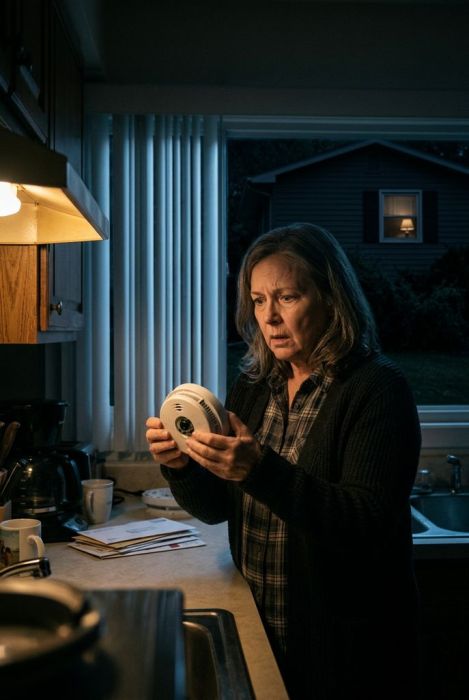
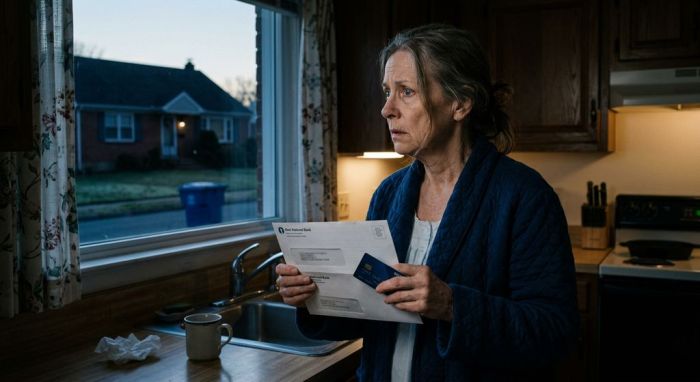
The morning I found the envelope, I was standing at my kitchen counter in my bathrobe with my coffee going cold, staring at a return address I had never seen in my life. Western Federal Bank. I had never banked a dollar at Western Federal, not once, not ever.
Inside was a welcome kit addressed to me by name. Vera Lindqvist. There was a debit card with my name printed on it, a booklet of checks, and a letter thanking me for choosing Western Federal as my new home for banking. And clipped to the letter was a deposit slip that made no sense at all. It showed an opening deposit of $1,850.00, listed as a retirement benefit from the railroad board, Carl Lindqvist survivor account.
Carl was my husband. He died four years ago this February. The $1,850 was my monthly survivor pension check, the one that had gone missing from my mailbox three weeks earlier, the one the retirement board had promised to reissue after I spent two hours on hold explaining that no, I was not confused, the check had simply never arrived.
Someone had deposited my missing pension check into a bank account with my name on it. An account I had never opened. And the moment I understood that, my knees gave out, and I sat down hard on the kitchen floor with the welcome kit scattered around me like confetti, because I finally knew exactly who had done it.
Monty Vance had lived across the street from me for six years. He was sixty-three, a retired airline baggage handler with a weathered face and a booming laugh, and everyone on Mesquite Lane adored him. He had moved in after his own wife passed, a year before Carl got sick, and in the way of widowed neighbors everywhere, we had looked out for each other. He fixed my garbage disposal. I brought him casseroles. It was a good, decent arrangement, the kind you hear about and feel hopeful for.
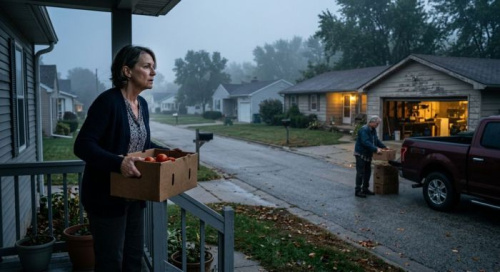
But the thing Monty was famous for, the thing that made him a legend on our street, was the Tuesday Bin Brigade. Every Tuesday night, without fail, Monty would walk the length of Mesquite Lane in his old yellow vest and wheel every single trash and recycling bin to the curb, and the next morning he would wheel them all back. He never charged a dime. He said he did it out of kindness, because so many of us were older, and because bending over those heavy bins had thrown out half the backs on our block.
I thanked him almost every week for three years. I brought him cold sweet tea in the summer and told him he was a saint. And all that time, with every bin he grabbed at dawn, he was going through our trash like a man reading a newspaper.
It started with small things. A neighbor's mail sometimes arrived already opened, the flap slit clean. A retired teacher down the block spent a week convinced someone had used her credit card at a gas station in Tucson, until the bank said it was a billing error. We traded these stories over fences and at the mailbox, never once looking at the man in the yellow vest who listened to every word.
And then there was Shred Day. Twice a year, Monty would set up his industrial paper shredder in his driveway and invite the whole street to bring their sensitive documents, so the identity thieves would never get their hands on them. He made a little production of it. He wore work gloves and safety glasses, he fed pages into the machine in front of us, he told us how proud he was to protect his neighbors. Half the people on the block brought over old bank statements, W-2s, and tax folders they had been meaning to destroy for years.
I was one of them. I brought him a box of Carl's old papers once, and he took it from my hands like it was precious, and told me he would take care of it personally.
Somewhere in that box, or in the emergency contact form he collected from every household for the neighborhood emergency registry, was everything Monty needed. My Social Security number. Carl's survivor benefit details. My date of birth, my mother's maiden name, the answer to every security question a bank could ever ask. I gave him all of it, right into his gloved hands, and thanked him for being so thoughtful.
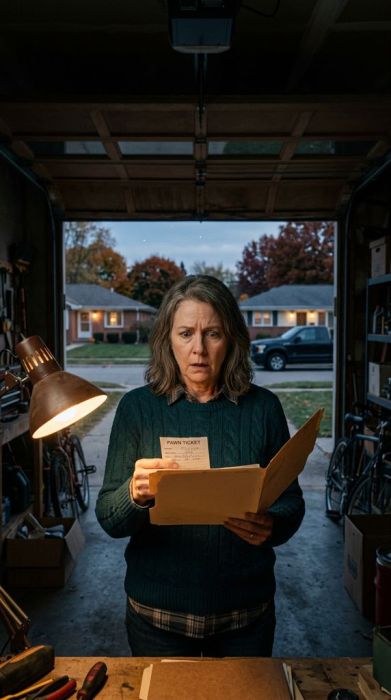
The first pension check went missing in September. I called the railroad board. They said the check had been mailed. The post office shrugged. The second check went missing in October, and then the third, and that was when I started to get scared, because I knew I was not the kind of woman who misplaces pension checks. I have kept every receipt I have owned since 1976. I balance my checkbook with a pen. My daughter Megan likes to tease me about it, but it is true.
By November, people were starting to look at me differently. Megan suggested, very gently, that maybe I should have the pension money sent directly to my account, and when I mentioned my missing checks to my bridge club, one of the women patted my hand and said, "Oh, Vera, sweetheart, at our age these things happen." It was the kindest way anyone has ever told me I might be losing my mind, and it made me want to cry.
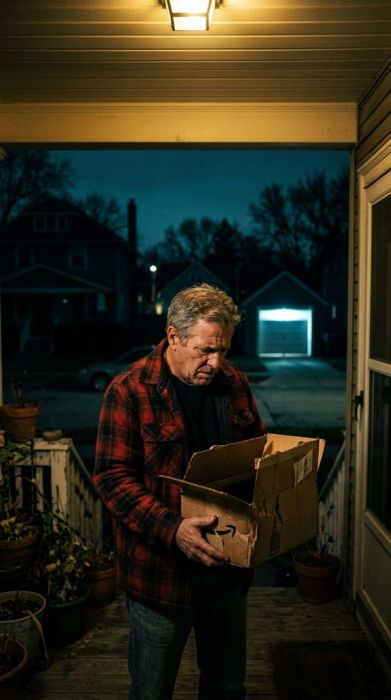
Monty was the one who consoled me. He came over with a tin of cookies and sat at my kitchen table and told me it was not my fault, that the mail these days was a disaster, that he had been meaning to tell me I should set up direct deposit. He even offered to call the railroad board for me, to sort it all out, because I was clearly so distressed. I remember sitting there across from him, feeling grateful, feeling seen, while he ate my cookies and smiled at me with every sign of a man who had never once taken anything that was not his.
The welcome kit from Western Federal arrived on a Tuesday morning in December. It sat in my mailbox with the rest of my mail, and I would have gone on ignoring it if the return address had not caught my eye. And as I sat on my kitchen floor with that debit card in my hand, I remembered one very specific thing: Monty Vance had been out of town that week, picking up his sister at the airport. For the first time in three years, he had not grabbed my mail from my box the moment the carrier passed. He had not had the chance to hide the evidence of his own greed.
I called the credit union where I have banked for thirty-one years. A kind woman named Rosa pulled up my credit report and went very quiet. Then she told me that an online application for a checking account at Western Federal had been submitted in my name nine months earlier, using my Social Security number, and that the account had received three deposits matching my missing pension checks. The withdrawal history showed cash withdrawals at a branch in Mesa, small ones, the kind a careful thief makes.
I asked Rosa to hold the account open and say nothing. I kept my voice calm, but my hands were shaking so hard I had to grip the phone with both hands. Then I called my daughter and told her to meet me at the Western Federal branch in Mesa, without telling her why.
The teller who processed the withdrawal was a young woman named Danielle, and she remembered every detail. A woman in her sixties had come in to deposit a railroad pension check, and the ID she presented bore the name Vera Lindqvist, but the face in the photo was a large, cheerful man with a weathered complexion and a voice that filled the whole lobby.
That was the moment it all clicked into place for me. Monty had opened the account in my name and gone to the branch in person to make the deposits, because a forged mobile deposit had a better chance of being questioned. He had worn someone else's identity like a coat, walked into that bank, and handed over my dead husband's pension like it was his.
Megan stood beside me at the counter when Danielle showed us the transaction photo. She gripped my arm so hard it left a bruise, and I knew she was thinking the same thing I was: the man who wheeled our bins to the curb every Tuesday, the man we had trusted with our keys and our mail and our garbage, had been robbing the whole street in broad daylight for years, and nobody had ever once looked at him twice.
The strangest part was what happened next. When I told my story to the neighbors, most of them did not believe me. Mrs. Okafor from number 12 said Monty had helped her reheat her mother's soup the winter she was sick. The Hendersons said he had shoveled their driveway at 5 a.m. during the ice storm. How could a man like that steal a widow's pension? They looked at me the way people look at a woman with a wild imagination, and I felt the same sickness in my stomach that I had felt in November, the feeling of the ground dissolving under my feet.
Frank Bennett saved me. Frank is my other neighbor, two doors down, a retired Mesa police detective who keeps to himself and creeps everyone out by noticing everything. We had never been close. He was too blunt, too suspicious, the kind of man who asked questions at the block party when everyone else just wanted to talk about the weather. But when I told him what I had found, he did not smile kindly at me and pat my hand. He just nodded slowly and said, "About time someone caught him."
Frank told me things about Monty that made my skin crawl. There had been a forgery conviction in Yavapai County in 2009, buried under a decade of good behavior. There had been complaints on his old block in Surprise about a paper recycling drive that nobody could ever prove. Frank had always wondered about the industrial shredder and the safe bolted to the floor of Monty's garage. He just had never had a victim brave enough to come forward.
That night, Frank laid out a plan at my kitchen table with my good china cups, and for the first time in months I felt something other than fear. The railroad board had reissued my November pension check, and it had just been mailed to my house. Frank proposed we let it land in my mailbox and then wait. If Monty was what we thought he was, he would come for it. And this time, someone would be watching.
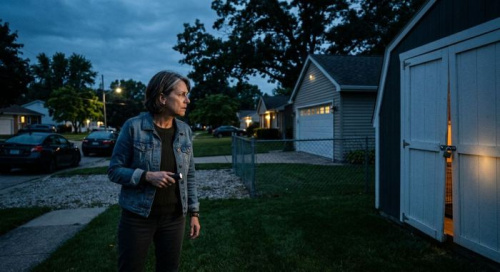
I spent the next two mornings on my front porch with a book, trying to look like a woman with nothing on her mind. Megan came over and pretended we were planning her son Tyler's birthday party. Frank sat in his dark living room with the blinds a crack open, drinking coffee and watching the street with the patience of a man who had spent thirty years waiting for people to do what they were going to do.
On Thursday, the reissued check arrived. I carried it inside, felt the envelope in my hands, and put it on the hall table where Monty would have seen me leave it. Then I did exactly what Frank had told me to do. I called the Western Federal branch and asked them to flag my account, and I called a number Frank had written on a scrap of paper, and I went to bed early, leaving my porch light burning.
The next morning, I was making coffee when Frank's text came through, two words: he's here. I set the cup down and walked to my front window. There was Monty, in his yellow vest, at the end of my driveway, lifting the lid of my recycling bin and dropping something inside. And then he turned, looked up at my window, and saw me standing there.
I do not think I will ever forget the look on his face. It was not fear. It was disappointment, like a man who had just discovered a small flaw in a plan that had been going perfectly for years. He smiled, waved, called out something cheerful about the garbage, and walked back toward his own garage, and I watched the two unmarked cars pull into the street from either end of the block.
The police found everything in Monty's garage. Boxes of paper statements from every house on Mesquite Lane, sorted by name. A folder on me with the emergency registry form and copies of my pension notices. A second set of gloves and a counterfeit ID with my name on it. And in the safe, beneath a stack of old bills, they found thirty-one thousand dollars in cash, along with a ledger listing every neighbor's routines and the days they would be away from home.
Monty stood in his driveway in handcuffs while the whole street watched. Mrs. Okafor held her hand over her mouth. The Hendersons stood frozen beside their car. And Monty, with tears running down his face, kept saying the same thing over and over: "I was going to pay it back. I was always going to pay it back. I just needed one more month."
He was arrested and charged with forgery, identity theft, and fraud, and because he had done the same to seven other families on our street, the charges stacked up like a small Bible. The last I heard, he took a plea deal and was sentenced to state prison, and his house was sold at auction to pay restitution to the families he had robbed.
It took the neighbors a while to look at each other again, and a while longer to look at me. Mrs. Okafor came over with a pie and apologized for doubting me. The Hendersons asked if they could do anything. At the next block meeting, we voted to disband the Bin Brigade for good and set up a real neighborhood watch, with Frank as the captain, which made me laugh for the first time in months.
I finally set up direct deposit for my pension, with a little help from my granddaughter over FaceTime, and I have not missed a check since. I keep the welcome kit from Western Federal in a drawer, though I am not entirely sure why. Maybe to remind myself that when the world tells you that you are confused, or forgetful, or simply too old to trust your own eyes, you should believe what is in front of you anyway.
On most mornings now, I sit on my front porch with my tea and watch the street wake up. There is no yellow vest out there anymore, no cheerful voice calling out about the garbage. There is just a quiet street full of neighbors who finally learned what I learned the morning I found that envelope: kindness is not a job description, and the people who do the most for you are sometimes the ones who want the most in return.
Frank still keeps to himself mostly, but a few times a month he walks over and sits on my porch swing with a cup of coffee, and we watch the sunset over Mesquite Lane. He says I would have made a good detective. I tell him I was just a librarian who kept her receipts. And for the first time in four years, the house across the street sits dark and empty, and I sleep through the night, every night, with my doors unlocked and my pension safe in the bank where only I can find it.