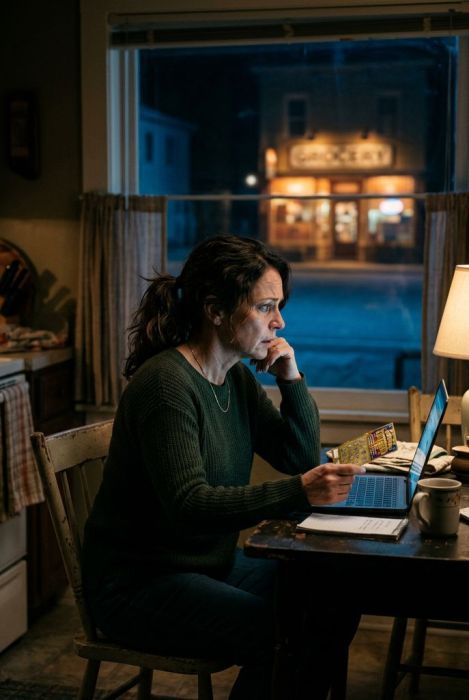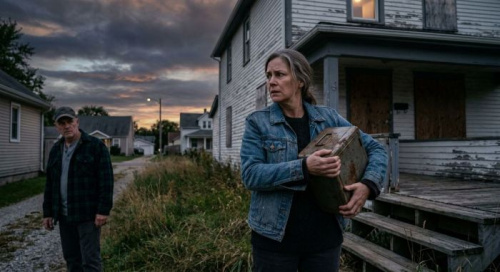
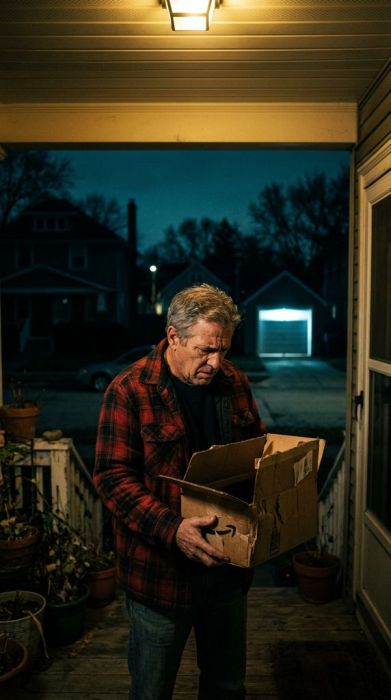
The box split open the way cardboard does when it's been rained on and thrown around one too many times. It was after eleven at night, and I was at the kitchen sink getting a glass of water for my heart pills when I heard the soft thunk on the front porch. I flicked on the porch light, and there it was — a sagging brown package the size of a shoebox, torn at the seam, sitting on my mat like it owned the place.
I squinted at the label. Weaver's Kitchen Table, Smoked Chipotle Rub, one pound. The line below it said 115 Sycamore, which is not my house. 115 is the house next door, the one with the string lights and the smoker that made our Sundays smell like heaven. I carried the box into the mudroom, set it on the bench, and told myself I'd return it first thing in the morning.
That was my first mistake. Being neighborly.
My second mistake was lifting the lid.
I didn't lift it right away, of course. I was raised to believe that a neighbor's business is a neighbor's business, and whatever Glenn and Marisol Weaver sold from their garage was nothing I needed to see. Glenn had a story that everybody on Autumn Ridge knew by heart. He'd been a line cook for twenty years, saved every tip, and finally scraped together enough to open a little barbecue joint outside Cincinnati. When the economy turned and the restaurant went under, he moved to our street with Marisol and a truck full of cast iron. Somewhere along the way, he turned his love of dry rubs and seasoning blends into an online business he called Weaver's Kitchen Table.
The whole street loved them. Barbara from number 204 got her roof patched through a crew Glenn vouched for, and they charged her half of what the city company quoted. When Susan sprained her ankle one winter, Marisol showed up with a chicken pot pie so good I asked for the recipe twice. When the high school kids ran a car wash to fund the band trip, Glenn pulled up with a smoker full of pulled pork and refused to take a dollar. If you'd told me back then that the Weavers were hiding anything, I would have laughed in your face. I'd have bet my truck on it.
So the torn box sat on my bench for a full day, and I didn't think twice about it. Then Jake came home.
Jake is our grandson. He's nineteen, quick with a smile, never any trouble. He moved in with us while he does his first two years of community college, and he works evenings for a regional courier company — the kind that delivers the packages the big carriers won't touch. He got home around eight, threw his keys on the counter, and gave me a look.
"Gramps, why is there a box from Weaver's Kitchen Table sitting on your bench?" he asked.
I explained the mix-up. He didn't say anything for a minute. Then he said something that should have stopped me cold.
"They get a lot of boxes for a spice company," he said. "Some of them are heavy, too. Way too heavy for spices."
I told him shipping rates had gone up and Glenn probably used heavy glass jars. Jake shrugged. "Okay, but there was one package last month. It ripped open on the belt before it went on the truck. It wasn't spices. It was a bag of bricks wrapped in that silver crinkle stuff. Glenn got to it before anybody else could look, but I saw it."
I should have called somebody that night. Instead, I told myself that Jake was nineteen and liked a good story, and that Glenn Weaver was the kind of man who'd bring you ribs when your wife had a bad day. I'd rather be wrong a hundred times than carry a grudge against a good neighbor because of a kid's imagination. That's how these things work, isn't it? You give a story every chance to be nothing, and then one day it's too late to pretend it's nothing.
The lid finally came off the following Tuesday.
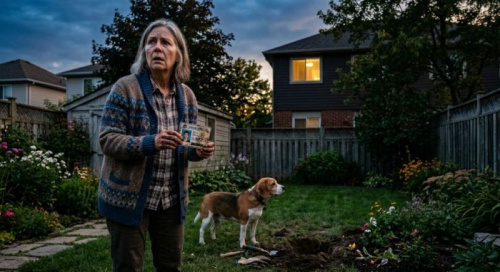
Susan was out of town visiting her sister, and I decided to get that miserable box off my bench once and for all. I picked it up, and something shifted inside. A one-pound bag of chipotle rub weighs one pound. This felt like it weighed four, and it shifted the way sand shifts — dense and heavy in a way dried chile has never once moved. I peeled back the flap and found a foil pouch stamped Smoked Chipotle Rub, plain as day. The corner of the pouch had torn. Underneath it, wrapped tight, was a clear plastic brick full of off-white powder, pressed flat as cookie dough, with a small mark pressed into the top that meant nothing to me. I didn't need it to mean anything. I knew what I was looking at, and I knew I was in trouble either way — because whoever owned that package could not afford for me to have seen it.
I closed the box, put it in the back of my closet, and drove three houses down to Cal Bouchard's place.
Cal is a retired postal inspector. He's been on Autumn Ridge for twenty years, long enough to know everyone's mail habits the way small towns used to know everyone's comings and goings. He's the first one to notice when a house gets a package from somebody nobody else has heard of. I showed him the box without a word. He looked at it for about two seconds.
"That's not spice, Frank," he said quietly. "That's product."
Cal told me something that turned my blood cold. For almost a year, he'd been flagging small anomalies in his head — prepaid shipping labels, return addresses at a mailbox store in the next county, packages routed through three different hubs before circling back. He'd noticed the Weaver house received far more inbound boxes than a spice shop could possibly use, and far more than the few jars they sold at the farmers market. He'd been one signature away from filing a tip with the federal task force when I walked in with the box. Now he had probable cause, and what he said next made my hands shake: the names on those labels had started appearing on a DEA watch list.
"You're going to stay out of it now, Frank," Cal said. "You're going to go home, put the box back in the closet, and let my people do their job."
I agreed. I meant it, too. For about four days.
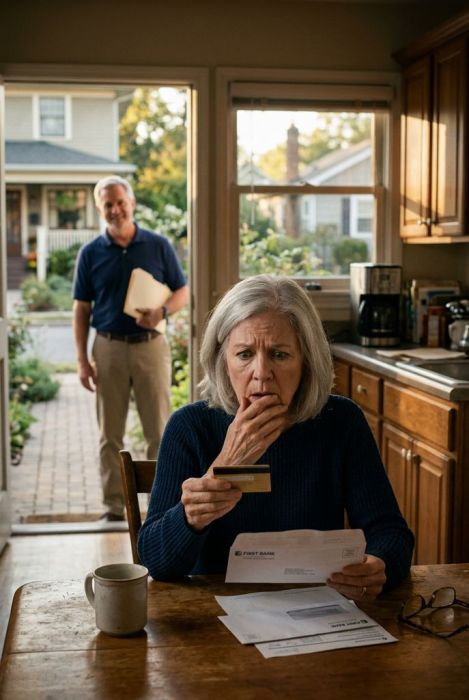
See, the Weavers noticed the torn box never made it back to them. Marisol came over on a Thursday with a blueberry pie and a smile full of questions. She asked how I'd been sleeping, whether I'd had any package mix-ups lately, whether my grandson's company had found the missing parcel. I lied badly, the way honest people do. She left the pie on the counter and told me to enjoy it.
That night, somebody got into our garage.
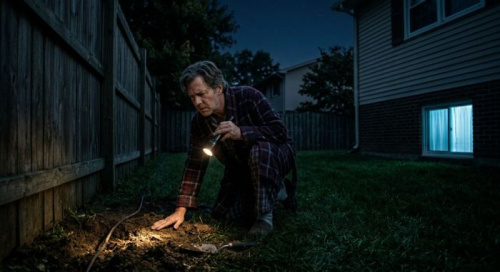
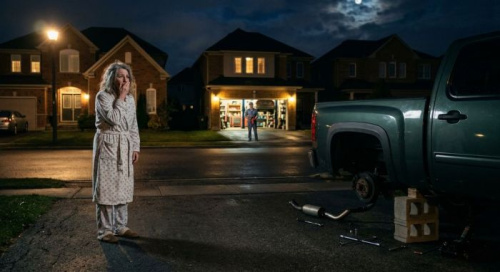
There was no forced lock and no broken window — just my garage door standing wide open at three in the morning, with the truck untouched and nothing missing except the sense that my home wasn't mine anymore. Under the windshield wiper, folded small enough to fit in a coat pocket, was a note printed in block letters: KEEP THE PORCH LIGHT OFF AFTER MIDNIGHT. GO BACK TO SLEEP. Nobody on this street writes notes like that. I called the police anyway, and a young officer walked around the yard with a flashlight and filed it as possible juveniles. That was the official answer for a lot of strange things on Autumn Ridge.
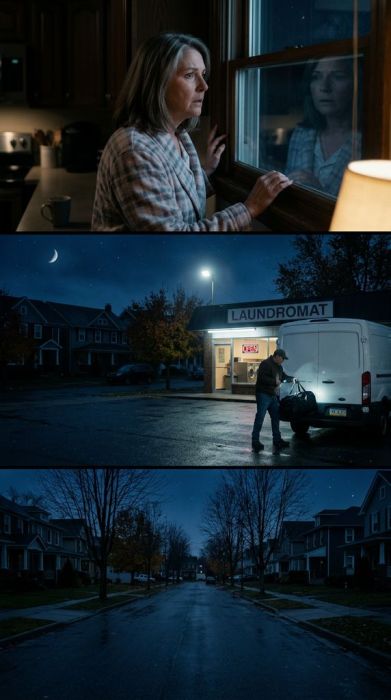
The next week, the passenger window of my truck showed up with a fresh spiderweb crack, the kind a BB gun or a pellet leaves behind. No note that time. No pie either. Susan started locking the deadbolt at dusk and kept the curtains drawn, and I caught her standing at the kitchen window more than once, watching the Weaver house.
I should have listened to Cal. Instead, I made a decision I'll probably defend for the rest of my life: I got smart.
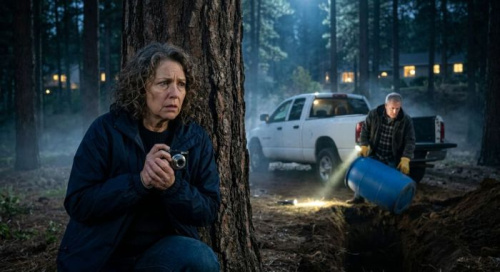
I went to Jake and told him most of it — enough to keep him safe, enough to make him careful. He didn't blink. "I've been waiting for you to say something, Gramps." He started keeping a log of every Weaver package he touched: weight, time, destination zip code, condition of the tape. He photographed the van's plates every time it crossed our street. And one Friday night, parked in the 7-Eleven lot two blocks over, Jake's phone caught the handoff — Glenn Weaver in his apron, a man in a Cardinals cap driving a black truck, four duffel bags moving between vehicles in under ninety seconds.
Cal ran the plate. The man in the cap had a name, and that name was already attached to a distribution case out of St. Louis. Cal said the task force was interested now. He said all they needed was one more piece of proof that the spice packages themselves were the transport method, and Jake's manifest log was going to be that piece.
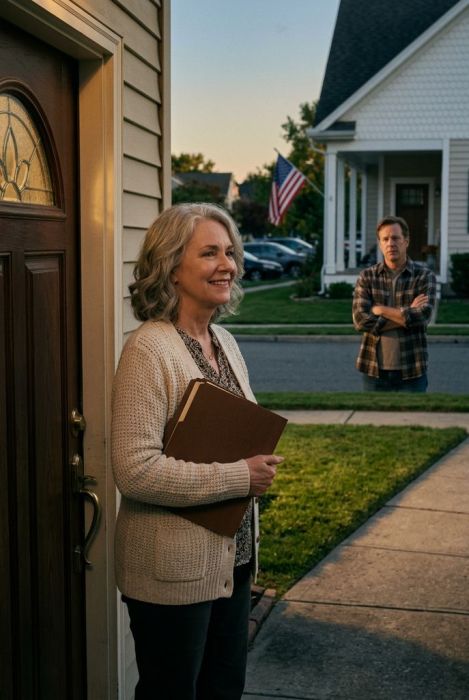
I started to believe we might actually get out of this alive. And then Marisol knocked on my door one night at dusk, and her face was the face of a woman who had decided to end the game before it ended her.
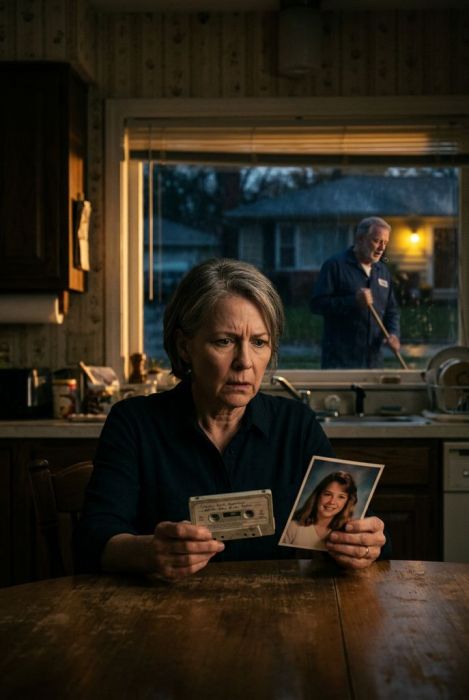
She stood on my porch with no casserole this time, no pie. "Frank, I need to ask you something, and I need you to hear me out before you answer." Her voice wobbled. Glenn, she said, had stage-four pancreatic cancer. He'd been sick for months, hiding it from everyone. The package that came to my house belonged to their cousin Vincent, a man with a gambling problem who'd dragged them into something they never wanted. They were being threatened, she said. Their daughter's college fund was gone. They just wanted the box back and a promise that I'd keep the porch light on at night and my mouth shut, and she'd pay me two thousand dollars cash on top of it.
I stood there with my heart pounding and almost, almost said yes. I have spent my whole life believing the best about people, and some part of me wanted that story to be true, because the alternative was that the man who'd fed our street for three years moved product for a cartel.
Susan saved me. She came up behind me at the door and said, very quietly, "Frank, Glenn mowed his lawn this morning. He was whistling." And then she showed me her phone: Glenn Weaver's own public page, posted two days earlier — a photo of him at a charity 5K with the caption "Two miles under twenty-two minutes, and I'm just getting started."
A dying man on a feeding tube does not post race results. A frightened man being threatened does not whistle while he mows. The whole sob story was a script, printed in the same block letters as the note under my wiper. The moment Marisol saw me understand, her face changed. She didn't cry again. She smiled, small and cold, and said, "You should have taken the money, Frank."
I don't honestly remember the next few days in order. I remember Cal filing everything. I remember the task force calling back fast, because the man in the Cardinals cap had gone quiet, and quiet meant the operation was about to move. They moved the date up a week.
The morning it happened, I was awake at five-thirty, coffee in hand, watching our street in the gray dark. At five-fifty-eight, three unmarked cars turned onto Autumn Ridge without headlights. Then the light bars went on — county sheriff's, then two more units, then a van that said nothing at all but drove like it knew exactly where it was going. A K-9 officer walked a dog up the Weavers' driveway, and the dog sat down at the garage door like it had known the secret for years.
They came out in handcuffs, Glenn first, then Marisol, still in their bathrobes, saying nothing. Neighbors stood on their porches with mugs of coffee, watching the way you watch weather you didn't ask for. Barbara from 204 dropped her mug on the steps and didn't pick it up. The evidence teams carried out tub after tub — jars, heat-sealed pouches, Mylar bricks in clear bags — and I counted every single one from behind my window, feeling something I didn't have a name for yet.
The charges came down three days later: trafficking, conspiracy, and a list of related offenses so long the local news ran it on the scroll. That night, the man in the Cardinals cap was picked up at a rest stop outside Toledo, and two weeks after that, the task force took down the operation in St. Louis that fed him. What started as a torn box on my porch turned out to be the loose thread in a sweater bigger than any of us knew.
Glenn and Marisol both pleaded guilty. Glenn got twelve years. Marisol got nine. The house at 115 Sycamore went to auction last spring, and a young couple bought it — he teaches middle school science, she manages the pharmacy downtown. Their smoker fired up on the first warm Saturday of the year, and the smell that drifted over our fence was actual barbecue, the honest kind, the kind that doesn't need a story to explain it.
Susan healed. Jake finished his first year with straight B's and a new habit of checking our porch light before bed. Cal still walks the neighborhood every evening, and people still bring him their strange packages, and he still takes them seriously — which is why our street votes for him for block captain every single time.
As for me, I still buy my chipotle rub in a jar at the Kroger two towns over. I lift the lid, smell the smoke, and think about how long a person can smile at you while hiding a world of hurt and harm behind it. I don't trust the way I used to, and I don't regret it. I know now that the best neighbor isn't the one who brings you pie. The best neighbor is the one who notices when the pie comes with a question attached.
And on quiet nights, when the porch light burns until midnight, I like to think that somewhere out there, somebody else found a torn box on their mat, and they did the only brave thing there is: they lifted the lid. And then they called for help.