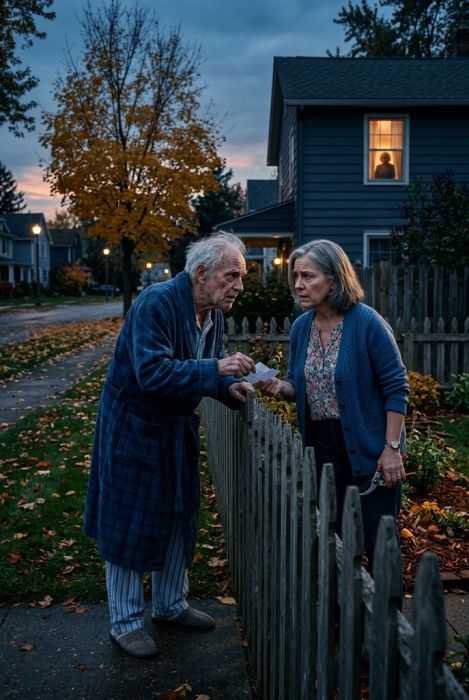
The last time I saw Art Kovac alive, he was handing me a jar of his jalapeño jelly over the fence and telling me to lock my doors. There had been two break-ins over in Millbrook that week, he said, and he didn't like the way things were heading. He was always looking out for me like that, even though I was the one the whole street quietly leaned on. I'm the retired school nurse on Juniper Row, the one who drives folks to appointments and remembers their grandsons' names. Art and I had the kind of friendship you build in your sixties and never expect to build again. He was a seventy-four-year-old Army veteran who'd lost his wife to cancer the year before I moved in. I'd lost Frank to the same disease. When you've sat in that kind of waiting room, you learn to spot the people who've sat there too.
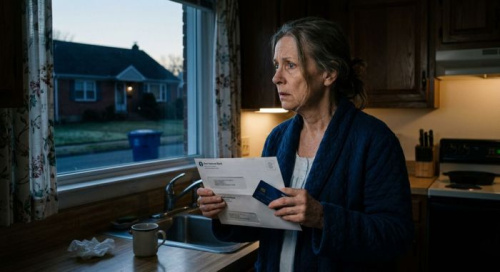
"Lock your doors this week," Art said, pressing the jelly into my hands. "Something's off out there." I laughed and told him there was nothing off about Juniper Row — we were four mailboxes deep in a cul-de-sac where everybody waved. "Humor me," he said. And because it was Art, I did. That was the last Sunday in August. By the first Tuesday in December I was standing in the darkened doorway of his rented apartment holding three months of his mail in my arms, and I already knew, in the deepest part of my stomach, that Dale Whitfield's story about Tucson was a lie.
Dale was the landlord. He owned the little duplex at the end of the cul-de-sac, the one with the green shutters and the garage apartment tucked behind it where Art lived. Dale had been good to Art, or so everyone thought. He'd knocked the rent down when Art's pension got complicated. He drove Art to the pharmacy when the VA clinic canceled his ride. He was the first face at every neighborhood meeting, always ready with a story about the uncles he'd had "over there," though he never said where. People liked Dale Whitfield. They trusted him the way you trust a man who remembers your anniversary and brings donuts to the firehouse.
The first week Art was gone, I didn't think much of it. He'd mentioned once, while we were pulling weeds, that he'd been thinking about visiting his sister in Ohio. The second week, I noticed his old blue Ford still sitting in the driveway with a fine layer of October leaves on the hood. The third week, I asked Dale about it at the mailbox. "Oh, he moved to Tucson," Dale said, smoothing his mustache. "Got tired of the winters. His daughter out there found him a nice place in a veterans' community. He left in a hurry, gave me the keys, said he'd send for his things." It was a clean story. It had details. But it had one problem: Art's daughter had died when she was nine years old. I knew because he'd told me one evening, when the light was orange and low, that he kept her photograph in his wallet next to his wife's. A man does not move to Tucson to be near a daughter who is buried in Ohio.
I told myself I was being silly. I called his sister, Carol — a sharp, kind woman I'd met once at Art's Fourth of July cookout, with his same laugh. She said she hadn't heard from Art in over a month, which wasn't unusual because he hated the phone, but she'd written him twice and gotten nothing back. "If he was in Tucson, he'd have called me on my birthday," she said. "He never misses my birthday." That was the moment the first door in my mind clicked shut, and I started paying real attention to the house behind Dale's duplex.
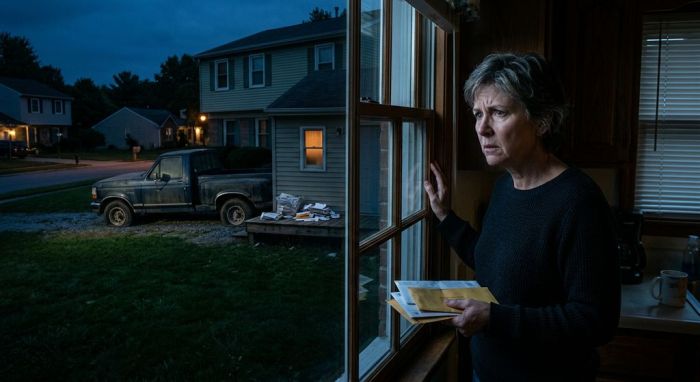
There was a rhythm to that garage apartment in October. The porch light came on at six-thirty every evening, like clockwork. Art had hated that light — "burns all night, costs me a fortune," he'd grumble — and he never once used a timer. He was old-school; he turned things off with his own hand. But the light was on at six-thirty sharp every night, and it stayed on until six-thirty the next morning. Someone was going into that apartment. Someone was turning that porch light on and off. And the mailbox out front was crammed so full that the little red flag could barely lift under the weight of it.
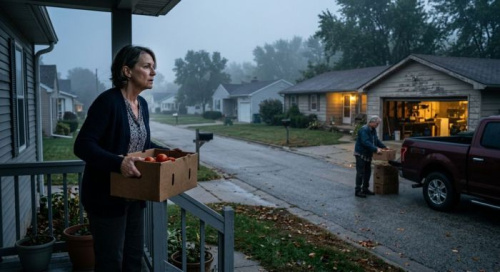
I started watching the house the way I used to watch the crosswalk during flu season. I'd sit on my porch with coffee and a book I was only pretending to read. I saw Dale's truck in the duplex driveway a lot more often than a landlord cleaning an empty unit should need. I saw him carrying boxes to his own garage, boxes with Art's handwriting on the tape. I saw him laughing into his phone some mornings, and I saw him on his knees in the rented unit's flower bed once, doing something with a spade that had nothing to do with flowers.
The afternoon I decided to act, I was at the post office in town mailing my own daughter a birthday package. The clerk, Jean, said, "Hey, Ruth, I've got a stack here for Art Kovac. He sent in a change of address to a post office box, but half of it keeps coming back because the forwarding keeps expiring. Want me to hold it for when he's back?" I asked to see the change-of-address form. It was a yellow card filled out in Art's name, forwarding his mail to Box 42 at our own main post office. Under "reason for moving," in handwriting that matched nothing Art had ever written me, it said: "warmer climate."
I knew Art's handwriting the way you know a friend's handwriting — from birthday cards, from the little notes he'd tape to my door when he borrowed my ladder, from the time he wrote me a recipe in ballpoint that still sat under a magnet on my fridge. That form was not written by Art Kovac. Someone had practiced an old man's signature on a yellow USPS card, and they'd done a decent job from three feet away, but I had thirty years of school-nurse eyes. I photocopied it and slid the original back.
Carol flew in two days later. I picked her up at the airport with my hands shaking. "He would never leave his tools," she kept saying. "Art's tools were his church. He'd have sold the truck or put the keys in my hand." We drove straight to the garage apartment, and this time I used the spare key Art had pressed into my palm two summers ago, the one he'd made me swear to use only for emergencies. The apartment was gutted like a marble, everything spotless except for a pile of mail in the corner and a duffel bag on the closet floor, half-packed, his shaving kit still inside it. A man who moves to a warmer climate packs his shaving kit. A man who is hidden does not.
What I found in that apartment broke something in me and then set it on fire. In a kitchen drawer, underneath a stack of takeout menus, was a bank envelope addressed to Dale Whitfield. Inside was a statement for a joint account in two names — Arthur Kovac and Dale Whitfield — with monthly deposits labeled "VA BENEFITS ARTHUR KOVAC" and monthly withdrawals, all in cash, in even, careful amounts. The statement was current. It had a transaction dated the week before, when I'd been making my coffee and watching the light come on at six-thirty. Behind the refrigerator I found a receipt from a crematorium over in Gary, and I understood, with a cold that had nothing to do with the weather, that Dale had not simply found Art dead one morning. He had made a decision, and he had spent the next three months signing an old man's name to keep the money coming.
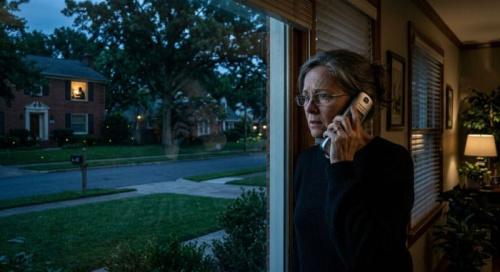
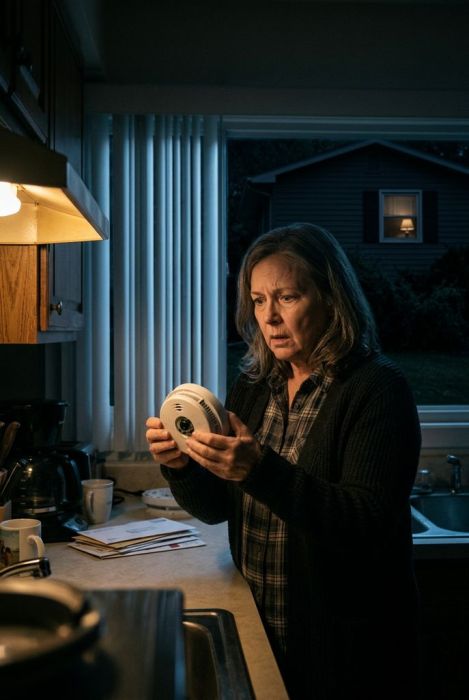
I didn't sleep that night. I want to tell you I was brave, but I wasn't. I was sixty-two years old, and I'd just learned that a man I'd shared coffee with had been turned into a bank account. I sat in my dark kitchen watching the duplex, and I called the one person I knew wouldn't tell me I was imagining things: Doug Harland, three houses down, a retired postal inspector who'd spent forty years chasing people who stole other people's mail. Doug listened for about ten seconds before he said, "Don't touch anything else. Don't say a word to Dale. I'm coming over."
Doug and I made a plan the way he said he used to make them with the federal boys. We did not confront Dale. That was the hardest part — every bone in my body wanted to scream at him through his window, but Doug kept saying the word "evidence" until it started to make sense. He dug out his old retirement camera, a good one, and we set up a watch. My daughter Karen, three states away, had been nagging me for months to let her install a doorbell camera. I finally said yes, and then I said thank you, because that little camera gave us the angle on the duplex's side gate. For five nights, nothing. On the sixth, at 2:14 in the morning — I remember the timestamp because I checked it a hundred times — Dale Whitfield came out of the garage apartment carrying a banker's box, walked it to his truck, and went back in for another. Doug's camera caught every step. In the truck's cab light you could see the box was labeled, in Art's own careful handwriting: "PAPERS — DON'T THROW."
The strangest part came the next morning, when Dale knocked on my door with a casserole dish and a smile like a sales brochure. "I've been meaning to ask you, Ruth. Art left a few boxes with me for safekeeping, and I was wondering if you had a key to his unit for the estate people." He said "estate people" like it was a phrase he'd practiced. I told him, calm as I could manage, that I didn't keep any key, and I watched his eyes flick to my doorbell camera and away again. He knew it was there. He'd watched me screw it in with his own eyes. And he asked anyway, which told me he was either desperate or stupid. Doug later said the casserole dish was the tell: Dale had never brought me food in eleven years on that street, and now, the morning after moving boxes at 2 a.m., he was acting like a neighbor.
We called the county sheriff that afternoon — a patient deputy named Morales — and laid it all out: the joint account, the VA deposits, the crematorium receipt, the forged change of address, the camera footage. Morales took about ninety seconds to pick up the phone to the VA's Office of Inspector General, and about ninety more to get the Postal Inspection Service involved, because it turned out Dale Whitfield had pulled the "collect the old man's benefits" trick before, over in another county, with a house that went to foreclosure before anyone noticed the quiet tenant had died. He wasn't a landlord who'd made one awful choice. He was a pattern.
The arrest happened on a freezing Thursday, six days before Christmas, on a street where everyone knew everyone. Two county cruisers and a dark federal sedan pulled up to the duplex while Dale stood on the porch shaking the same welcome mat he'd shaken a thousand times. I watched from my kitchen window, and I will never forget the way his face went from neighborly to gray in the space of one step backward. The deputy read him his rights while Mrs. Peña from across the street stood frozen over her recycling bin. The neighbors finally saw the truth — saw the boxes loaded into the federal sedan with corners labeled in Art's handwriting, saw the look on Dale's face that had nothing left in it but arithmetic. He went quietly, which disappointed me at the time and relieved me later. Men like him always think the paperwork will save them.
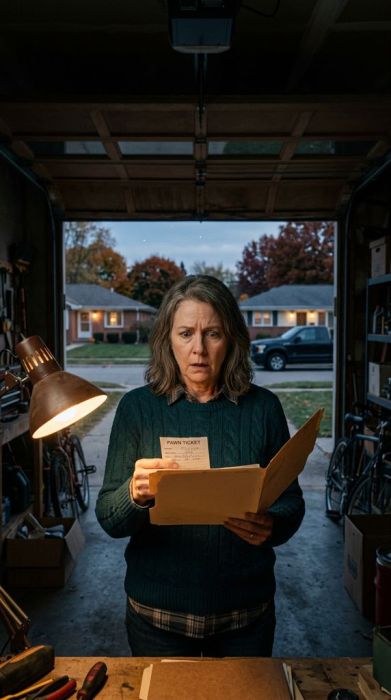
The truth came out at the hearing, and it was worse than my imagination, and also more ordinary. Art had died of a heart attack in his sleep in the second week of September — the week after he handed me the jelly jar, the week after the first leaves fell on his truck. Dale found him the next morning when the rent envelope never appeared. He made his decision in about an hour: no call to 911, no call to Art's sister, no call to anyone. He moved the body himself and cleaned the apartment with a single-mindedness the DA's office later described as remarkable. Then he kept the joint account humming, kept depositing the pension, and started showing the unit to a new tenant, collecting a second rent on a house whose first tenant was an open file. In his garage, investigators found Art's tools, his medals, his wife's jewelry, and the boxes of "papers" he'd been sorting to sell at a scrap yard, because Dale had weighed them.
Here's the part that stays with me. At the sentencing, Art's sister Carol stood up and told the judge about her brother — about the nine-year-old daughter he buried, about the wife he outlived by sheer stubbornness, about the jalapeño jelly he made every August and gave to the whole street. She said the word "dignity" three times, and every time she said it, Dale's lawyer stopped scribbling. Dale got eight years on the federal benefits theft and four more on the fraud, to run together, plus forfeiture of the duplex and restitution to Art's estate. The VA found nothing to bury — Dale had scattered the ashes, which the judge called out as its own small cruelty. But the VFW chapter held a full military service for him anyway, with a bugler and a folded flag, and Carol carried his picture out of that hall with her chin high.
People ask me now what changed on Juniper Row, and I tell them the honest answer: everything small and nothing loud. Mrs. Peña walks her mail to the post office instead of leaving it out. The Simpsons put a camera above their garage and told everyone so. Dale's duplex sits with a rental sign that nobody answers, because a neighborhood has a memory even when its streets don't. And every August, when the jalapeños come in, I make a small batch of jelly from the recipe still under the magnet on my fridge. I keep the last jar Art ever gave me on my windowsill, where the light hits it, and I say a quiet thank you to a neighbor who told me to lock my doors.
Because here's what I know now that I didn't know then: it isn't the strangers who scare you. It's the ones who stand at your fence and smile in August and cash your pension in December. Art never planned to need that spare key. But he gave me something better — he trusted me with his last good jar of jelly, and he taught me who to watch for. On the morning of the arrest, with the federal sedan still idling at the curb, I went inside and ate a piece of toast with that jelly, and I cried, and I laughed, and I thought: that's for you, Art. Lock your doors.